
 English
 中文简体


How to Seal Plastic Containers: Lid, Film, and Tamper-Evident Seals Explained
Oct 30, 2026
Content
- 1 The Four Sealing Methods Used in Commercial Food Packaging
- 2 Match the Seal to the Container Material
- 3 The Numbers That Decide Whether a Lid Seals
- 4 How to Test a Seal Before a Full Production Run
- 5 Five Sealing Failures and What Actually Causes Them
- 6 Sealing Choices for Delivery, Retail, and Catering
- 7 Frequently Asked Questions
A 16 oz round container can pass a quick hand-shake at the packing counter and still leak twenty minutes into a delivery run. Sealing plastic containers is not one decision; it is three decisions that have to agree with each other: the closure, the rim geometry it grips, and the way the container is filled, cooled, and stacked.
The short version, before the details. A snap lid is only reliable when rim diameter, lid interference, and headspace are held inside a tolerance. Heat-seal film beats a snap lid on thin sauces and liquids. A tamper-evident closure solves the same leak problem as a snap lid while adding a visible opening indicator. A shrink band is not a seal at all; it is evidence that a seal arrived intact. When a pack fails, the cause is usually fill level or rim temperature, not the lid itself.
The Four Sealing Methods Used in Commercial Food Packaging
Each method closes a different gap. A snap lid relies on mechanical interference between the lid skirt and the container rim. A heat-sealed film welds itself to the rim and creates a continuous barrier. A tamper-evident lid combines mechanical sealing with a break-away ring or hinged lock. A shrink band adds no barrier at all, which is why it is almost always used on top of one of the other three.
| Sealing method | Where it is used | What you need | Leak risk when rim and fill are correct |
|---|---|---|---|
| Snap-on lid | Takeaway meals, bowls, soup cups, deli containers | Hand press; a lid press at high volume | Moderate, driven by rim roundness and lid interference |
| Heat-seal film | PET cold cups, sauce and dip portions, sealed trays | Sealer with temperature, pressure, and dwell control | Low |
| Tamper-evident closure | Delivery and retail packs that must show they left the kitchen unopened | Hand press; no extra machinery | Low to moderate |
| Shrink band or sleeve | Retail cups and tubs already sealed by another method | Heat tunnel or hot-air gun | Not applicable; it is tamper evidence, not a barrier |
If a buyer asks for one recommendation without any other information, the honest answer is that the method follows the material. A PET cold cup rim is thin and flexes; it wants film. A polypropylene container rim is thick and stiff; it wants a lid.
Match the Seal to the Container Material
Two containers can look identical on a shelf and behave completely differently once a lid meets the rim. Wall thickness, rim profile, and the resin itself decide which closure will hold.
PET cold drink cups
PET cups are usually sealed with a flat or domed lid that snaps over a rolled rim, or with a lidding film where the pack has to be single-use and tamper proof. PET is stiff but brittle: a lid that is forced on at an angle can crack the rim, and a crack will never reseal. Warm cups are the bigger risk, because a cup filled with cold drink in a warm room sweats, and moisture on the rim reduces friction between lid and rim by a surprising amount.
PP food containers, bowls, and soup containers
Polypropylene is the workhorse material for hot food, and it tolerates a wider sealing window than PET. The critical point is the rim: on round containers, lid performance depends on rim roundness rather than rim diameter alone. A rim that is 0.4 mm out of round will leak at the same spot every time. For a deeper look at how leakproof and fresh-keeping behaviour is achieved on round containers, see this analysis of round plastic food container sealing performance. Soup is the hardest case because it is hot, liquid, and often filled close to the brim; a combo pack with a matched lid and a defined fill line removes most of the guesswork.
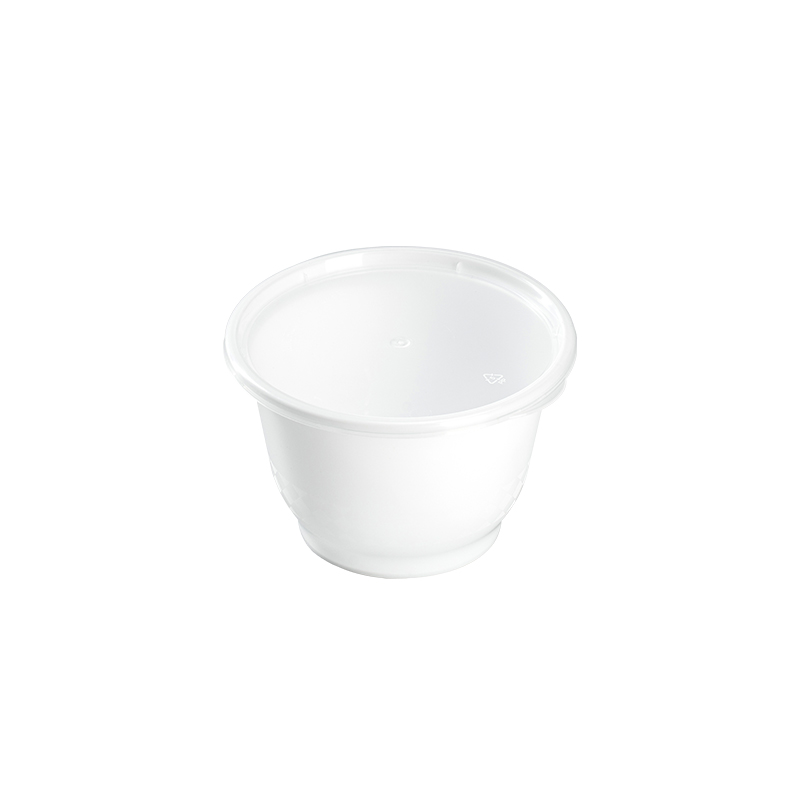
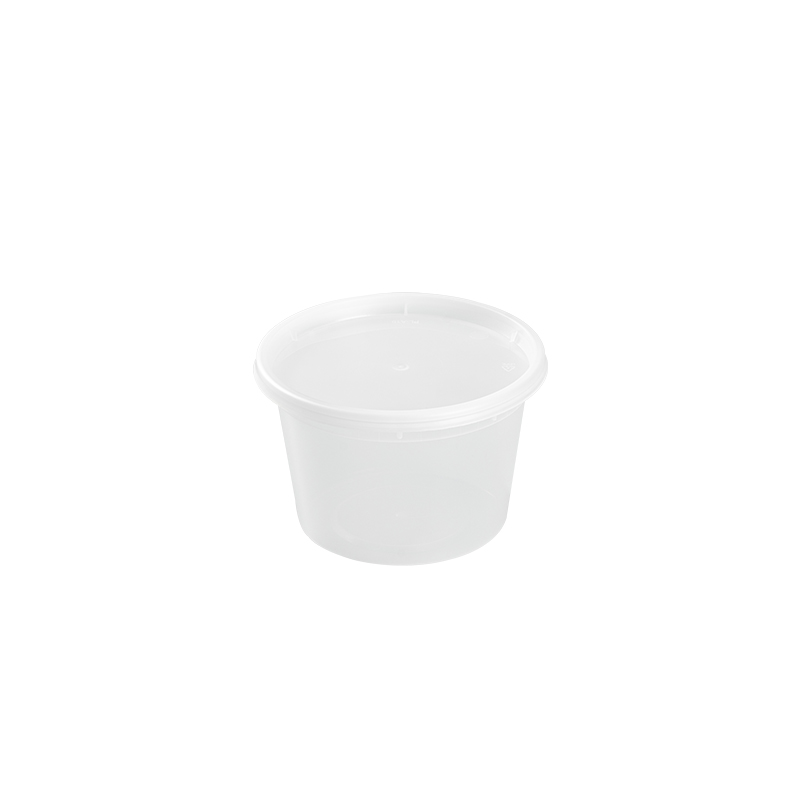 16oz Plastic Soup Container Combo Pack S16Matched lid combo pack for hot soup, with defined 500 ml capacity and round rim design suited to leak-resistant filling and sealing.View Product →
Paper, kraft, and bagasse containers
Paper and moulded fibre containers do not seal to a plastic rim the way plastic-to-plastic does. A paper soup cup usually relies on a rolled paper rim plus a tightly fitted lid, with a PLA or kraft lid option for a cleaner material story. Heat-sealing directly to a paper rim is possible, but the coating and the rim moisture content both matter, and a sealer set for plastic will scorch the paper edge.
The Numbers That Decide Whether a Lid Seals
When a lid fails, the fix is almost always a number rather than a new supplier. These are the variables worth writing into a specification sheet before the first production run.
- Rim diameter tolerance. A starting point for round containers is plus or minus 0.25 mm across the rim; anything wider and the lid will be tight on one side and loose on the other.
- Lid interference. The lid skirt usually needs 0.3 to 0.6 mm of interference with the rim to stay on under load, and more than that makes the lid hard to press without distorting the rim.
- Headspace. Leave at least 5 mm, and closer to 10 mm for hot fills, because the contents expand and the trapped air expands more.
- Fill temperature. Filling above roughly 85 C softens PP rims enough that a lid pressed on immediately can shift as the container cools.
- Cooling time before lidding. A hot container lidded at the filler traps steam; that steam condenses, creates a vacuum, and can pull a lid down into the food.
- Stack load. Ten containers stacked in a crate put continuous pressure on the lowest lid, which is where slow leaks appear first.
None of these numbers is universal. They are a starting range that lets a packaging team test a real product instead of arguing about a sample.
How to Test a Seal Before a Full Production Run
Sample approval on a bench proves very little, because a bench test rarely reproduces heat, vibration, and time together. A short, repeatable test sequence catches most failures for the cost of a few dozen containers.
- Tilt each filled and sealed container to 45 degrees for 30 minutes at room temperature and inspect the rim for weeping.
- Invert the pack for 24 hours at 4 C and again at 38 C, which covers both a chilled display case and a warm delivery van.
- Drop the pack from about 1.2 m onto a hard floor, landing on the lid edge, twice per container.
- Stack ten containers for 48 hours and check the bottom unit for rim deformation and slow leakage.
- Hold a filled pack on a tilt for ten minutes and watch the rim-to-lid joint, not the lid surface; that is where the first drop usually appears.
Keep the failed units, photograph each one next to a ruler, and record the fill weight. That record is what turns a complaint into a specification change. If a trial needs to start from existing shapes and capacities rather than a new mould, the sample book is the fastest way to see which matched container and lid combinations are already available.
Five Sealing Failures and What Actually Causes Them
- Lid pops off in the cooler. Usually overfilling; chilled contents shrink and pull the lid inward.
- Leak at one fixed point on the rim. An out-of-round rim or a damaged rim from a drop during packing, not a bad lid batch.
- Lid looks closed but lifts on a tilt. Insufficient interference, often because the lid comes from a different mould than the container.
- Film peels at the tab corner. Contamination on the rim from sauce or oil; the seal bonded to residue instead of to plastic.
- Fine mist of liquid after a van ride. Vibration fatigue at the lid skirt, made worse by loose stacking rather than snug crates.
Two of those five are solved by tooling, two by process, and one by handling. When delivery reliability matters more than cost per unit, a tamper-evident format is often the simplest upgrade, because the closure is designed to stay locked until it is deliberately opened.
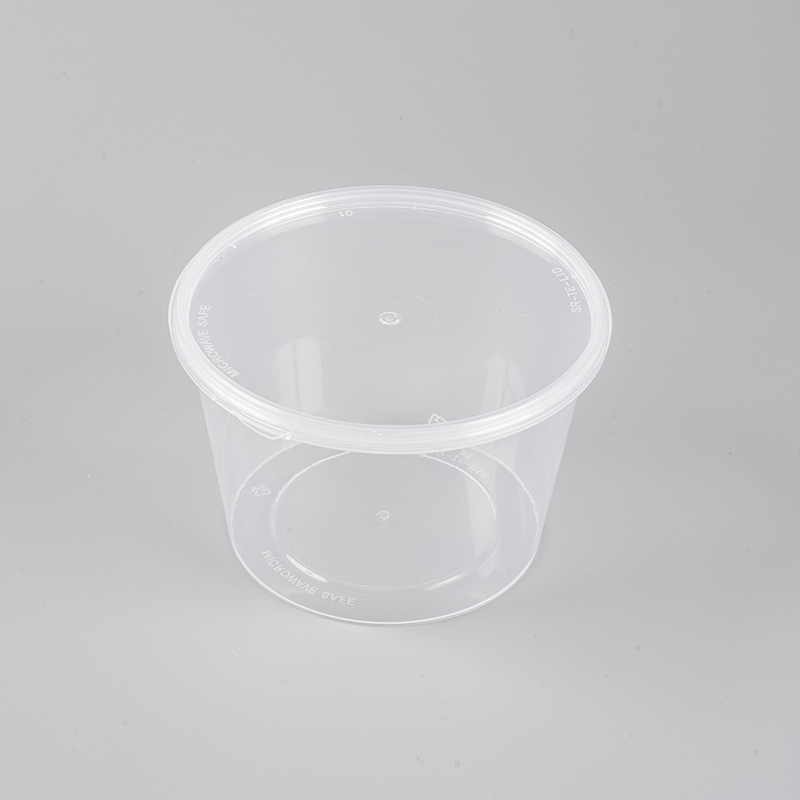 Custom 16oz Round Tamper-Evident Container R16Round tamper-evident food container with 500 ml capacity and 600-set carton quantity, suited to delivery packaging where closure reliability matters.View Product →
Sealing Choices for Delivery, Retail, and Catering
Delivery and takeaway
Delivery punishes seals with heat, vibration, and a tilted bag. A mechanical lid on a stiff PP rim, matched to the same mould family, outperforms a prettier container with a loose lid every time. Soups and curries should be filled below the line marked on the container and lidded after a short rest.
Retail shelf
Shelf life and tamper evidence matter more than recloseability here. Film sealing plus a shrink band gives the longest barrier, while a printed sleeve carries branding without touching the seal.
Catering and condiment service
Small formats are sealed differently. A 1 to 5 oz portion cup is usually lidded in trays, and the failure mode is not a leak but a lid that lifts in a stacked tray. A flat, closely fitting lid with a defined stacking shoulder solves it.
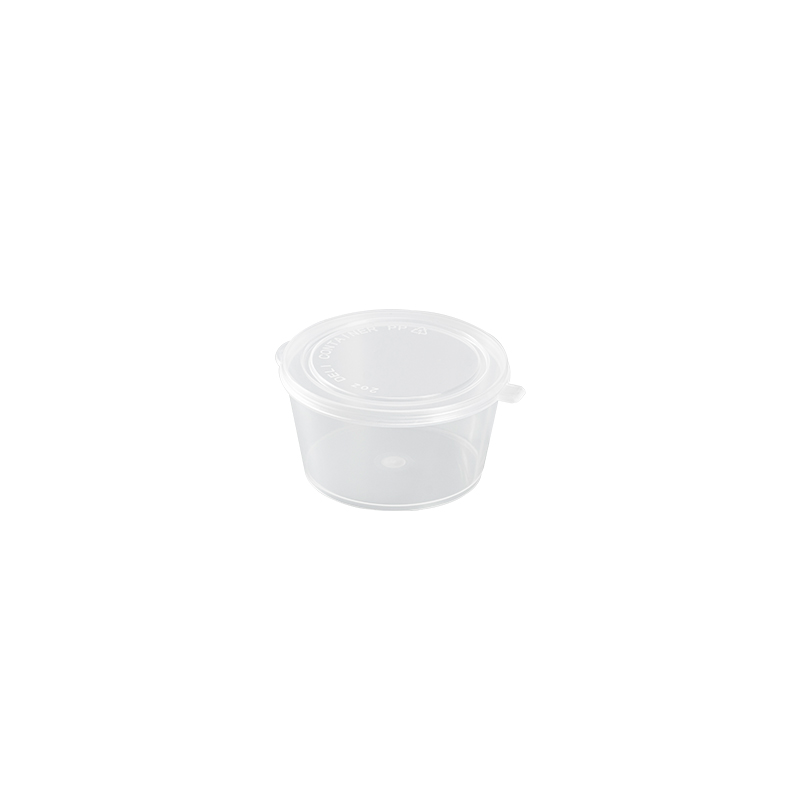 2oz Portion Cup with Lids PC-02Small lidded portion cup with 60 ml capacity and 2,000 sets per carton, useful for stacked tray service where a close-fitting lid matters.View Product →
Frequently Asked Questions
Does a snap lid seal better with a liner?
A foam or EVA liner helps on dry goods and on slightly imperfect rims, but it does not fix an out-of-round rim, and it adds a material that has to be separated for recycling. For liquids, a matched lid without a liner is usually the better choice.
Can a PP container be heat sealed?
Yes, with a film designed for polypropylene and a sealer that holds temperature and dwell within a narrow band. The margin is smaller than on PET, so a trial run on the actual product is essential before a production order.
Why does my cup lid loosen in the refrigerator?
Cold air shrinks the container and the lid at slightly different rates, and condensation lubricates the rim. A lid with deeper skirt engagement and a positive click holds far better than a shallow one.
Is a tamper-evident lid also leakproof?
It is as leakproof as an equivalent snap lid with the same rim fit, plus it shows whether the pack was opened. It is not a substitute for film sealing on very thin liquids.
Sealing plastic containers comes down to three questions asked in the right order: which closure suits the material, whether the rim and fill level are controlled tightly enough for that closure, and whether the pack still holds after heat, cold, and a van ride. Answer those before choosing a lid, and the packaging line stops being the place where leaks are discovered.
Share:
Related Products

We are very glad that you came to JIEYU to purchase or customize, and we are confident to provide you with quality products and services.

We are committed to developing innovative, reliable, economical, and environmentally friendly disposable and reusable food service products for our customers.

No.199 Liansheng Road, Coast Business Center, Yinzhou District, Ningbo, Zhejiang, China

+86-18106622299

jay@jieyuplast.com
