
 English
  中文简体
中文简体


Can the paper container hold hot soup or oily food without leaking?
Jul 03, 2026
Content
- 1 The Core Principle of Leak-Proof Paper Containers: Coating Is Key
- 2 Four Key Factors Affecting Leak-Proof Performance
- 3 Heat and Oil Resistance Comparison of Different Paper Container Structures
- 4 Paper Container Series for Hot Soup and Oily Food Scenarios
- 5 How to Self-Test Paper Containers for Leakage Before Procurement
- 6 Purchasing Recommendations for Takeaway and Catering Scenarios
- 7 Frequently Asked Questions
Qualified Paper Containers with PE or PLA inner coating and proper sealing can safely hold hot soup and oily food without leaking, typically withstanding brief heat exposure between 70 and 95 degrees Celsius. Products with sealed-edge gaps controlled within 0.5 mm generally show no noticeable leakage within two hours. However, not all paper containers offer this capability; coating type, sealing structure, holding duration, and grease content all directly affect leak-proof performance. Choosing the wrong model or low-quality OEM products may still lead to softening, oil seepage, or bottom collapse.
The Core Principle of Leak-Proof Paper Containers: Coating Is Key
Ordinary paper has almost no waterproof or oil-resistant properties on its own. Whether a paper container can hold hot soup or oily food depends entirely on whether the inner wall has a functional coating. Currently, mainstream disposable food container manufacturers typically adopt two coating solutions, each with different strengths in heat resistance, oil resistance, and environmental attributes.
| Coating Type | Heat Resistance | Oil Resistance | Degradability | Common Uses |
| PE Polyethylene Coating | Suitable for cold and hot drinks and general hot food | Moderate; prolonged contact with high-grease food may cause oil seepage | Not biodegradable | Paper meal box, takeaway soup bowls |
| PLA Polylactic Acid Coating | Heat resistance slightly lower than PE; avoid prolonged contact above 90 degrees Celsius | Better; slower grease penetration | Compostable | Salad boxes, windowed meal boxes |
| Uncoated Raw Paper | Not suitable for hot soup or oily food | Poor; penetrates in a short time | Recyclable | Dry goods outer packaging, paper bag liners |
Four Key Factors Affecting Leak-Proof Performance
- Coating Thickness and Uniformity: Thin or uneven coatings are prone to develop leak points at corners and sealed edges, which is the main reason for significant quality differences among OEM products from different factories.
- Sealing and Folding Craft: The folded corners of square meal boxes and the rolled edges of round soup bowls are the highest-risk areas for leakage. Professional manufacturers reinforce these weak points through heat-press sealing.
- Holding Temperature and Duration: Brief contact with soup at around 95 degrees Celsius is generally acceptable, but prolonged heat retention or repeated reheating accelerates coating softening and shortens the effective leak-proof period.
- Grease Content: High-grease foods such as fried items and braised dishes penetrate paper fibers more easily than clear broth. Containers with higher oil resistance grades, such as kraft salad boxes or dedicated fried-food cartons, should be selected.
Heat and Oil Resistance Comparison of Different Paper Container Structures
Not all paper container shapes offer the same tolerance. Below is a performance comparison of several common structures in actual takeaway and catering scenarios, providing a reference for takeaway food container procurement.
| Container Type | Structural Features | Suitable Scenarios | Leak-Proof Rating |
| Round Kraft Meal Box | One-piece molded, fewer seams | Curry rice, stir-fried dishes for takeaway | High |
| Square Hamburger Box | Multiple folded corners, vent hole design | Hamburgers, sandwiches, and low-liquid foods | Medium |
| Soup Bowl / Soup Cup | Thickened bottom, dedicated leak-proof lid | Hot soup, stews, porridge | High |
| French Fries Cone | Open-top without lid, thicker paper | Fries, fried chicken, and other small fried snacks | Medium to High |
| Salad Window Box | Partial window for display | Cold or room-temperature salads, braised items | Medium |
Paper Container Series for Hot Soup and Oily Food Scenarios
The following paper meal boxes and soup cups are made from natural kraft paper or white card paper combined with functional coatings, balancing sealing performance and visual presentation for delivery food container, food packaging box, and other takeaway and dine-in scenarios.
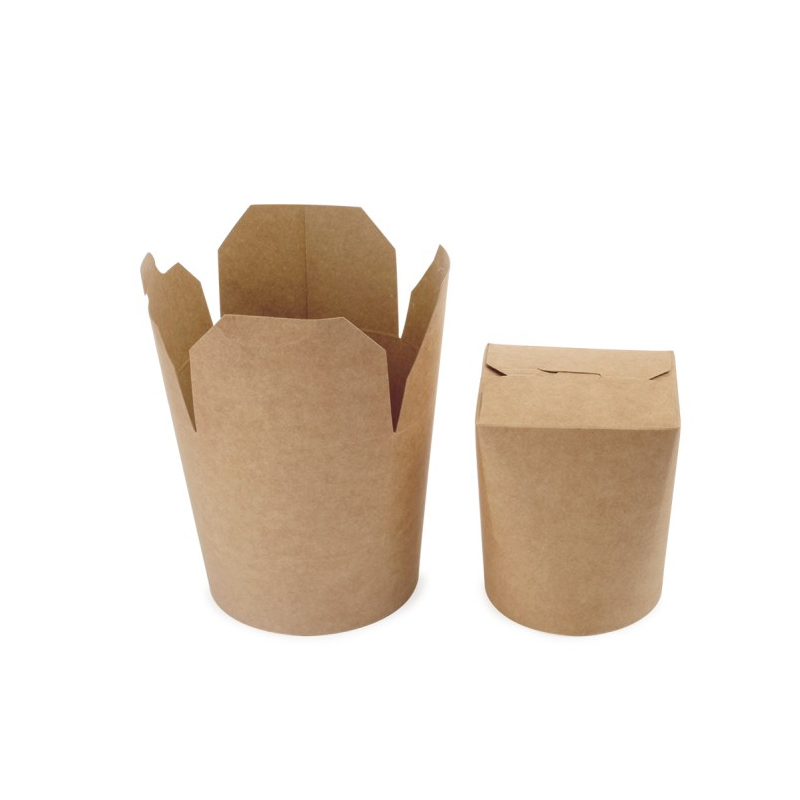
Kraft Round Food Box
Round Meal Box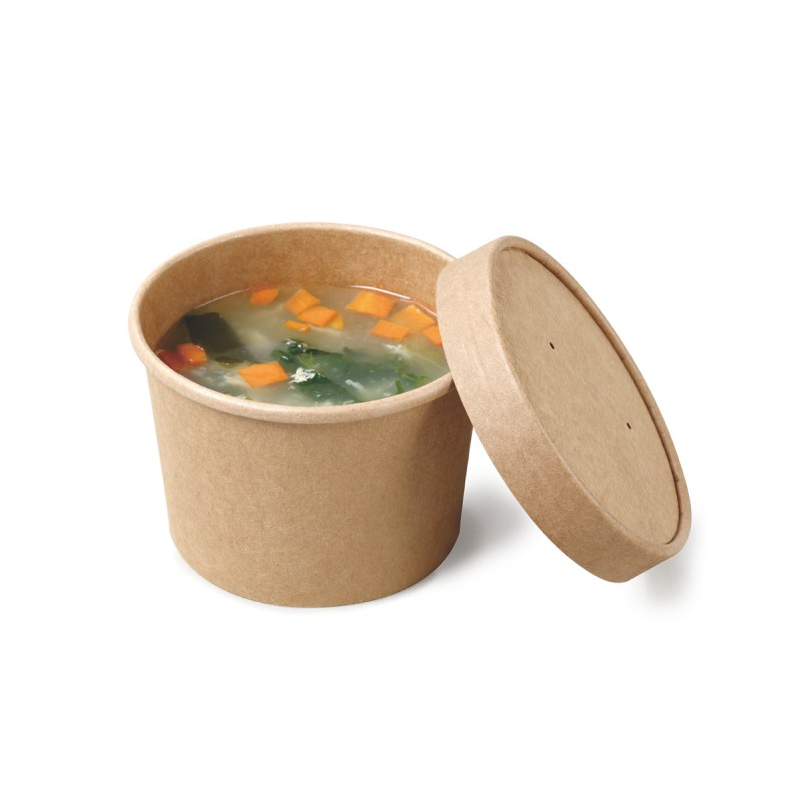
Natural Kraft Soup Cup
Hot Soup Container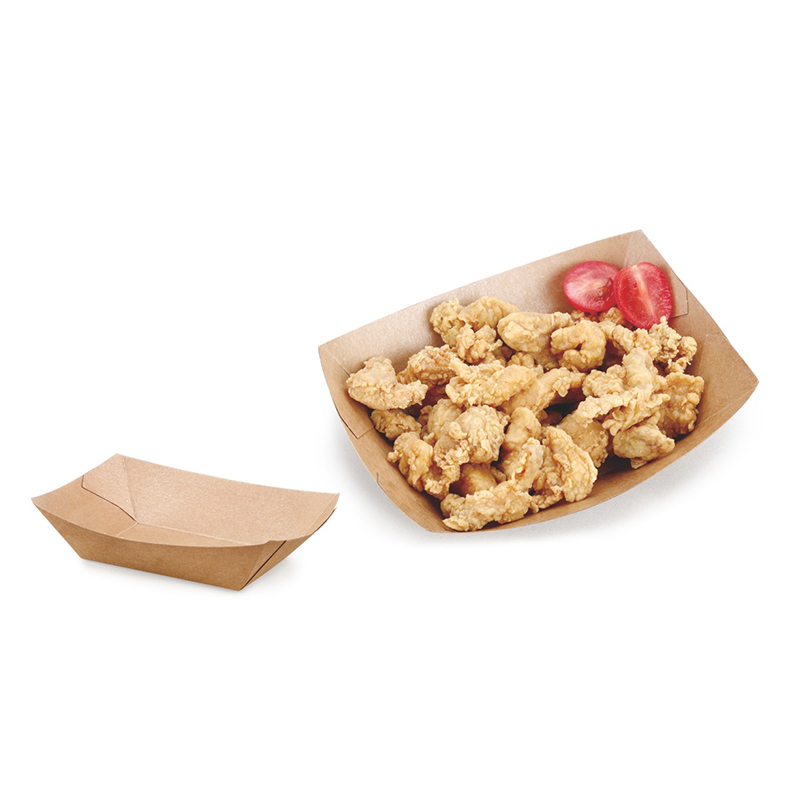
Kraft Paper Tray
Tray / Platter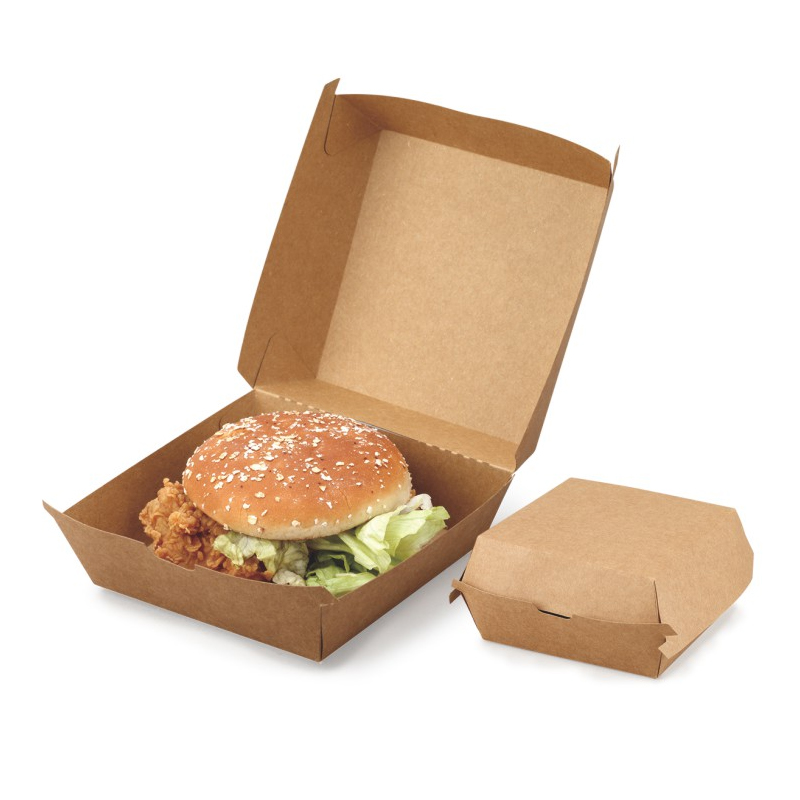
Natural Kraft Hamburger Box
Burger / Sandwich Box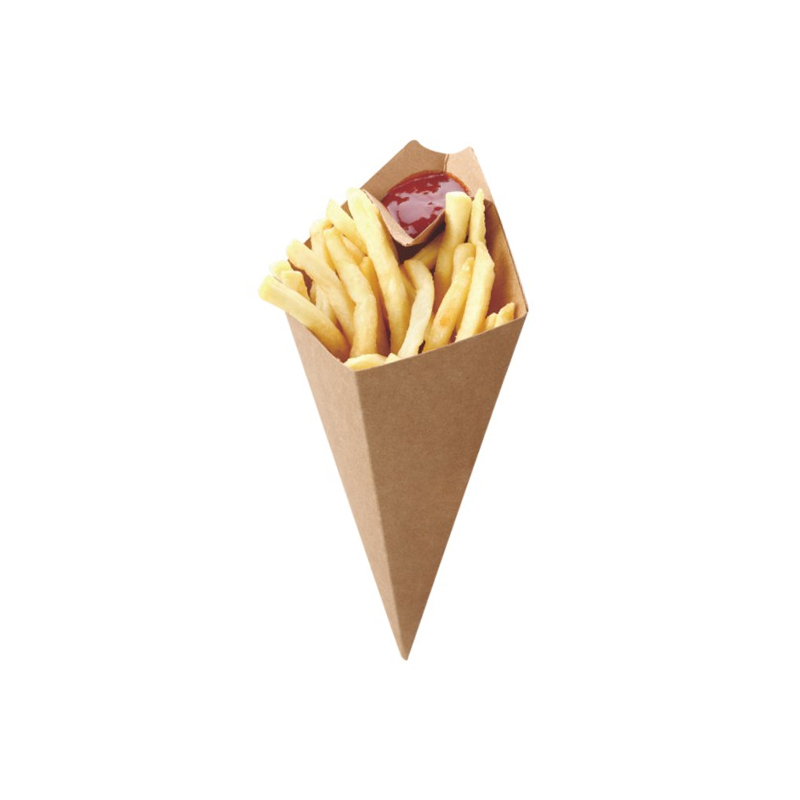
Kraft French Fries Cone
Fried Snack ConeHow to Self-Test Paper Containers for Leakage Before Procurement
For restaurants or platforms that procure disposable food containers in bulk, it is recommended to conduct simple on-site tests before placing formal orders to avoid large-scale complaints caused by substandard coatings.
- Fill the container with hot water or hot oil at around 80 degrees Celsius, let it stand for 15 minutes, and observe whether the outer wall shows any wet or seepage marks.
- Focus on inspecting the folded corners, sealed edges, and the connection between the cup body and the bottom, as these areas are most prone to leakage.
- Simulate real delivery conditions by tilting the container at a 45-degree angle for 30 minutes to test the sealing stability of the lid and sealed edges.
- Compare multiple samples from the same batch; significant differences in coating uniformity usually indicate unstable manufacturing processes and warrant cautious procurement.
Purchasing Recommendations for Takeaway and Catering Scenarios
Depending on different business scenarios, the selection approach for disposable packaging also varies. The following points can serve as procurement references.
- For soup and porridge takeaway, prioritize dedicated soup cups with leak-proof lids rather than substituting with ordinary paper meal boxes.
- For fried, grilled, and other high-grease foods, choose containers with higher oil resistance grades, and consider pairing with grease-absorbing paper liners when necessary.
- Fast-food outlets can improve serving efficiency by selecting disposable tableware and containers as integrated sets to reduce assembly steps.
- For cold drinks and cold food, disposable cups and plastic cups can be used without requiring heat-resistant coatings; the focus should be on lid sealing design.
- When procuring fast food packaging overall, request coating material test reports from the manufacturer to confirm compliance with local food contact material standards.
Frequently Asked Questions
Can Paper Containers Be Microwaved
Whether a paper container can be microwaved depends on the coating material and whether it contains metallic printing layers. Ordinary PE-coated meal boxes are not recommended for prolonged microwaving. Always follow the product label instructions to avoid abnormal coating release under heat.
Can One-Time Use Containers Be Reused
Reusing paper containers is not recommended. They are designed for single use; the coating degrades after the first contact with hot oil or soup, significantly increasing leakage and hygiene risks upon reuse.
Share:
Related Products
We are very glad that you came to JIEYU to purchase or customize, and we are confident to provide you with quality products and services.

We are committed to developing innovative, reliable, economical, and environmentally friendly disposable and reusable food service products for our customers.

No.199 Liansheng Road, Coast Business Center, Yinzhou District, Ningbo, Zhejiang, China

+86-18106622299

jay@jieyuplast.com
