
 English
  中文简体
中文简体


EN 13432 Certification for Compostable Packaging: Tests, Thresholds & Buyer Guide
Sep 04, 2026
Content
An EU café chain reviews packaging samples for its next menu. The kraft boxes look right, the lining is plant-based, the catalogue says "compostable" — and then the buyer asks one question: what is the EN 13432 certificate number? The order stalls, because "compostable" without EN 13432 certification is a claim, not evidence. Here is the short version for anyone in the same position: EN 13432 is the European standard that decides whether foodservice packaging can credibly be sold as industrially compostable. It sets pass or fail thresholds for biodegradation speed, physical disintegration, compost quality and restricted substances. This article explains what the standard actually tests, which products can realistically meet it, how long it takes, and how to verify a supplier's certificate before the purchase order goes out.
What EN 13432 Actually Requires
EN 13432 - officially titled "Packaging - Requirements for packaging recoverable through composting and biodegradation - Test scheme and evaluation criteria for the final acceptance of packaging" - is the technical backbone behind the European Seedling logo and most EU municipal composting rules. It is not a self-declaration: a laboratory must test the finished packaging and a certification body must review the results against four acceptance criteria.
- Biodegradation: at least 90% of the material must convert to carbon dioxide within 180 days under industrial composting conditions, measured against a cellulose reference.
- Disintegration: after 12 weeks in a working composting process, no more than 10% of the dry material may remain on a 2 mm sieve - in plain terms, the product must physically fall apart into small fragments.
- Ecotoxicity: the finished compost must not damage plant life; germination rate and plant biomass in the test must reach at least 90% of the control compost.
- Constituents: regulated heavy metals and fluorine must stay below defined limits, and the material must contain a minimum share of organic solids.
Two details buyers frequently miss. First, the tests run on the complete packaging - inks, adhesives, windows and liners included - so a flawless paper body can still fail because of one non-complying component. Second, the 180-day clock runs in an industrial composting plant at around 58 °C, a temperature a backyard heap will not reach, which is why EN 13432 says nothing about home composting.
| Criterion | Requirement | Test window |
|---|---|---|
| Biodegradation | ≥90% converted relative to cellulose reference | 180 days |
| Disintegration | ≤10% of dry mass retained on a 2 mm sieve | 12 weeks |
| Ecotoxicity | Germination and biomass ≥90% of control compost | After compost maturity |
| Constituents | Heavy metals and fluorine below defined limits | Screening stage |
Why the Certificate Matters in Procurement
Conclusion first: treat EN 13432 as a purchasing document, not a marketing label. Environmental claims face real scrutiny in the EU, and unproven "compostable" wording can be treated as misleading by consumer protection authorities and by retail chains that audit their suppliers. The company that prints the claim on its menus and shelves carries that risk, so the buyer - not just the supplier - needs a certificate on file.
Then there is the classic mix-up between a material certificate and a product certificate. A resin producer or paper mill may hold papers for its own grades, but your finished box passed through printing, lamination and gluing, and every one of those steps can change the outcome. Only a certificate scoped to the finished item protects your claim. Certification is also tied to a named holder and specific models: if the coating weight, ink system or adhesive changes, the scope may no longer match what you are buying. Valid certificates allow licensed marks such as the Seedling logo or OK compost INDUSTRIAL, administered by bodies like DIN CERTCO and TÜV Austria - a useful visual shortcut, provided you verify the license rather than trust a printed symbol.
Which Foodservice Products Can Realistically Pass
Fiber-based foodservice packaging has the clearest certification route. Plain kraft paper, bagasse and paperboard are biodegradable by nature, and PLA - a compostable bioplastic made from plant starch - has become the standard way to add grease resistance, a liquid lining or a transparent window without leaving the compostable stream. A kraft salad box with a PLA window is the typical example: both the fiber body and the film must comply, and when they do, the whole unit can be certified.
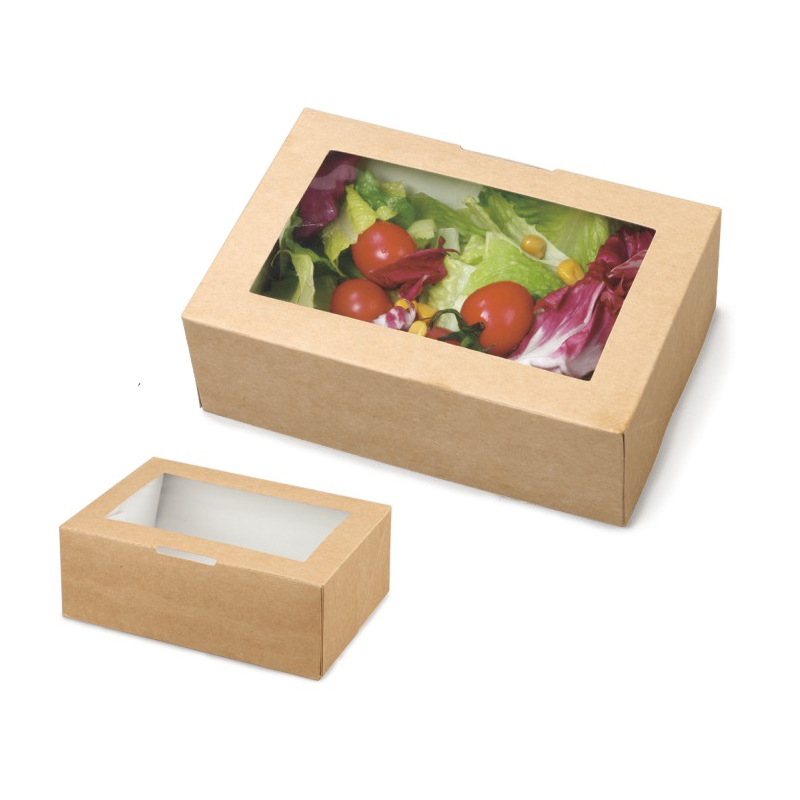 Kraft Paper Salad Box with PLA WindowA kraft paperboard food box paired with a PLA compostable window, offered in round and rectangular combo packs. It illustrates how fiber and bio-based lining can stay within the compostable certification stream.View Product →
Bagasse, the fibrous residue left after sugarcane pressing, is another strong candidate for soup cups and bowls because it handles hot, wet food without a plastic laminate. Certified paper straws, including versions reinforced with bamboo or wood fiber, round out the compostable assortment for drinks service.
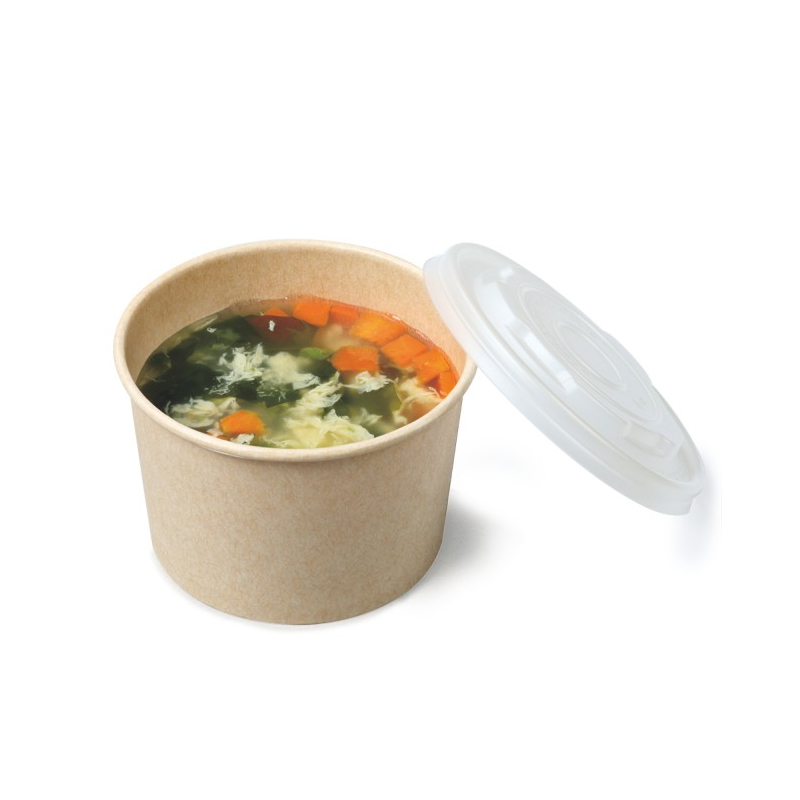 Bagasse Paper Soup Cup with Matching LidsSugarcane bagasse soup cups in round and rectangular sizes from 17 to 50 oz. Bagasse handles hot, wet foods without plastic lamination, making these cups practical compostable choices for soup service.View Product →
 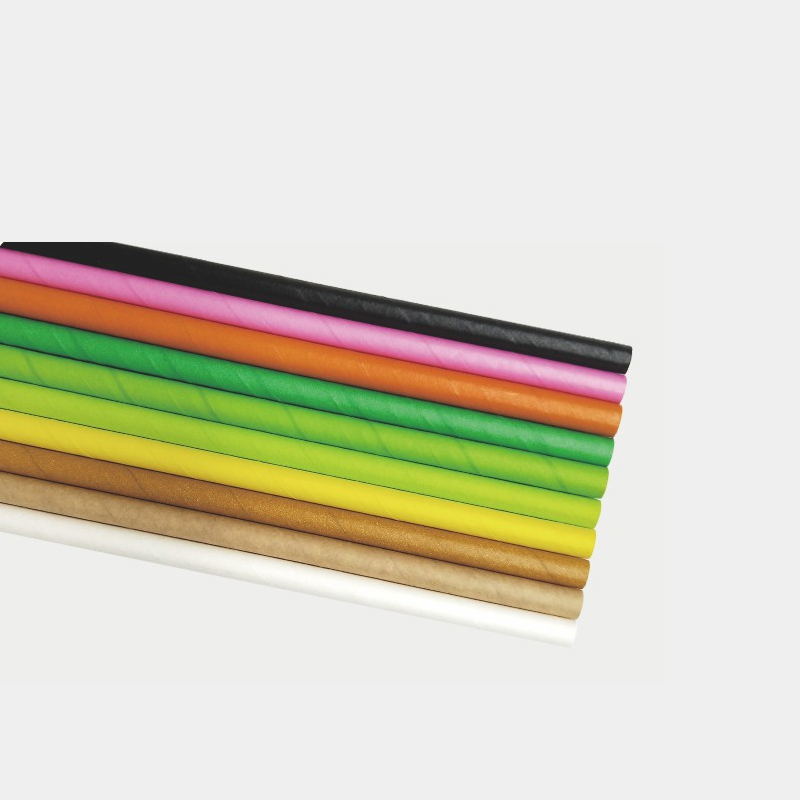 Bamboo and Wood Fiber Paper Straws in Solid ColorsCertified paper straws reinforced with bamboo or wood fiber, available in solid colors. These straws complete a compostable drinks service lineup, adding durability while remaining plastic-free.View Product →
Honesty in planning matters too: PET cold cups and conventional polypropylene containers are not compostable and should never be presented that way - they belong to the recycling stream, which is a different end-of-life story. A credible supplier separates the two waste streams instead of blurring them, and as a manufacturer we keep both lines precisely so customers can match each product to the disposal system they actually have. We track these material choices on our sustainable packaging page.
- Paper fibers 82%
- PLA lining and window 14%
- Inks and adhesives 4%
Illustrative weight composition of a PLA-lined paper food box - every layer falls inside the certification scope.
How to Verify a Supplier's EN 13432 Claim
Certificate checking takes fifteen minutes and prevents expensive mistakes. Work through this list before awarding the contract:
- Ask for the certificate number and the issuing body - commonly DIN CERTCO or TÜV Austria - and look it up in the certifier's public database rather than accepting a PDF at face value.
- Confirm the certificate holder is the actual manufacturer, and that your specific models and sizes appear in the scope.
- Check that the scope covers every component: base, lid, window film, printing ink and adhesive.
- Ask whether testing was performed on the finished product with its final lamination and printing, since design changes after testing can break conformity.
- Note the validity period and ask how re-certification is handled when raw materials change.
- If you plan to print a certification logo on the packaging, confirm the supplier holds the corresponding logo license and that your artwork use is permitted.
A manufacturer with its own tooling and production - rather than a pure trader - can usually answer these questions faster, because the person managing your project sits closer to the materials and the test reports.
EN 13432 in Context: Other Compostability Standards
EN 13432 is the European reference, but global buyers meet two neighboring schemes. ASTM D6400 covers the North American market with closely aligned industrial thresholds. Home composting standards, such as EN 17427 in Europe, apply milder ambient conditions and longer timelines, so a home-compostable product is a stricter claim than an industrially compostable one - not the other way round. Claims about marine or soil degradation sit on entirely separate test schemes and should never be mixed into a compostability conversation.
| Standard | Market | Composting environment | Headline thresholds |
|---|---|---|---|
| EN 13432 | Europe | Industrial, around 58 °C | ≥90% biodegradation in 180 days; ≤10% disintegration residue at 12 weeks |
| ASTM D6400 | North America | Industrial | Closely aligned: ≥90% biodegradation in 180 days |
| EN 17427 | Europe | Home composting, ambient temperatures | Longer timelines under milder conditions |
Frequently Asked Questions
Does EN 13432 mean the packaging will break down in my garden or in the sea?
No. The standard describes industrial composting at roughly 58 °C with managed humidity and aeration. Home composting is covered by separate schemes with milder, longer cycles, and marine degradation is a different topic altogether.
How long does certification take?
The biodegradation test alone runs for 180 days, so from sample submission to issued certificate, plan for roughly six to twelve months, plus time for logo licensing. Build this lead time into any launch that depends on a compostability claim.
Is kraft paper automatically compostable?
No. The fiber itself biodegrades, but grease barriers, lamination, inks and adhesives decide the outcome of the finished item. Certification attaches to the complete construction, not to the word "kraft".
Can I pair a compostable box with a conventional plastic lid?
Not if the unit is to be sold as compostable. Every component must comply, which is why certified lines pair PLA or fiber lids with compostable bases - and why the certificate scope should list the lid explicitly.
Bottom line: EN 13432 is what turns "compostable" from an adjective into auditable evidence, and the buyer who checks the certificate scope - holder, models, components, validity - is the one who never has to retract a claim. If you are building a fiber-based assortment of boxes, cups and straws, work with a manufacturer that understands both the plastic and paper worlds and can tell you honestly which product belongs in which waste stream. You are welcome to request a quote and ask for the documentation behind any specific model - the answer you get will tell you a lot about the supplier.
Related Products


We are very glad that you came to JIEYU to purchase or customize, and we are confident to provide you with quality products and services.

We are committed to developing innovative, reliable, economical, and environmentally friendly disposable and reusable food service products for our customers.

No.199 Liansheng Road, Coast Business Center, Yinzhou District, Ningbo, Zhejiang, China

+86-18106622299

jay@jieyuplast.com
