
 English
 中文简体


Plastic Container Ice Cream Guide: Sizes, Lids and Freezer Performance
Nov 06, 2026
Content
A tub of ice cream leaves the freezer at around −18 °C and lands in a customer's hand a few minutes later. Whatever container you pick has to survive both moments: the cold, and the drop into a bag. That is the order we work in when a scoop shop or dessert brand asks about plastic container ice cream packaging — shape and printing come after the temperature question.
The practical answer up front: food-grade PP round bowls in 8oz, 12oz, 16oz and 24oz will cover most scoop-shop and takeaway menus, and the 16oz (473 ml) size does most of the work. Add tamper-evident lids for delivery, keep PET for cold drinks rather than frozen stock, and treat paper ice cream cups as a single-serve or brand-led option rather than a blanket replacement.
What follows is the sizing, material and ordering detail that decides whether a production run performs inside a real freezer instead of inside a sample bag.
Size Comes From the Scoop, Not From the Shelf
Most sizing mistakes come from copying a competitor's tub instead of measuring your own scoop. A 16oz container is the familiar pint, yet the fill weight behind it swings widely, because ice cream carries air. At 100% overrun a 473 ml tub holds roughly 280–350 g, while a dense gelato can push past 400 g in the same volume.
Two checks save a lot of reordering. First, weigh ten real scoops on the scale you use at the counter rather than trusting the label. Second, leave 10–15 mm of headspace below the rim; it keeps product off the sealing ledge, prevents smear under the lid print, and stops the lid from tenting on an overfilled tub.
| Nominal size | Typical fill | Menu fit | What to watch |
|---|---|---|---|
| 8oz (227 ml) | 120–160 g | Kids' scoop, tasting flight, delivery add-on | Wide rim relative to volume; check scoop reach |
| 12oz | 180–240 g | Single scoop with toppings | Good bridge size, often skipped for no reason |
| 16oz (473 ml) | 280–350 g | The pint, retail and take-home | Largest choice of lid styles; test stack height |
| 24oz | 400–520 g | Sharing tub, family takeaway | Lid depth on filled tubs; freezer shelf clearance |
| 36oz | 600–780 g | Catering, party packs | Scoop reach at the bottom; nesting release force |
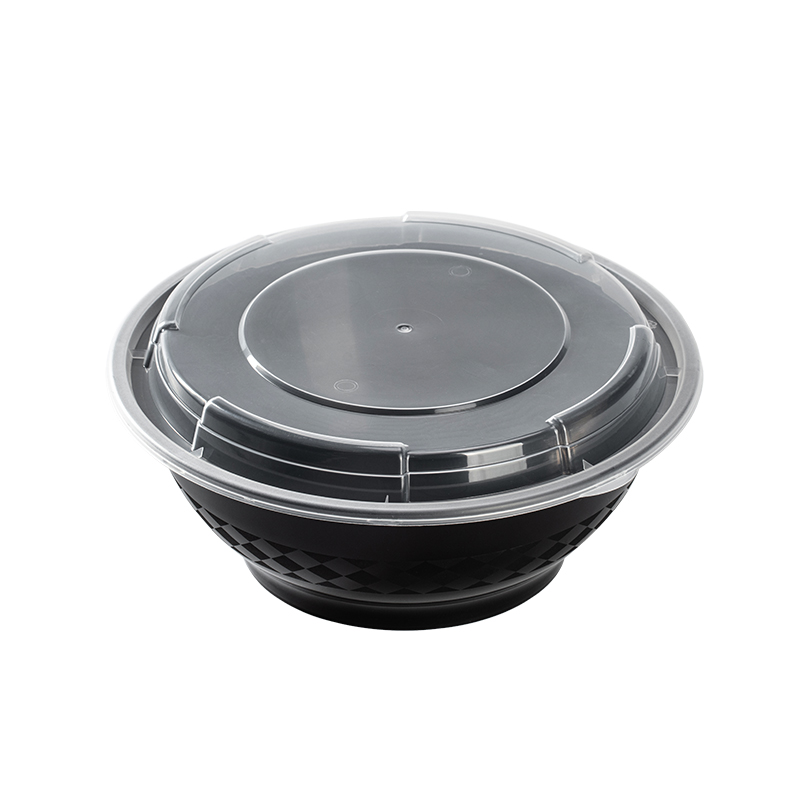
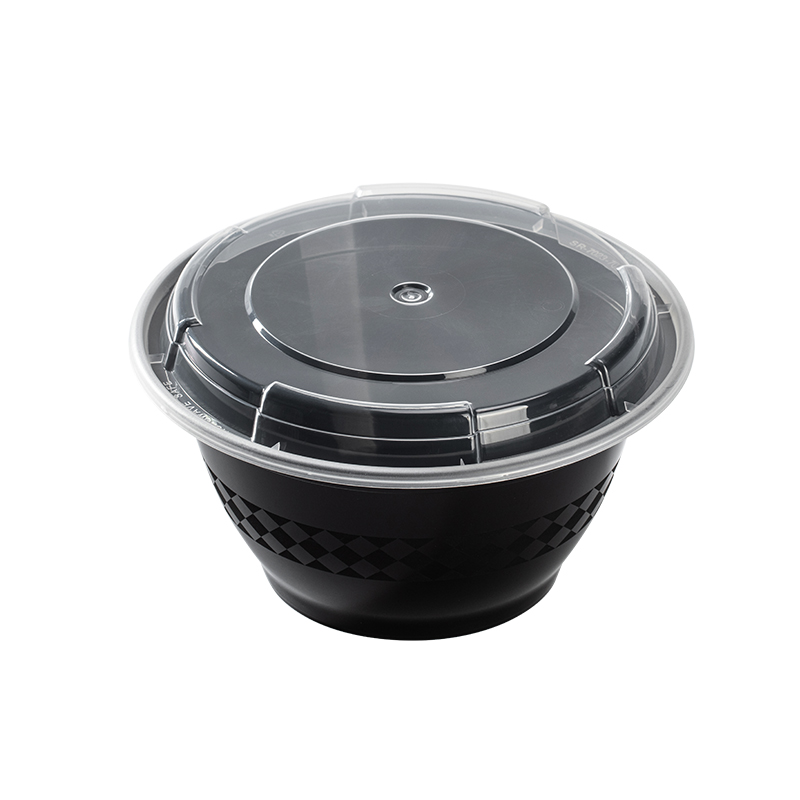
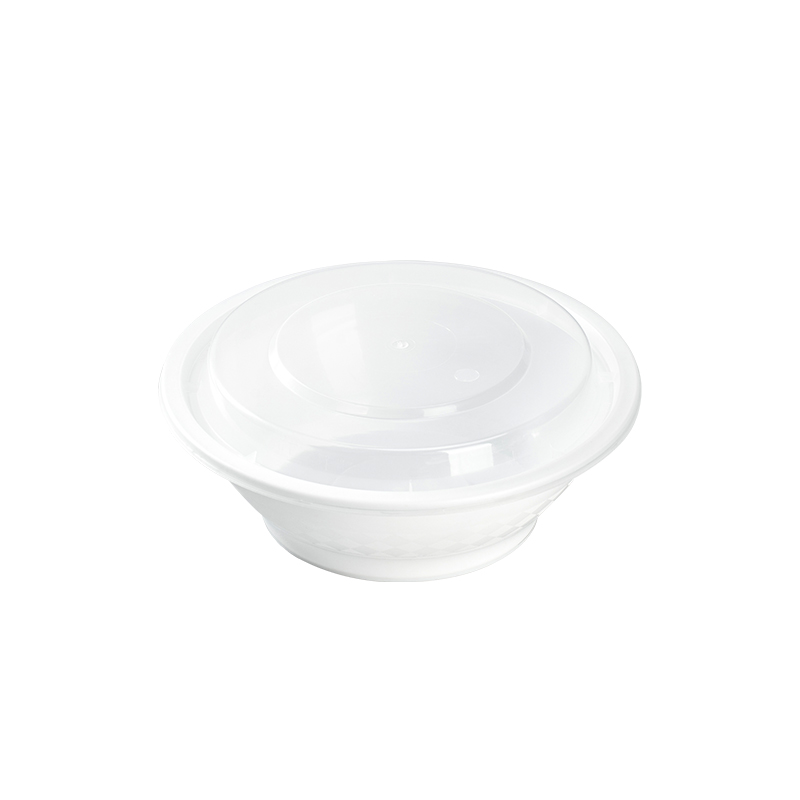 16oz Round Bowl B16 Plastic Food ContainerB16 500 ml round bowl measures 50 × 157 × 93 mm and packs 150 sets per carton, bridging smaller scoops and larger sharing tubs.View Product →
If your menu spans a kids' scoop and a sharing tub, run two sizes instead of one compromise size. A single middle size tends to look small for take-home orders and generous for add-ons, and you end up discounting to move the stock you committed to.
Material and Lid Choices That Change the Result
PP is the default for frozen dessert for one structural reason: it stays flexible at freezer temperature. A PP bowl that takes a knock deforms and recovers. A stiffer material may crack at the rim instead, and the rim is exactly the surface that has to stay sealed.
| Format | Best for | In the freezer | Watch out for |
|---|---|---|---|
| Food-grade PP round bowl | Takeaway scoops, pints, gelato, frozen yoghurt | Stays ductile at −18 °C; dents rather than splits | Thin walls flex and pop the lid on handling |
| Tamper-evident PP | Delivery, retail, dark-kitchen dessert lines | Reliable seal, but the hinge stiffens when cold | Test opening force at −18 °C, not at room temperature |
| PET cold cup | Shakes, sundaes, affogato, toppings bar | Clear and rigid; can craze or crack on frozen impact | Keep for cold service, not frozen storage |
| Paper ice cream cup with PLA lid | Single serve, printed brand cups, events | Paper insulates and reduces the condensation ring | PLA lids are brittle when frozen; handle and stack with care |
Lid fit matters more than lid thickness. A snap-fit lid that seats with an audible click and resists a sideways push protects the product better than a heavier lid that only sits flat. For delivery, weigh the trade-off honestly: a tamper-evident container adds a few seconds per order at packing, and removes a category of complaint entirely.
 Custom Cardboard Ice Cream Cup, Six SizesCustom cardboard ice cream cup available in six models from SR01ICUP3K to SR01ICUP16K, with top diameters from 75 to 105 mm for branded single-serve presentation.View Product →
For a brand-led single serve, a cardboard ice cream cup with a PLA lid prints beautifully and reads as a considered choice to customers. It is a different product decision from a PP pint, though — not a like-for-like swap.
What Fails First in a Working Freezer
Field complaints follow a predictable order: rim cracks, lid hinge splits, condensation ruins the print, and tubs deform under stacking load. None of these need a laboratory to catch — a domestic chest freezer and a hard floor will do.
- Fill and lid the container as your team actually does it, not as the drawing suggests.
- Freeze at −18 °C for 24 hours, then drop from 1.2 m, once lid-down and once on a corner.
- Open and close the lid ten times cold, then look for stress whitening around the hinge.
- Stack four filled tubs and leave them for a week to check creep and lid seating.
- Nest twenty empty bowls and pull one out; excessive release force slows every packer.
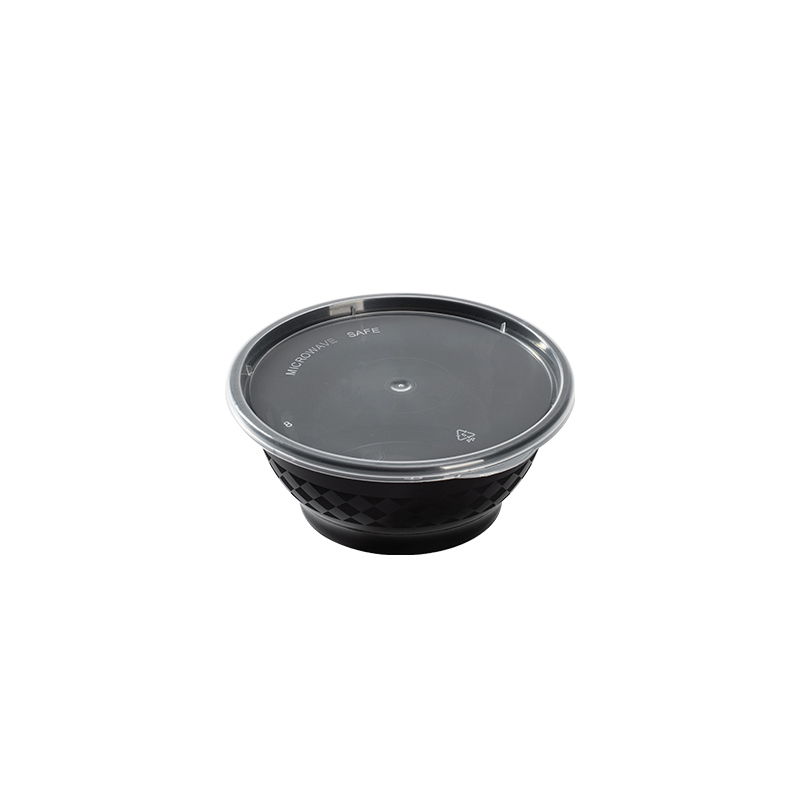 B08 8oz Round Plastic Food Bowl8 oz round bowl B08 holds 250 ml and measures 46 × 109 × 65 mm, packed 240 sets per carton for single-serve tub testing.View Product →
Single-serve tubs deserve their own test, because customers eat straight from them. An 8oz bowl with a wide mouth and a rounded inner rim is easier to scoop clean than a narrow one, and the difference shows up in reviews long before it shows up in a spec sheet.
Cost, Minimums and the Checks Worth Doing
Per-unit price hides two variables: gram weight and packing density. Two bowls with the same nominal capacity can differ by several grams of material, which is a real cost across a season — and a real difference in how the rim holds up. Always compare price per piece alongside piece weight and carton count.
- Approve a sample with your own ice cream inside it, frozen and thawed once.
- Confirm print position: a sidewall print is safer than a lid print that can smear at the sealing ledge.
- Ask for carton and pallet quantities, then calculate how many pallets your freezer room can take.
- Place seasonal orders against your peak weeks, not your average week.
If you need a starting point for shapes and capacities, the sample book download lists the sizes and lid options in one file, which is faster than guessing from photos.
The Sustainability Question You Will Be Asked
Customers ask about packaging at the counter, so it pays to have a one-sentence answer. For plastic, the strongest position is mono-material PP, recyclable in stream 5 and easy to explain: one material, one lid, no hidden layer. Mixed-material tubs with a paper sleeve and a plastic window are harder to defend because the customer cannot separate them confidently.
For paper, the same logic applies in reverse: a paper cup with a PLA lid is only credible if the lid is genuinely matched to the cup and the disposal route is realistic in your market. Our sustainability overview covers the material options we work with, including bagasse, kraft board and PLA.
Quick Answers to Common Buying Questions
Is PP safe for ice cream?
Food-grade PP is BPA-free and stable at freezer temperature, which is why it is the standard choice for frozen dessert. Ask for the food-contact documentation that applies in your market rather than relying on the material name alone.
Is a 16oz tub actually a pint?
By volume, yes — 473 ml. By weight, no: the same tub can hold anything from about 280 g to over 400 g depending on overrun. Label by volume if you want to avoid reformulating your pack copy when your recipe changes.
Can I fill the containers while the product is still warm?
It is better to cool first. Warm product softens the container wall, raises condensation inside the lid, and increases the chance of warping once the tub hits the freezer.
Do tamper-evident containers work below −18 °C?
They do, but opening force rises noticeably when cold. Test the exact lid and bowl combination at freezer temperature with staff who will actually open it during service.
Choosing a plastic container for ice cream comes down to four numbers and one test: fill weight in grams, headspace in millimetres, piece weight, and carton count — then a 24-hour freeze and a 1.2 m drop. Get those right and the container disappears into the background, which is exactly what packaging should do.
Share:
Related Products

We are very glad that you came to JIEYU to purchase or customize, and we are confident to provide you with quality products and services.

We are committed to developing innovative, reliable, economical, and environmentally friendly disposable and reusable food service products for our customers.

No.199 Liansheng Road, Coast Business Center, Yinzhou District, Ningbo, Zhejiang, China

+86-18106622299

jay@jieyuplast.com
