
 English
 中文简体


plastic container sizes: Applications, Selection Criteria, and Practical Guidance
Nov 13, 2026
Content
- 1 What the Ounce Rating on a Plastic Container Really Means
- 2 The Size Bands Foodservice Operators Actually Work With
- 3 Shape Changes Capacity More Than the Label Suggests
- 4 What Compartment Counts Do to Usable Volume
- 5 Lids Decide Your Real Size Range
- 6 Cup Sizes Work on a Different Axis
- 7 A Practical Method for Sizing a Menu
- 8 Frequently Asked Questions
A kitchen manager orders a case of "16 oz" plastic containers from one supplier, then a second case from another for a weekend promotion. Filled to the same level, the second case holds visibly less food. The lids from the first case do not fit the second. Nothing on either invoice is technically wrong.
The short answer: the ounce figure printed on a plastic container is a nominal capacity, not a laboratory measurement. It usually describes a fill line below the rim, it shifts when the shape changes, and it means nothing at all about lid compatibility. Buyers who size a menu by label alone tend to over-portion large trays, under-fill small cups, and discover the mismatch after the labels are printed and the menu is priced.
What the Ounce Rating on a Plastic Container Really Means
There are three different numbers hiding behind one label, and they rarely match.
- Nominal capacity — the practical fill volume the manufacturer intends, usually measured to a point below the rim so the lid can close without pressing on the food.
- Brim capacity — the volume if you filled the container level to the top edge. This can run noticeably higher than the nominal figure, especially in bowls and ripple-wall designs.
- Content weight — the ounces a deli counter means when it says "an 8 oz tub of potato salad." That is weight, not fluid volume, and dense foods such as rice or pasta salad reach the nominal volume long before they reach the nominal weight.
The practical consequence is headroom. A 16 oz round container loaded with 16 oz of hot curry and sealed immediately will push against the lid, weep at the rim, and lose its shape in the bag. Most operators settle at roughly 80 to 90 percent of nominal capacity for liquid-heavy items and closer to the full figure for dry or cold items that stack flat.
Two further variables matter. High-lid versions of the same base add vertical space for tall items such as a domed salad or a piece of fried chicken, without changing the footprint. And normal production tolerance means two runs from the same mould can differ slightly, so a fill line that works today is worth re-checking when you switch to a new production batch.
The Size Bands Foodservice Operators Actually Work With
Rather than memorising individual SKUs, it helps to think in bands. Most disposable food containers fall into a handful of capacity ranges, and each range answers a specific menu question.
| Capacity band | Typical formats | Menu fit |
|---|---|---|
| 1 oz – 5 oz | Portion cups with lids (PC01–PC05) | Sauces, dressings, dips, samples, condiment kits |
| 8 oz – 12 oz | Round bowls, 12 oz rectangular combos, 12 oz tamper-evident | Sides, soup, small entrées, kids' meals |
| 16 oz – 22 oz | 16 oz and 22 oz round combos, 16 oz rectangular combos | Single-portion entrées, rice bowls, salad bowls |
| 24 oz – 32 oz | 24 oz and 32 oz round or rectangular combos, 32 oz three-compartment trays | Entrée plus sides, combo meals, grain and poke bowls |
| 38 oz – 48 oz | 38 oz and 48 oz round combos, 48 oz bowl | Sharing portions, family rice and noodles, meal prep |
| 56 oz – 80 oz | 56 oz rectangular combo, 64 oz and 80 oz soup combos | Bulk soup, catering trays, batch sauces |
| 96 oz – 190 oz | 96 oz and 128 oz tamper-evident combos, 190 oz storage box | Back-of-house storage, bulk prep, large-format delivery |
Shape Changes Capacity More Than the Label Suggests
The same nominal volume behaves differently depending on geometry, and the choice is usually driven by the bag, not the shelf.
Round containers
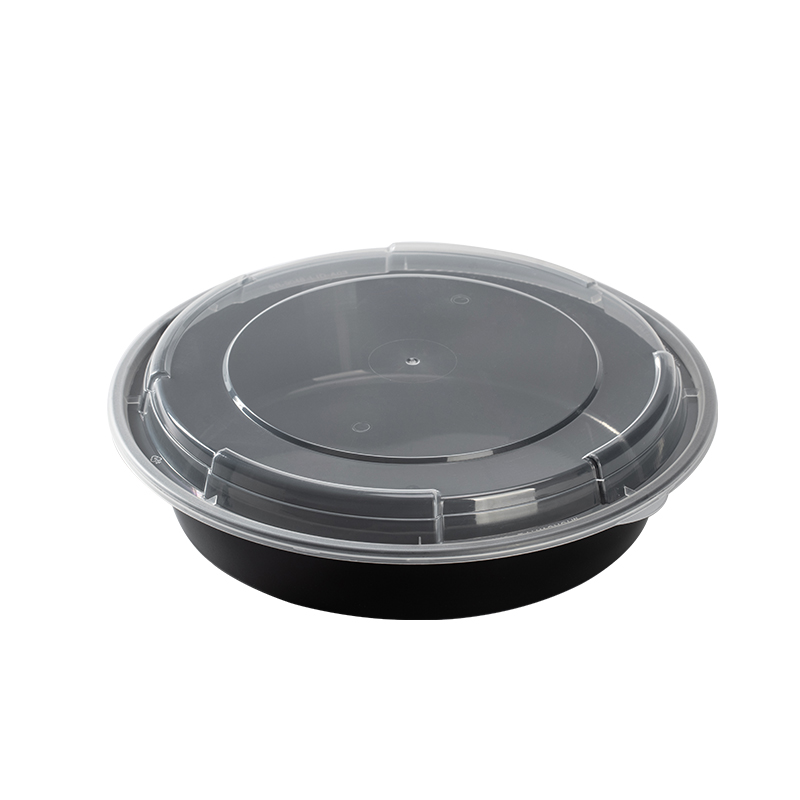
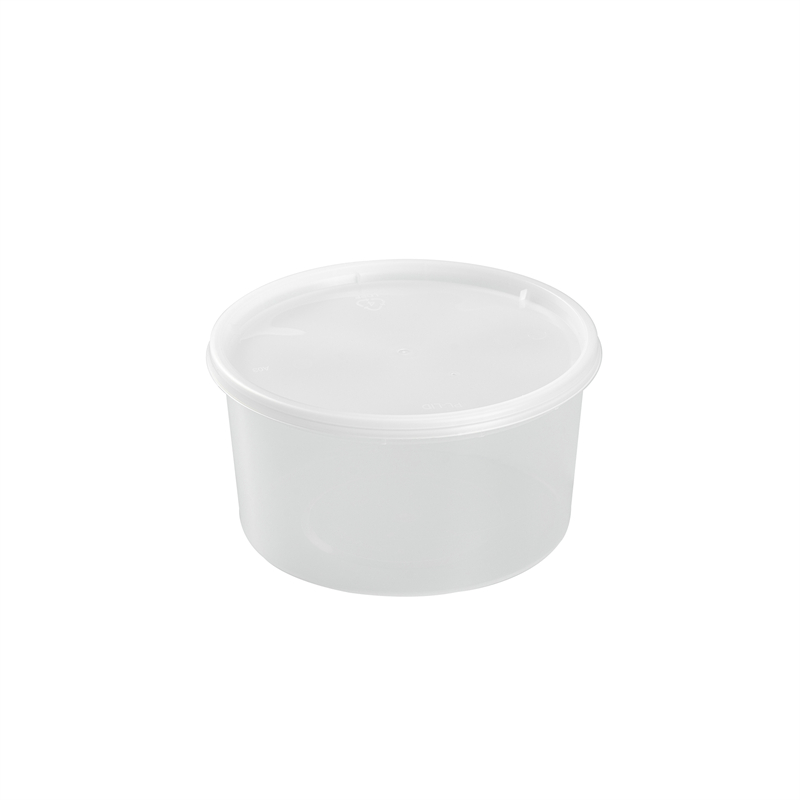
Round combos run from 16 oz up to 48 oz, with bowls in 8, 12, 16, 24 and 36 oz. Round is the safer choice for anything that is stirred, poured or served with a ladle: no corners means no trapped sauce and easier scraping. The trade-off is packing efficiency — a round container leaves dead space in a rectangular delivery bag.
Rectangular containers
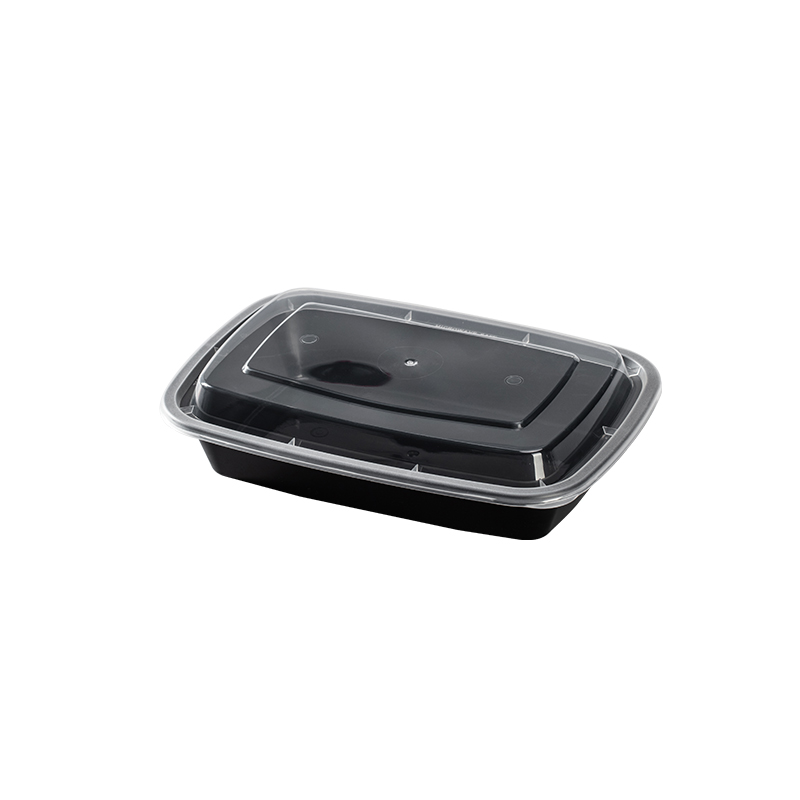
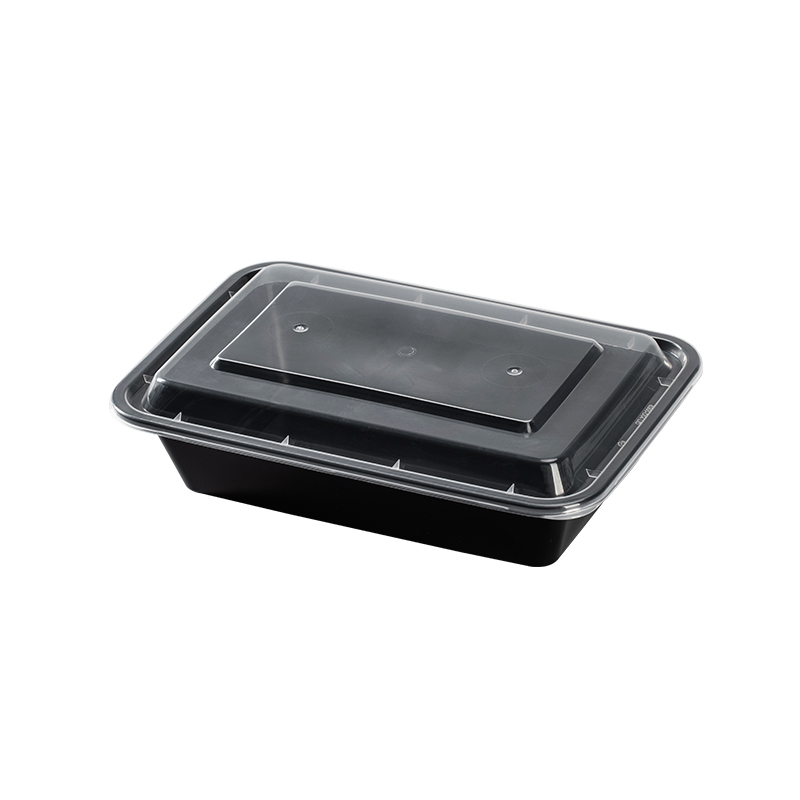
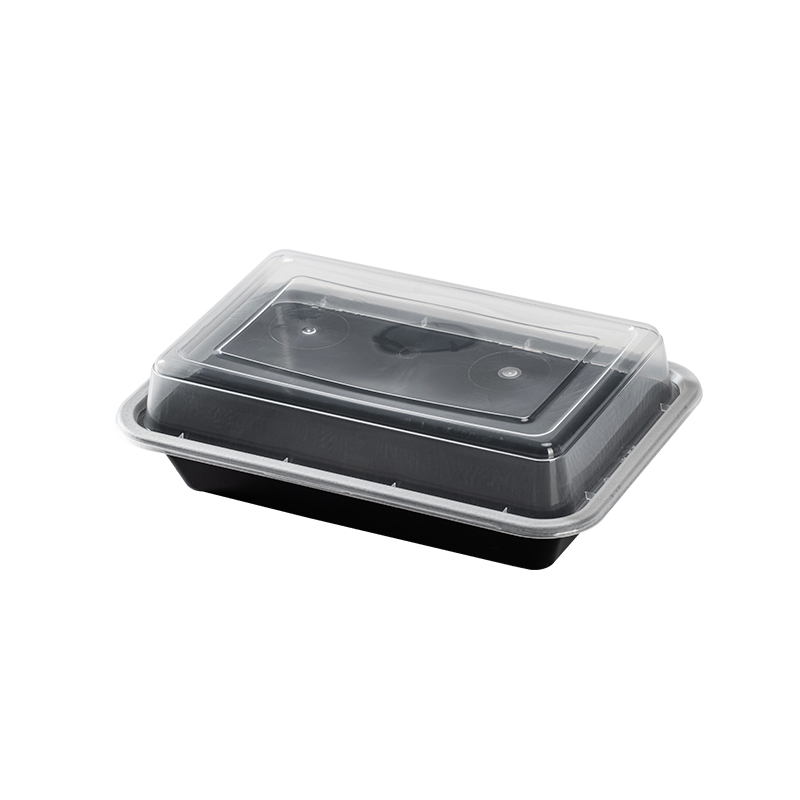
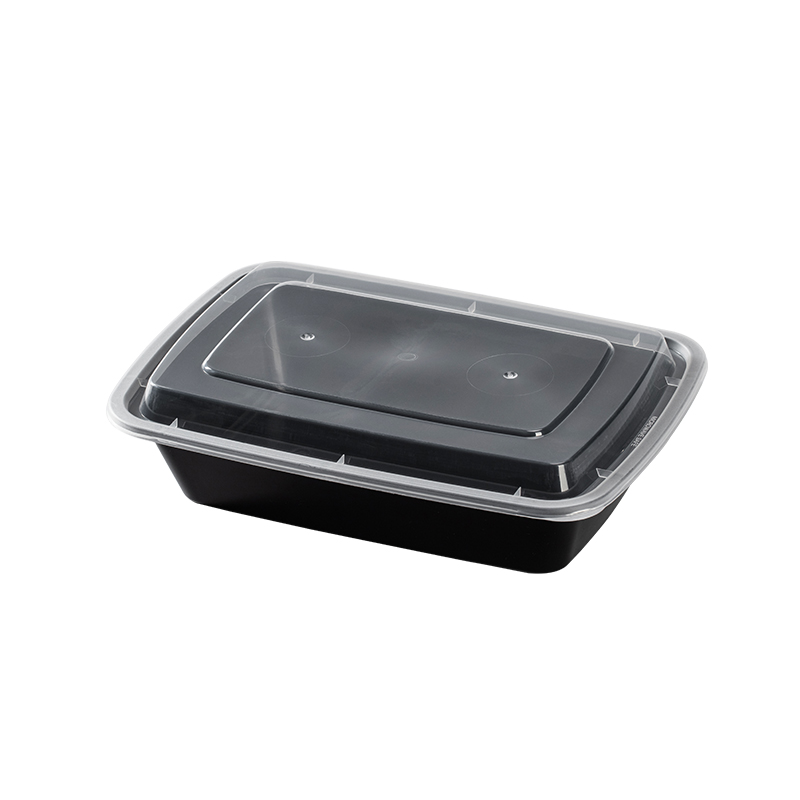
Rectangular combos span 12 oz to 56 oz, plus a 190 oz storage box for back-of-house use. They use the footprint of a bag more completely, stack squarely on a shelf, and present a composed plate better because the food spreads across a flat base rather than piling in the centre.
Oblong and ripple-wall variants
Oblong combos in 24, 28 and 32 oz suit longer items such as a burrito or a fillet. Ripple-wall versions add an insulating air gap for hot food, but the ribs also reduce usable volume slightly, so a 32 oz ripple container can feel smaller than a smooth 32 oz of the same nominal figure.
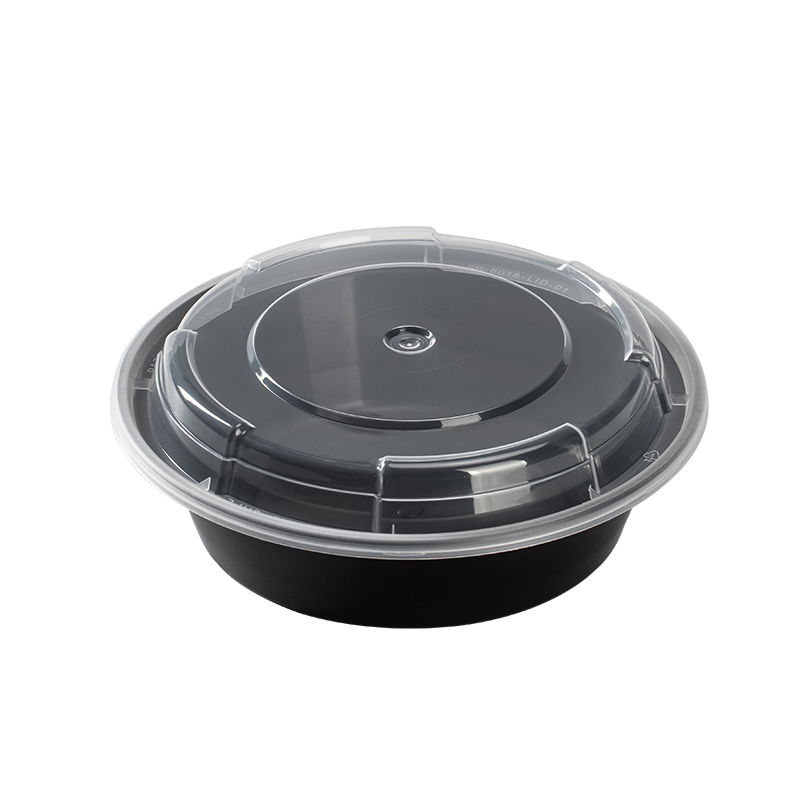 Custom 17 oz Round Combo Pack PL-718A round 17 oz combo pack with 500 ml capacity and 150 sets per carton, useful for comparing smaller container formats.View Product →
What Compartment Counts Do to Usable Volume
Compartment trays quote a total capacity, but the dividers consume a real share of it. A three-compartment 32 oz tray does not give you 32 oz of food — it gives you three smaller wells whose combined volume lands near the nominal figure, minus the walls between them.
Some five-compartment trays are catalogued by per-compartment volumes rather than one total, which is genuinely more useful for costing: it tells you whether the sauce well holds 2 oz or 4 oz before you commit to a menu design.
- Two-compartment (10–28 oz): protein plus rice, or main plus side.
- Three-compartment (24–38 oz): the standard combo-meal layout; the middle well is often the limiting factor.
- Five-compartment: bento-style and kids' sets where several small items must stay separate.
One risk worth flagging: small wells leak between compartments when the tray is tilted. If the sauce is thin, either choose a tray with a tighter divider seal or send the sauce in a separate portion cup.
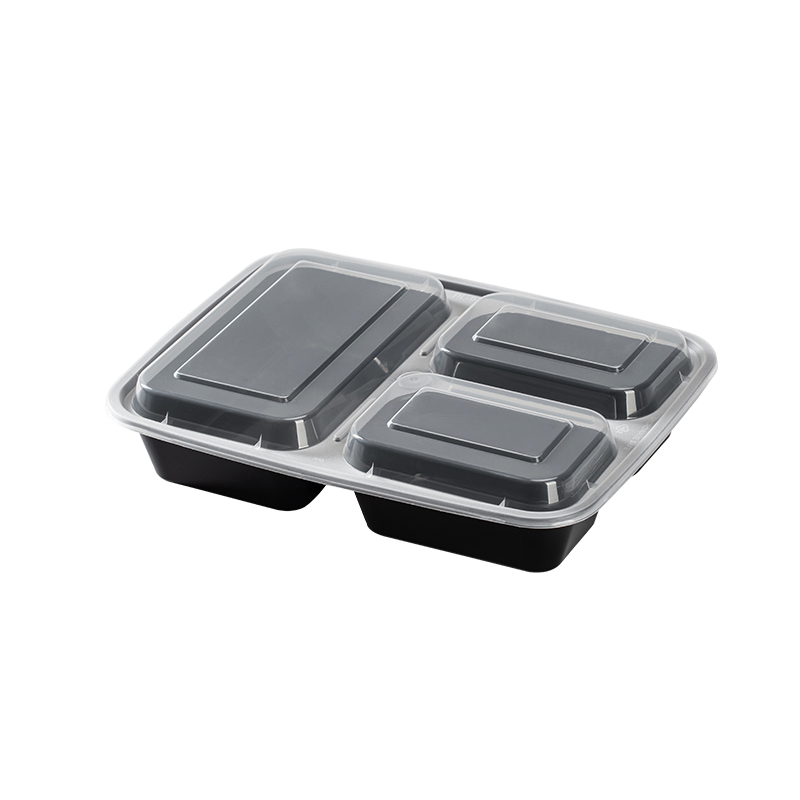 Custom 3-Compartment 8/8/16 oz Rectangular Combo Pack PL-9698A three-compartment rectangular container with 8/8/16 oz wells and 150 sets per carton, suited to keeping foods separated in one tray.View Product →
Lids Decide Your Real Size Range
Lid fit is set by rim diameter, not by capacity. Two containers that both read 16 oz can have different rim diameters, so a lid from one series will not seal the other. When you standardise a menu, standardise by series and diameter, not by ounce figure alone.
Tamper-evident ranges deserve separate planning. They run from 8 oz to 48 oz in round, square and rectangular shapes, with 96 oz and 128 oz combo packs for large-format orders. The tamper band adds a step at the rim, which means these bases only accept their matching lids — worth knowing before a delivery driver discovers it at the door.
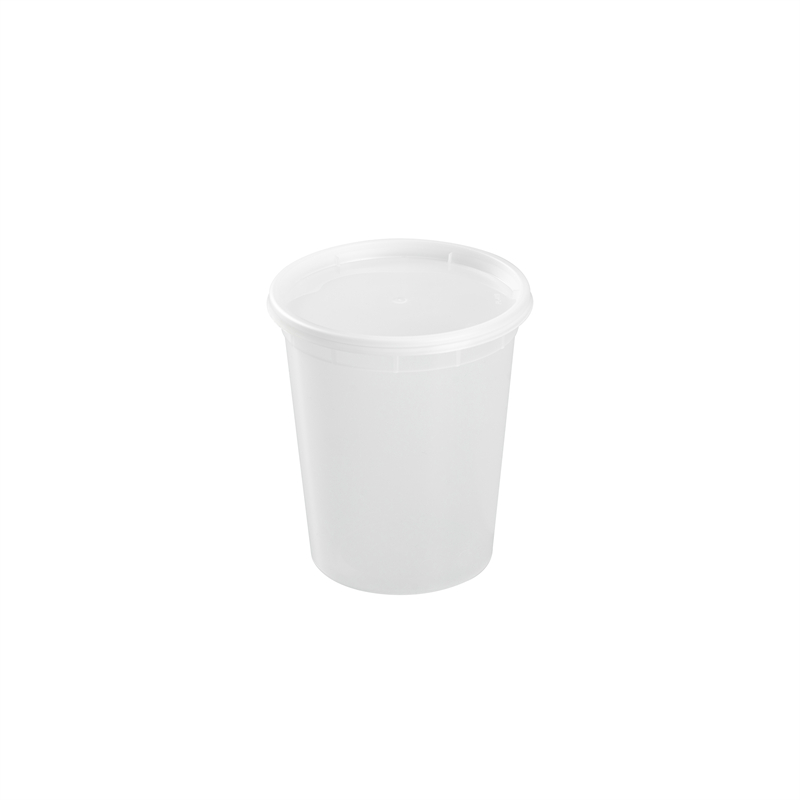
Soup containers follow the same logic: 8, 12, 16, 24, 32, 64 and 80 oz combo packs pair a specific base with a specific lid. Order the combo rather than mixing bases and lids from different sizes, and check whether the lid is flat or vented if the food goes out hot.
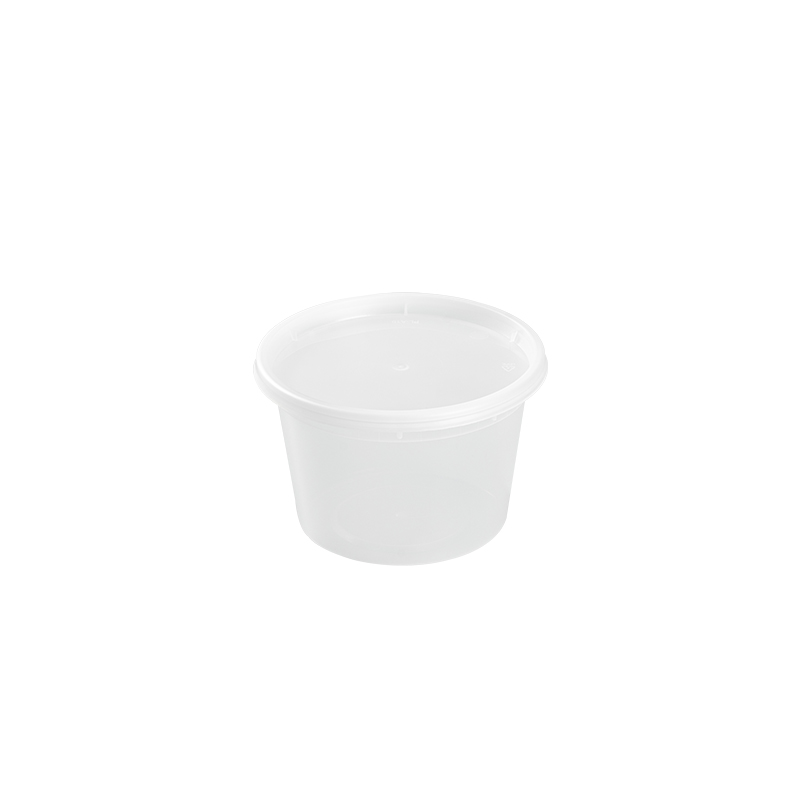 Custom 16 oz Soup Container Combo Pack S16A 500 ml soup container combo pack, model S16, packed 240 sets per carton for volume and lid-fit checks.View Product →
Cup Sizes Work on a Different Axis
Drink cups are sized by capacity and by diameter, and the diameter is what determines whether the cup fits your lids, carriers and cup holders.
PET cold cups are available in 8, 9, 12, 16, 20, 24 and 32 oz, across 96 mm, 98 mm and 117 mm diameters. A 16 oz cup at 96 mm and a 16 oz cup at 117 mm hold the same drink but take different lids and sit differently in a four-cup carrier — a small detail that becomes an operational problem at peak hours. Portion cups with lids cover 1 to 5 oz in 1 oz steps, which is enough granularity to standardise sauce costs per order.
A Practical Method for Sizing a Menu
- Weigh your actual served portion, including sauce and garnish, rather than estimating from the recipe.
- Convert to volume for the wettest component and add 10 to 20 percent headroom for expansion, shaking and lid clearance.
- Pick the shape first — round for liquids and stirring, rectangular for composed plates and bag efficiency.
- Confirm the lid series and rim diameter before committing to a base size.
- Fill-test physical samples with real food, including a 20-minute delivery run, before printing labels or setting menu prices.
Most operators end up with four to six sizes covering the whole menu rather than a dozen near-duplicates. Our product selection guide walks through matching format to dish type. Physical samples remain the only reliable confirmation, since a fill test on your own food settles questions that no catalogue page can.
Frequently Asked Questions
Is a 16 oz container actually 16 oz?
Usually it is close to 16 oz to the intended fill line, with brim capacity running higher. Dense or hot food will reach the nominal volume before it reaches the nominal weight, so treat the number as a starting point and verify by filling.
Do lids come with the containers?
Often they are sold as combo packs, but not always. Check whether the item number describes a base only or a base-and-lid set, and confirm the lid series matches the base rim diameter.
Can I use the same lid across different sizes?
Only within the same series and rim diameter. Capacity and rim size are independent, so a lid that fits one 24 oz container may not fit another 24 oz container from a different range.
What is the difference between a soup container and a round container?
Soup containers are built around liquid containment — taller wall, tighter lid, sizes extending to 64 and 80 oz. Round combos are more general purpose for rice, noodles and composed bowls, and top out around 48 oz.
Container sizing is one of those decisions that looks trivial on a purchase order and shows up later in food cost, leak complaints and delivery complaints. Settle the fill line, the shape and the lid series together, and the ounce figure on the label becomes a useful reference rather than a source of surprises.
Zhejiang Jie Yu Plastic Products Co., Ltd has been producing disposable food packaging since 2010, with in-house mould development across round, rectangular, compartment, tamper-evident, soup and portion-cup formats. To discuss a size range against your menu, get in touch with the team and request samples for a fill test.
Share:
Related Products
We are very glad that you came to JIEYU to purchase or customize, and we are confident to provide you with quality products and services.

We are committed to developing innovative, reliable, economical, and environmentally friendly disposable and reusable food service products for our customers.

No.199 Liansheng Road, Coast Business Center, Yinzhou District, Ningbo, Zhejiang, China

+86-18106622299

jay@jieyuplast.com
