
 English
 中文简体


Plastic Takeout Containers: Specs, Shapes and Leak Testing for Food Service
Nov 20, 2026
Content
- 1 Six specs that matter more than the size printed on the carton
- 2 Round, rectangular, or compartmented: choose the shape from the dish
- 3 Leaks start at the lid, so test the lid
- 4 PP, PET, or paper: material follows temperature
- 5 Tamper-evident containers for third-party delivery
- 6 Quote the cost per delivered order, not per container
- 7 Recyclability is decided by material choice, not by a label
- 8 Frequently asked questions
Two things decide whether a plastic takeout container survives the trip to a customer's door: how the lid engages the rim, and how the base behaves under heat, weight and time. Capacity is the spec buyers compare first and the one that explains the least. A container rated 32 oz is measured to the rim, and at a safe fill line it may carry 26 to 28 oz of food; two molds with the same nominal size can still differ by enough to decide whether a curry arrives intact or leaves a stripe of sauce across the bag.
So the practical order is to describe the dish first and choose the container second. Dish weight, sauce volume, holding temperature, delivery time, stacking inside the bag, and how quickly the guest opens the lid are all part of the container specification. The sections below work through each decision in the order we would apply it with a food service buyer.
Six specs that matter more than the size printed on the carton
Before comparing quotes, write down these six values for the worst dish on the menu rather than the average one. Most container failures trace back to a spec that was never written down, not to a supplier who could not meet it.
- Usable capacity. Measure at a safe fill line, typically 80 to 85 percent of nominal volume. A 24 oz round bowl that reliably carries 20 oz of stew is the real specification.
- Rim geometry. Lid fit is a mold question. Ask whether the lid was developed for that specific container mold and whether the supplier holds both tooling sets, because a lid from a different family will look right and behave badly.
- Wall thickness and load. A thin wall can pass a single-dish test and still bow when a bag of drinks is stacked on top. Check base rigidity and the corner radius on rectangular items, where stress concentrates.
- Temperature range. Polypropylene handles hot fills and reheating. PET is a cold-contact material and softens when hot food, hot sauce or a warming lamp is involved.
- Closure type. Snap-fit, press-fit with a tamper tab, or hinged. Each changes opening effort, reseal behaviour, and whether a guest can tell the container was opened before it reached them.
- Nesting and freight density. Units per carton and cartons per pallet matter, because on high-volume programs the freight line often costs more than the price gap between two suppliers.
Once those six values exist, price comparison becomes meaningful. Without them, two quotes that look different are usually answering two different questions.
Round, rectangular, or compartmented: choose the shape from the dish
Shape is a menu decision before it is a price decision. Round containers suit gravies and noodles because there is no corner for sauce to collect and reheat unevenly. Rectangular containers win on bag and shelf efficiency. Compartment trays exist because guests dislike mixed food more than they dislike a larger footprint.
| Format | Best suited to | Common capacity range | Practical strength | Watch out for |
|---|---|---|---|---|
| Round bowl or round container | Soups, stews, noodles, rice bowls | 8 oz to 48 oz | Even heat, easy stirring, strong rim | Taller stack height in the bag |
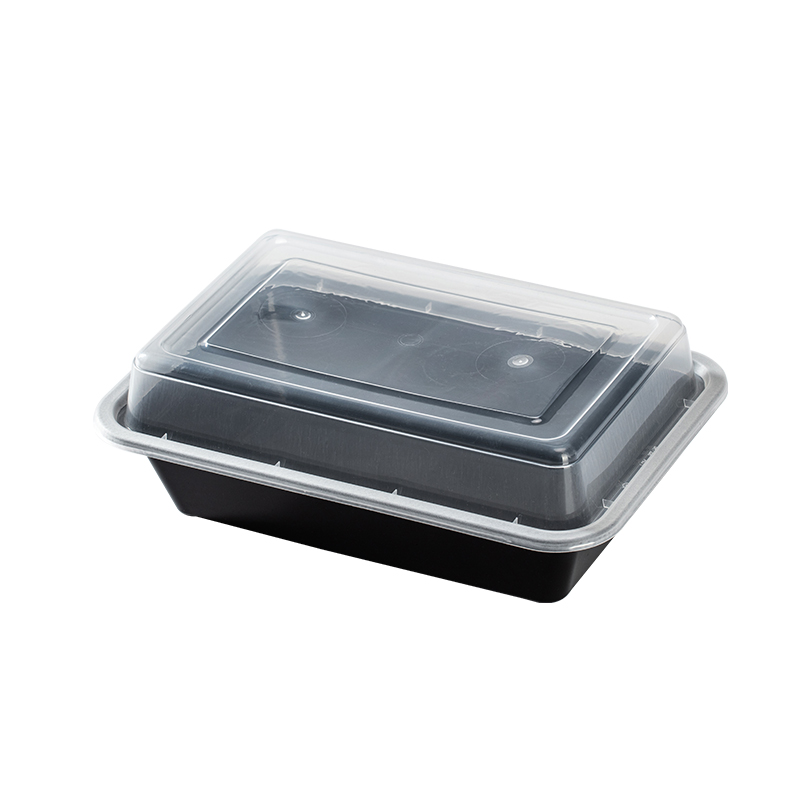
| Rectangular container | Rice with protein, bento sets, pasta, family portions | 12 oz to 56 oz, plus a 190 oz storage box | Bag efficiency and a flat surface for labels | Corners concentrate leaks if the seal is weak |
| Compartment container | Combo plates, kids meals, multi-item sets | 2, 3 or 5 sections, roughly 8 oz to 39 oz | Keeps textures and sauces separate | Less usable volume per section |
| Portion cup | Sauces, dressings, condiments, samples | 1 oz to 5 oz with lids | Precise portion control at low unit cost | Easy to overfill; needs a level surface |
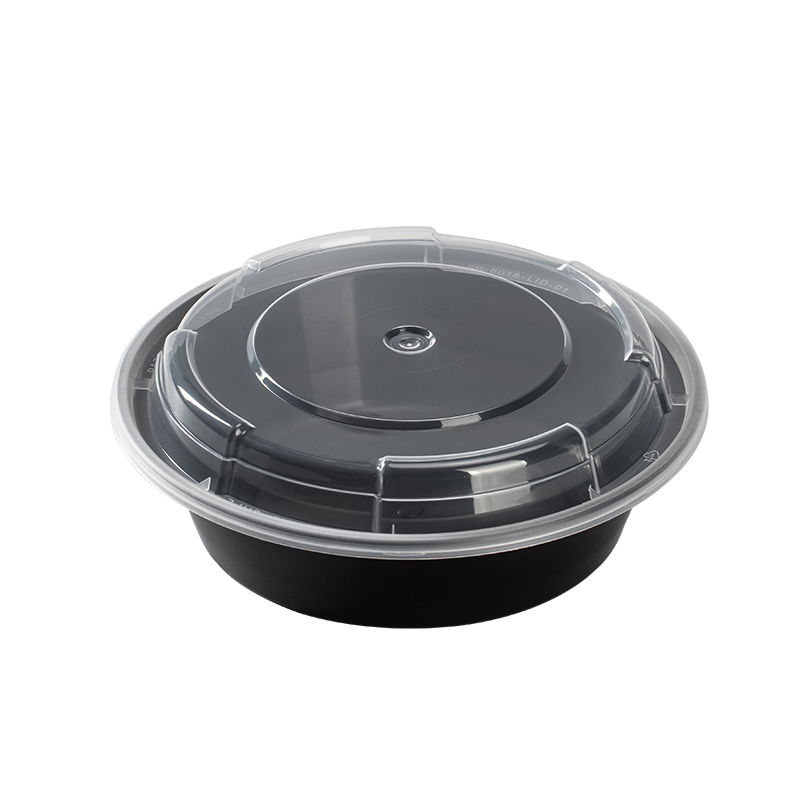
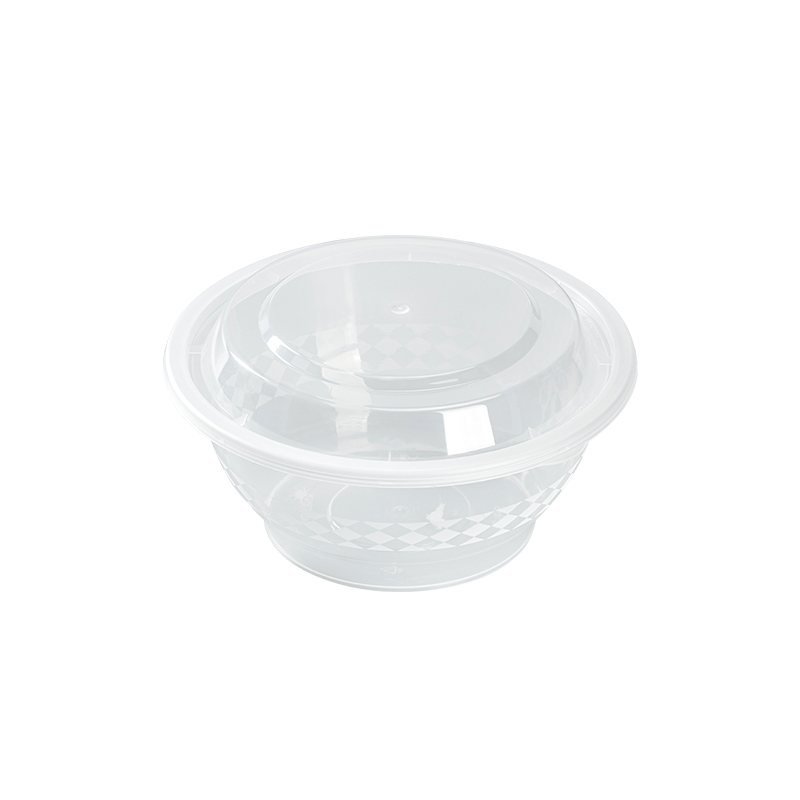 24oz Round Bowl B24 Plastic Food Container750ml round bowl, model B24, part of the round container range for sauces, noodles and other menu items.View Product →
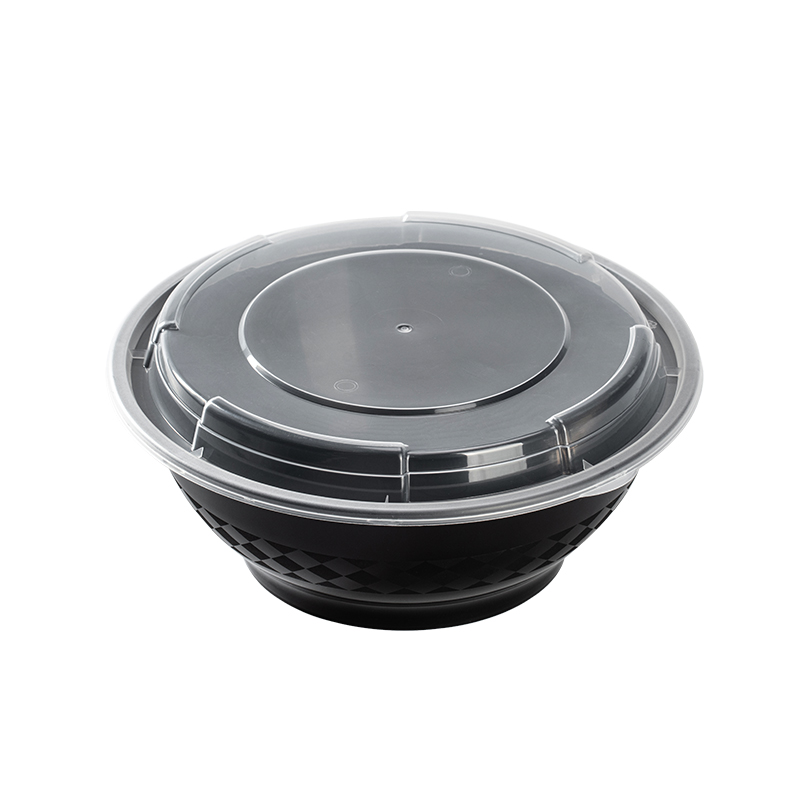
The round range covers 8 oz, 12 oz, 16 oz, 24 oz and 36 oz bowls alongside 16 oz to 48 oz combo packs, including ripple versions that give gloved hands a better grip. Rectangular is the broader family: 12 oz through 56 oz combo packs, oblong and high-lid variants for taller builds, an 8 + 8 + 1 compartment model, a chicken roaster container, and the 190 oz storage box for bulk cold prep.
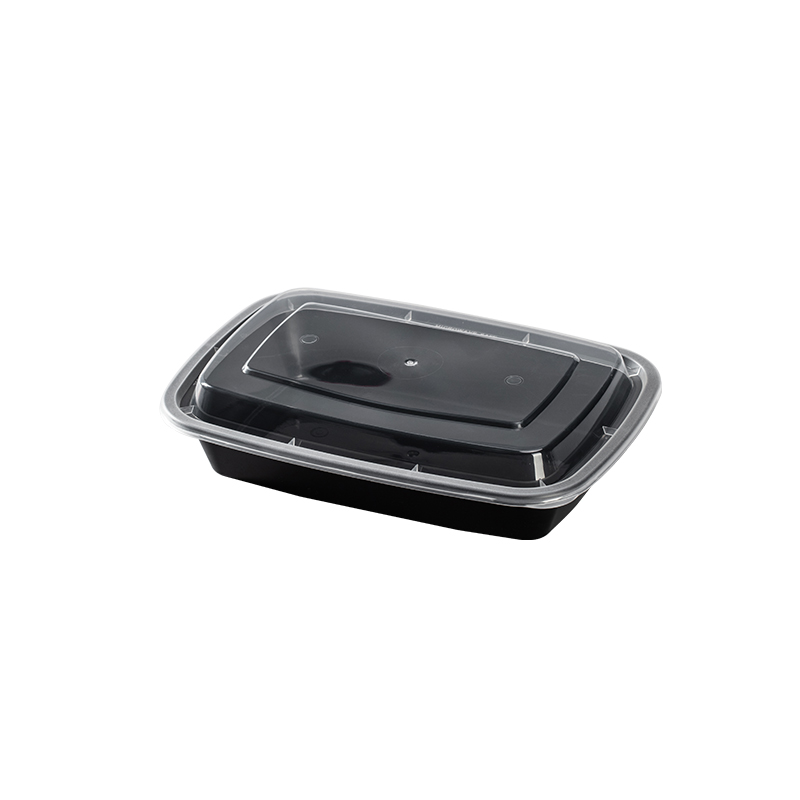
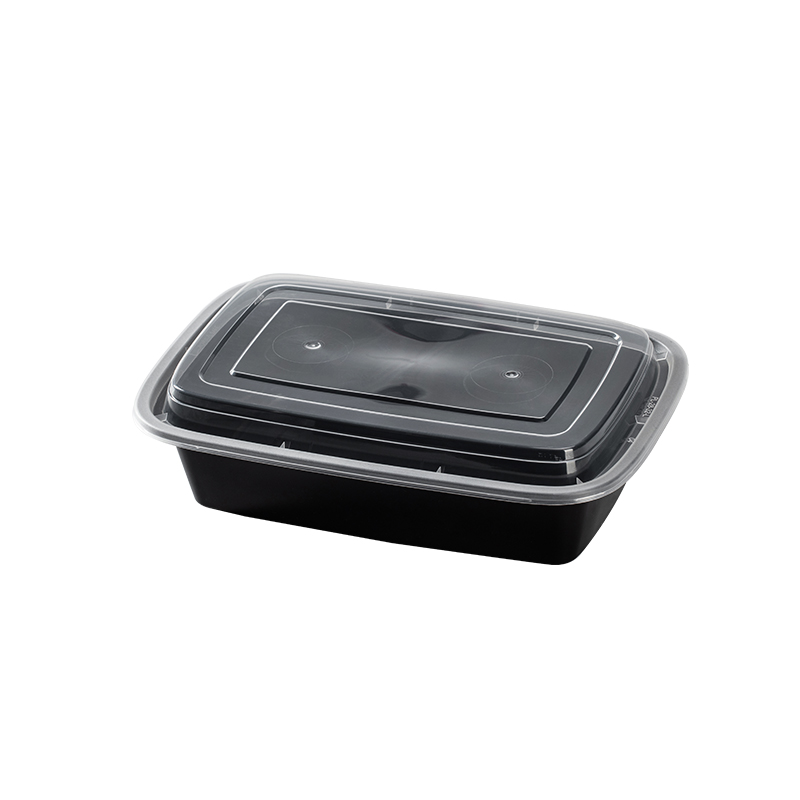 34oz Rectangular Combo Pack PL-88881000ml rectangular combo-pack container, model PL-8888, supplied 150 sets per carton within the rectangular range.View Product →
Compartment trays come in 2, 3 and 5 sections across round, rectangular and ripple formats, so a two-item lunch and a five-item platter can share the same lid family. That matters operationally: fewer lid SKUs on the shelf means fewer moments where staff grab the wrong lid during a rush.
Leaks start at the lid, so test the lid
When a delivery bag comes back with sauce in it, the base is rarely at fault. The usual cause is a lid that seated at packing time and lifted twenty minutes later as the food cooled. A five-step check in your own kitchen catches this before a purchase order does.
- Fill to the fill line, not to the rim, using the hottest liquid the menu actually serves.
- Close the lid the way staff close it during service, not the way an engineer closes it in a sample room.
- Invert the container for 60 seconds over a tray and check the seam line, then check the base corners.
- Repeat after 20 minutes of cooling, because a cooling sauce pulls a partial vacuum and can lift a lid that passed while hot.
- Repeat once more with an oil-based sauce or a dish with fine particles, which find gaps that water does not.
Keep the results with the product specification. If a supplier changes a mold, a resin or a lid wall thickness, the container is a new part and the test should run again. Likewise, qualify claims such as microwave-safe against the specific dish and reheat time, not against a general material label.
PP, PET, or paper: material follows temperature
Material choice is mostly a temperature decision, and getting it wrong is the most expensive mistake because it shows up in the guest's hands rather than at goods-in.
- Polypropylene is the default for hot food containers: rigid, resistant to hot fills and suitable for reheating. Round, rectangular, compartment, soup and tamper-evident formats are all commonly produced in PP.
- PET is clear and strong but cold-contact only. It suits cold drinks and desserts, and the standard range spans 8 oz to 32 oz with 96 mm, 98 mm and 117 mm diameters so a chain can keep one lid across several cup sizes.
- Paper and board handle dry or short-contact items, and windowed boxes with PLA or PET film let the product show through. Paper soup cups, salad bowls and square food boxes sit in this group.
A mixed-material assembly is normal, for example a plastic base with a board sleeve, but each element should be checked against the same heat and moisture profile as the dish it carries.
Tamper-evident containers for third-party delivery
Once food leaves the counter, the only proof that nobody opened the bag is the container itself. That is the case for tamper-evident formats: a break tab or locking rim that shows visible damage on arrival and cannot be resealed invisibly.
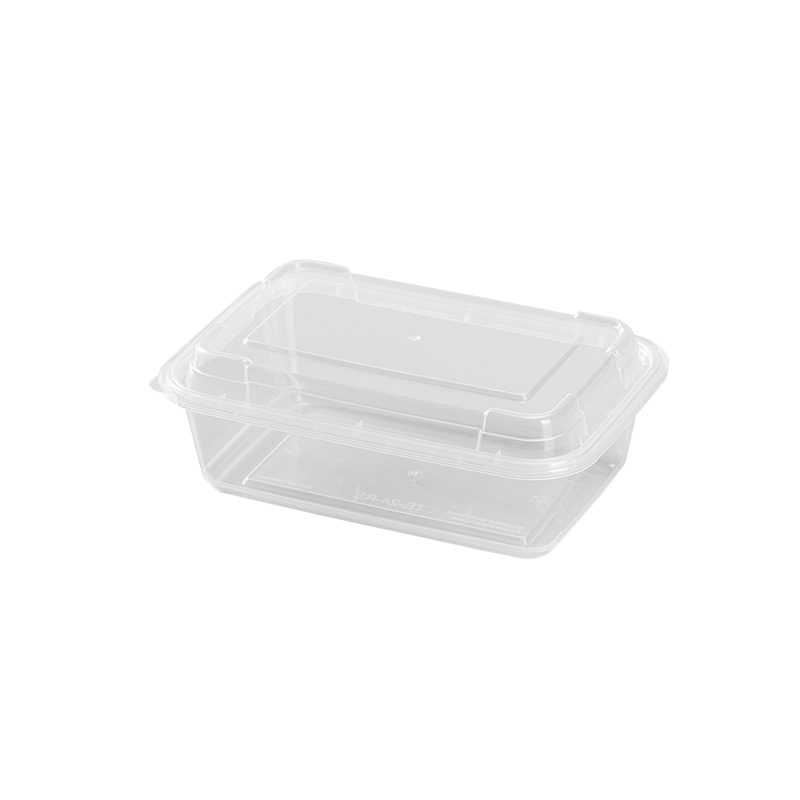 24oz Tamper-Evident Rectangular Container TE-24-RE700ml rectangular tamper-evident container for delivery and takeaway, with visible break-tab proof that packaging has not been opened.View Product →
Tamper-evident stock typically runs from 8 oz to 48 oz in round, square and rectangular shapes, with larger combo packs for bulk items. The trade-off is honest: opening takes more effort, and the container is not designed for reuse. Match the format to the order type, keep the tamper-evident stock for delivery and takeaway, and keep plain snap-lid containers for dine-in and counter service where the guest watches the packing.
Quote the cost per delivered order, not per container
Unit price is the easiest number to negotiate and the least reliable one to budget from. Four cost lines usually move the total more than the per-piece gap between two similar suppliers.
- Breakage and remakes. A cracked lid at the packing station costs the lid, the food and the labour.
- Carton configuration. Units per carton drive how often staff open a new case and how much space the stockroom gives up.
- Nesting ratio. Deeper nesting means more units per pallet and lower inbound freight per container.
- Minimum order quantity and colour. Custom printing or a colour match usually adds a minimum run, so forecast before specifying.
Request physical samples and test them with real dishes before setting a volume commitment. The sample book is a faster first step than a full catalog review: download the sample book and shortlist by shape and capacity, then ask for the specific items your menu needs.
Recyclability is decided by material choice, not by a label
A single-material polypropylene container has a clear route into the number 5 recycling stream. A container built from three bonded materials does not, however it is described on the carton. If end-of-life performance is part of your brief, ask three questions: how many materials are in the finished pack, whether the lid matches the base, and whether any decoration interferes with reprocessing.
Right-sizing is the quieter lever. Moving a dish from a 38 oz to a 32 oz container saves resin on every order and usually improves stacking. Where the dish allows a switch, board formats with PLA windows or bagasse soup cups offer a fibre-forward alternative for dry and short-contact items. More on the company's material approach is available in the sustainability section.
Frequently asked questions
Are plastic takeout containers microwave safe?
Polypropylene containers generally are, for short reheating at moderate power. PET containers are not, and neither are most fibre containers unless the lining is specified for it. Always test with the actual dish, because oil-rich food heats faster than water-based food and can exceed the temperature the material was qualified for.
What is the difference between a standard and a high-lid container?
The base is often identical. A high lid adds headroom for taller builds, toppings or a dome of whipped cream, and it changes the stack height and the carton count on the pallet, so both should be checked together.
How do I choose between 32 oz and 38 oz for the same dish?
Weigh the finished portion including sauce. If it comes to 28 oz, a 32 oz container gives you a comfortable fill line; if staff serve generously, move up one size rather than accepting sauce at the rim. Consistent portioning usually saves more resin than a size downgrade.
Can lids be ordered separately from bases?
Yes for many formats, and it is often the right call for cold applications where a clear lid improves presentation. Keep one lid matched to one base in the storeroom, though, because mixing families is the most common cause of a container that leaks only on busy nights.
Share:
Related Products

We are very glad that you came to JIEYU to purchase or customize, and we are confident to provide you with quality products and services.

We are committed to developing innovative, reliable, economical, and environmentally friendly disposable and reusable food service products for our customers.

No.199 Liansheng Road, Coast Business Center, Yinzhou District, Ningbo, Zhejiang, China

+86-18106622299

jay@jieyuplast.com
