
 English
  中文简体
中文简体


UAE Biodegradable Packaging Requirements: What Food Businesses Must Do in 2026
Oct 09, 2026
Content
A caterer in Dubai placing its first delivery order for January already knows the answer, and it is not a marketing slogan: from 2026 the disposable cups, cutlery and related single-use plastic items that moved through the UAE market for years can no longer be traded as before. The requirement is a purchasing condition. It gets checked at the border, in the warehouse and on the shelf.
The short version is that UAE biodegradable packaging requirements come in three layers. The first is a federal phase-out that removes named single-use plastic items from the market. The second is a material standard that decides whether paper, board, moulded fibre or bioplastic packaging may legally be sold as biodegradable or compostable. The third is a documentation trail that proves both, which is where most first-time importers lose time and money.
What follows walks through those three layers in the order a buyer actually meets them: scope, deadline, material evidence, paperwork, and the supplier questions that separate a compliant item from one that only looks the part.
What the Requirements Actually Cover
The rules do not ban every polymer used in food service. They target named single-use items and the claims made about them. Four groups matter most to restaurants, cloud kitchens, bakeries and hotels:
- Carrier and shopping bags used at the counter, in delivery and for takeaway.
- Cups, lids, plates, cutlery, straws and stirrers.
- Expanded polystyrene and similar foam food containers.
- Takeaway containers and clamshells whose material cannot be recovered or composted.
Two details catch people out. First, the phase-out applies to trade, not only to disposal, so holding old stock is not a defence. Second, "biodegradable" is a regulated claim. A supplier can sell a perfectly ordinary laminated cup and call it eco-friendly in a catalogue, but the evidence you need at customs and with the municipality follows a different standard entirely.
The 2026 Deadline: What Actually Changes
Bags moved first. The federal mandate prohibited the trade of single-use plastic bags, then extended the same treatment to plastic cups and cutlery, with the 2026 date acting as the practical cut-off for food service operators. For a buyer, the sequence matters more than the headline.
| Item group | Stage | What it means for a food business |
|---|---|---|
| Single-use plastic carrier and shopping bags | Phased in first | Kraft paper bags become the default at the counter and in delivery orders |
| Plastic cups, lids, cutlery, plates, straws and stirrers | By January 2026 | Paper cups, moulded fibre and PLA-lined items move from optional to standard specification |
| Foam and other hard-to-recover food containers | Same shift away from single-use plastic | Foam clamshells need replacing with board, moulded fibre or recyclable rigid containers |
| Imported finished packaging | Ongoing | Compliance is judged on documents and material evidence, not on how the item looks |
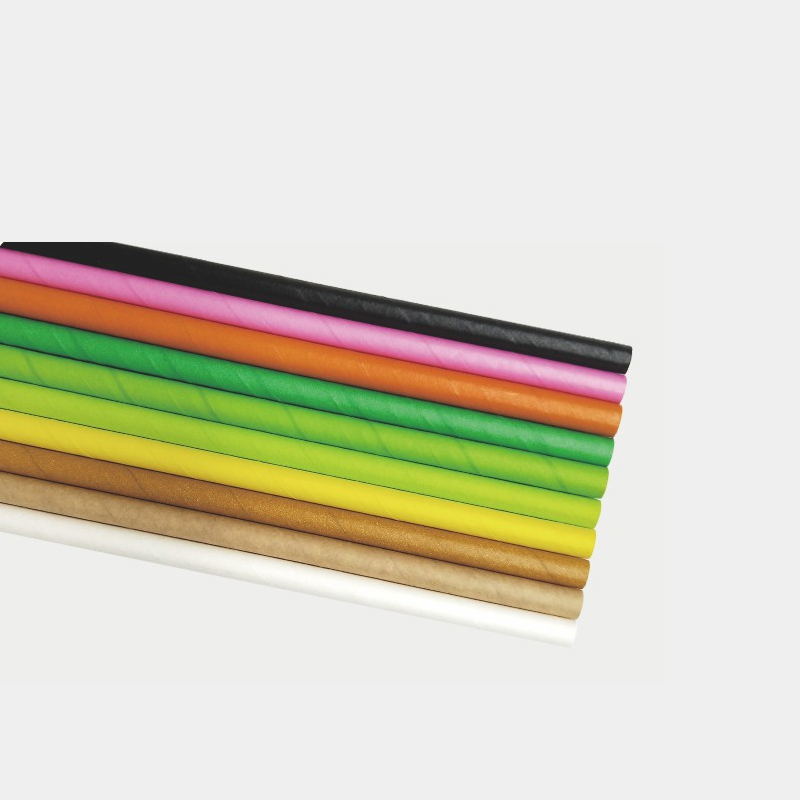 Solid Color Bamboo Fiber Paper StrawsSolid-color paper straws made with bamboo or wooden fiber, offered in ten colors and 500×10 case packs for foodservice buyers replacing plastic straws.View Product →
Straws are a useful example. A bamboo fibre or multi-ply paper straw costs more per unit than the plastic version it replaces, but across a few thousand drinks a day that gap is small next to the cost of a rejected shipment.
Which Materials and Test Standards Satisfy a UAE Review
Once you move past the ban, the question becomes evidentiary. A reviewer, whether a customs officer, a municipality inspector or a hotel chain's quality team, wants to know what the item is made of and which standard it was tested against. Three material families cover most of the demand.
Paper, board and moulded fibre
Kraft board, white card and bagasse based moulded fibre are the workhorses. They suit soup cups, salad bowls, trays, burger and sandwich boxes, cake boards and takeaway containers. Look for board with a stated fibre content, a food-contact-safe barrier, and, where possible, a lid that seals without a plastic film.
PLA and other bioplastics
PLA appears as linings, cold cup bodies, windows and lids. It behaves differently from conventional plastic because it needs specific temperature and moisture conditions to break down, which is why a compostable claim has to say where. Cold drink cups and salad bowl windows are common, sensible applications.
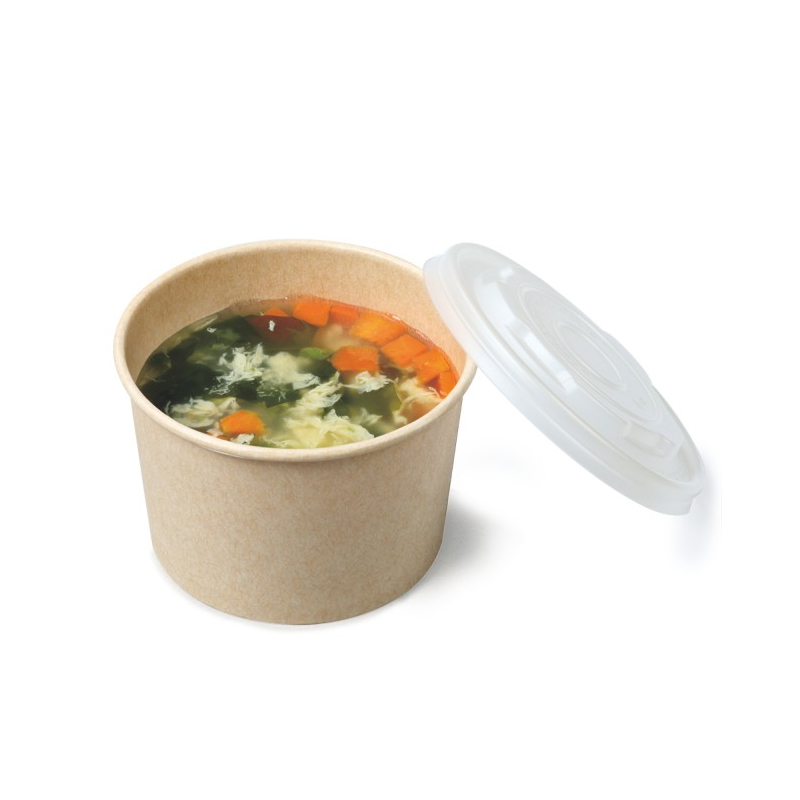 Custom Bagasse Paper Soup Cups and BowlsCustom bagasse paper soup cups and bowls in six model sizes, with listed dimensions and 500-unit case packs for food packaging.View Product →
The standards reviewers look for
Compostability claims are normally accepted when a product has been tested against a recognised framework such as EN 13432, ASTM D6400 or ISO 17088, and when the certificate names the exact item rather than a material family. Food-contact evidence matters too, which usually means migration testing on the finished article and not on the raw resin. Gulf standards increasingly mirror these international references, so a report from an accredited laboratory travels far further than a supplier's own declaration.
The Documentation Pack That Clears Checks
Certification in the UAE is a document exercise before it is a factory exercise. The file normally expected for imported biodegradable food packaging includes:
- A valid UAE trade licence for the importing entity.
- Full product formulation and ingredient list, including coatings and linings.
- Material safety data sheets for each component.
- Laboratory test reports covering compostability and food-contact migration.
- A declaration of compliance or certificate of conformity linking the report to the product code.
- Artwork showing the correct material identification and disposal wording.
Assembling this after the container has sailed is the most common cause of delay. Testing alone can run into weeks, and re-testing a substituted material can run into months. Build the file at sampling stage, not at shipping stage.
Where Compliance Usually Breaks Down
Most failures are not dramatic. They are quiet mismatches between what was sampled and what was shipped.
- Oxo-degradable additives sold as biodegradable, which many regulators treat as conventional plastic with a fragmenting agent.
- PLA-lined board that only breaks down in an industrial composting facility, while the pack wording implies it will disappear in landfill.
- Compostable logos printed without a certificate number or standard reference.
- Thin-wall containers that pass a visual check but fail a leak or heat test on the line.
- A material change between sample and bulk order that voids the original test report.
- Labels printed before the packaging is confirmed compliant, forcing an expensive reprint.
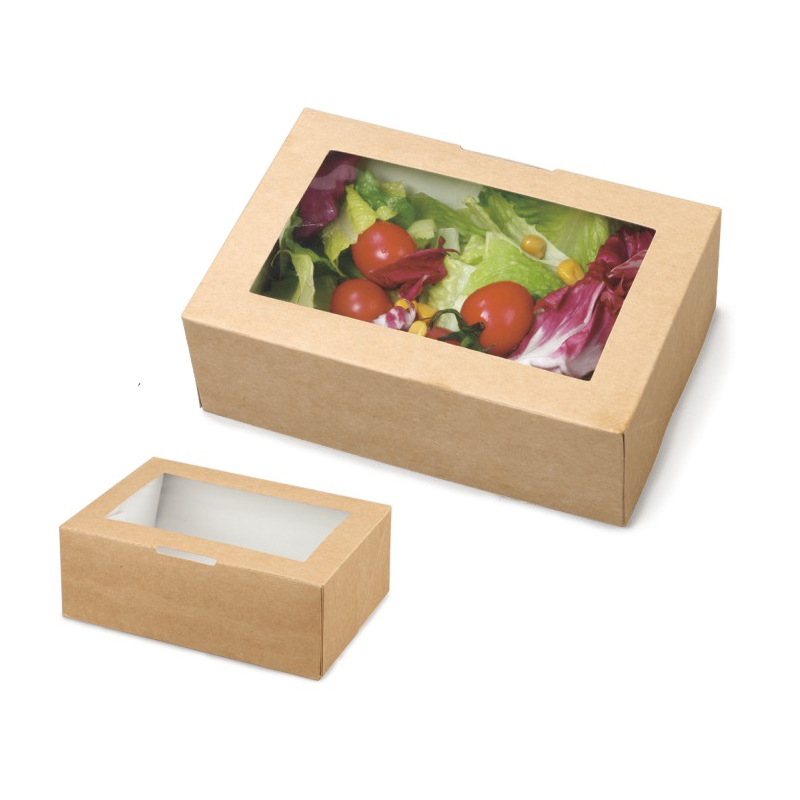 Kraft Paper Salad Boxes with PLA WindowsKraft salad boxes with PLA windows in three models, each 60 mm high with listed base dimensions and 600-unit case packs.View Product →
A kraft salad box with a PLA window shows how this looks when it is done properly: the board is fibre based, the window is a controlled bioplastic, and one specification can cover both components in the documentation.
Questions to Ask Before You Place the Order
Supplier selection is where the requirements become practical. Six questions separate a manufacturer from a trader:
- Which standard was this exact item tested against, and can I see the report?
- Does the item still pass your leak, stack and heat tests after the material change?
- What is the minimum order quantity per size, and does it change if I add a printed lid?
- How long is the gap between artwork approval and a repeatable bulk production run?
- Can you supply the same item in two material options, so I keep a compliant fallback?
- Who signs the declaration of compliance, and does the factory hold the mould for that shape?
A supplier with its own mould development can answer the last one without hesitating, and can adjust wall thickness or lid fit when a customer's dish changes. Before committing to volume, request the sample book and test the containers with your actual food, not with water.
Frequently Asked Questions
Does the UAE ban all plastic packaging for food?
No. The measures target named single-use items and misleading claims rather than every polymer. Rigid and recyclable formats can still be used where they are permitted and correctly declared.
Is biodegradable the same as compostable?
Not legally. Compostable usually means a tested, time-bound breakdown under defined conditions. Biodegradable is broader and much easier to print on a box, which is exactly why it attracts more scrutiny.
How long does certification take?
Depending on the testing required, expect several weeks for laboratory work and longer if the product fails and has to be reformulated. Documents that already exist for a tested product can be reissued quickly.
Can I keep using packaging I already own?
The restriction applies to the trade of affected products, so stock on hand does not solve the problem. Plan the switch by product line, starting with your highest-volume item.
UAE biodegradable packaging requirements are less about slogans and more about evidence: the right material, tested against a recognised standard, supported by documents that name the item. Operators who start with their highest-volume product, verify the paperwork before shipping, and keep a second compliant material option rarely lose a delivery date. Our sustainable packaging programme and the product lines built around it were assembled for exactly that kind of switching.
Share:
Related Products

We are very glad that you came to JIEYU to purchase or customize, and we are confident to provide you with quality products and services.

We are committed to developing innovative, reliable, economical, and environmentally friendly disposable and reusable food service products for our customers.

No.199 Liansheng Road, Coast Business Center, Yinzhou District, Ningbo, Zhejiang, China

+86-18106622299

jay@jieyuplast.com
