
 English
  中文简体
中文简体


How to Choose Food Grade Plastic Containers for Your Food Service Business
Sep 18, 2026
Content
- 1 What “Food Grade” Actually Means for Plastic Containers
- 2 Plastic Resin Codes: Which Numbers Are Safe for Food Storage
- 3 Match the Container to the Food Service Job
- 4 Three Specifications That Predict Real-World Performance
- 5 Plastic vs. Glass: The Quick Reality Check
- 6 When to Retire a Food Grade Container
- 7 Food Grade Plastic Containers: Common Questions
Not every plastic container that touches food is food grade, and not every food grade plastic is right for your menu. The resin code, the food contact approval, and the container’s real limits – heat tolerance, leak resistance, stacking strength – decide whether it survives hot takeout, cold deli displays, or long-term storage. Verify these three points before you order to avoid the two most expensive packaging mistakes: containers that fail in service, and containers that should never have been near food.
What “Food Grade” Actually Means for Plastic Containers
Food grade plastic is a material approved for safe contact with food under specific conditions. It is made from permitted resins and additives, produced in a controlled environment, and tested to ensure that no harmful substances migrate into the food at measurable levels. US regulators evaluate food contact materials under Title 21 of the Code of Federal Regulations; European Regulation (EU) No 10/2011 sets migration limits for plastics.
Two practical consequences follow. First, “food grade” is always tied to an intended use: a container approved for cold service is not automatically approved for reheating. Second, the approval belongs to the material and the manufacturer, not to the word printed on the box. A supplier that cannot produce a material data sheet and a food contact declaration for a bulk container is asking you to buy trust on credit.
Plastic Resin Codes: Which Numbers Are Safe for Food Storage
Almost every food service container is made from one of four food grade resins. Resin codes identify the polymer family but do not, by themselves, prove food safety. Use this table as a starting point, then confirm the specific product’s approval.
| Resin code | Material | Typical food service use | Practical heat limit |
|---|---|---|---|
| 1 (PET) | Polyethylene terephthalate | Cold cups, portion cups, deli containers | About 60°C (140°F) |
| 2 (HDPE) | High-density polyethylene | Jugs, heavy-duty storage, dairy packaging | About 80°C (176°F) |
| 4 (LDPE) | Low-density polyethylene | Lids, flexible containers, squeeze bottles | About 70°C (158°F) |
| 5 (PP) | Polypropylene | Hot takeout boxes, microwaveable containers, soup cups | About 110°C (230°F) |
| 6 (PS) | Polystyrene | Budget cold containers, bakery trays | Avoid hot or fatty food |
Polypropylene (code 5) is the resin we specify most often for hot meals: it resists oil absorption, stays rigid on a steam table, and handles microwave reheating better than any other common food grade plastic. PET (code 1) is the standard for cold beverages and deli items because it is clear, light, and inexpensive, but it distorts quickly when heated. If you need one container for cold storage with occasional reheating, choose PP and confirm the lid is rated for the same conditions.
Match the Container to the Food Service Job
Resin selection keeps food safe; container format keeps it presentable. The right shape controls portion size, protects food from crushing, and signals a considered choice. Because molds determine rim and wall geometry, the same nominal size can perform differently between suppliers – another reason to compare the physical container, not only the price list.
Round Containers for Soups, Salads, and Catering
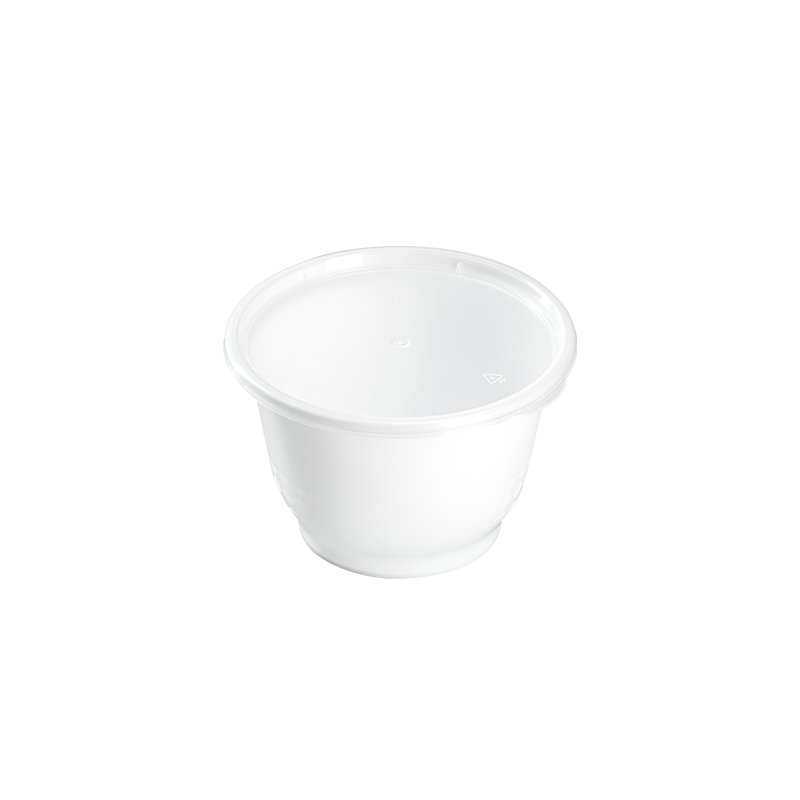
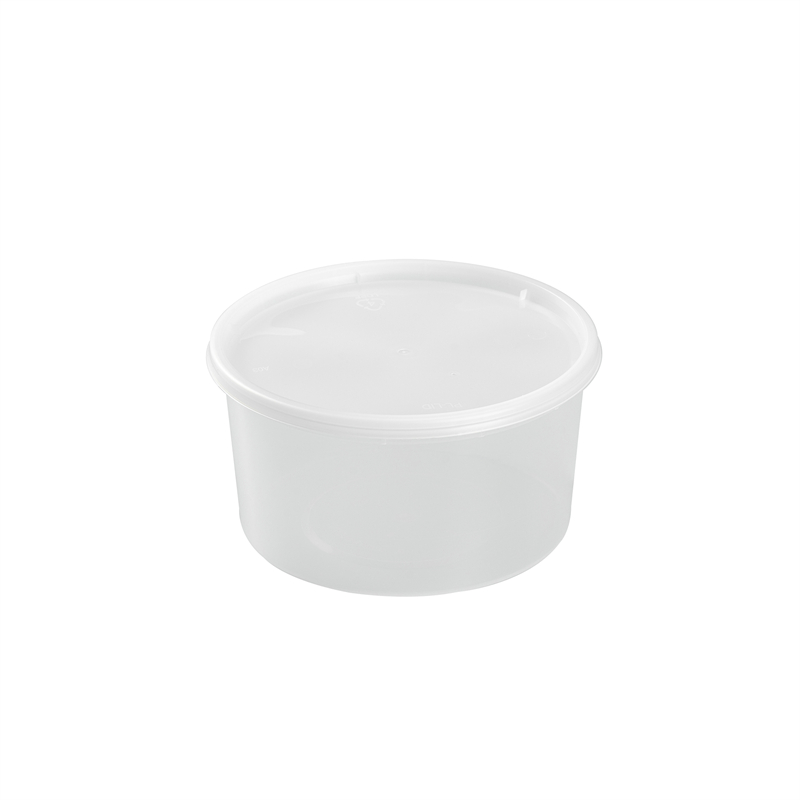
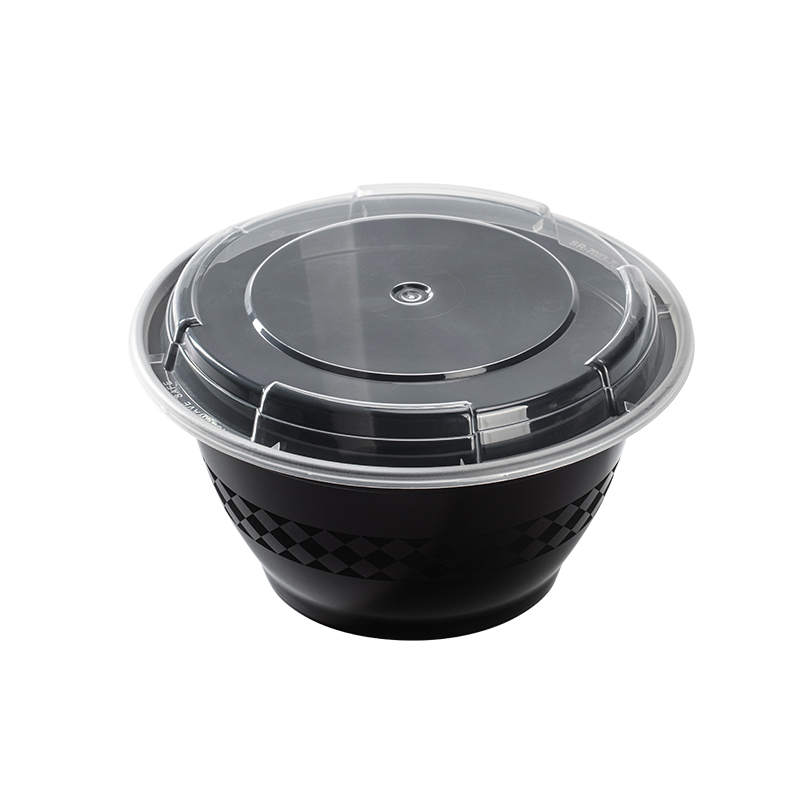
Round containers have the best strength-to-material ratio of any shape and the most predictable fill for liquids, which makes them the default for soups, stews, salads, and catering sides. A 24 oz round container with a flat lid is a standard portion for a full salad or a generous soup serving, and the rim design decides whether the lid locks with a clean click.
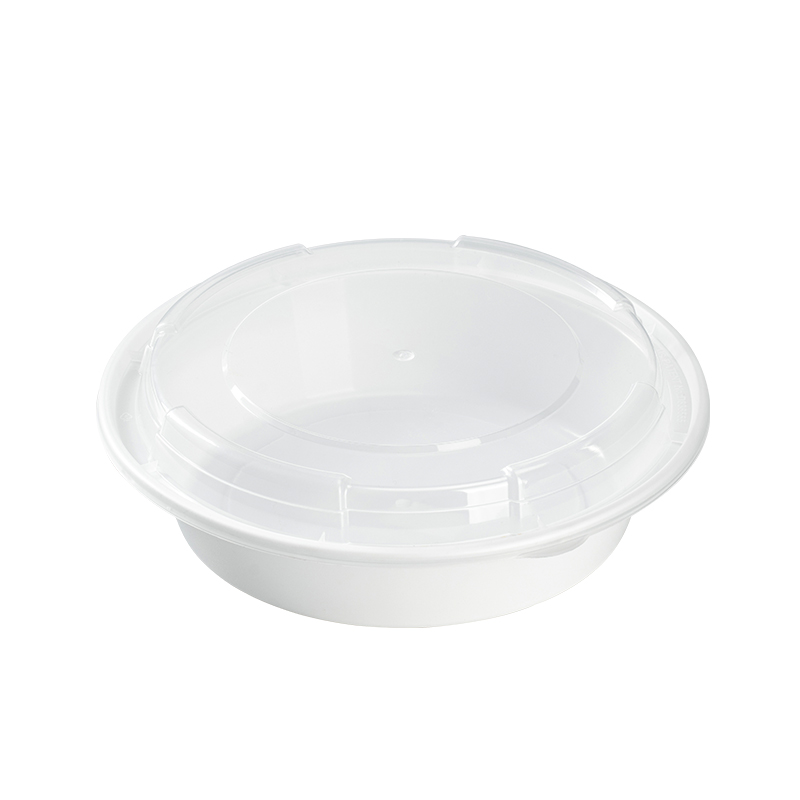 23 oz Round Combo Pack with Ripple Lid PL-723This round 23 oz container with a flat ripple lid suits soups, stews, and salads. Its shape provides sturdy stacking and predictable filling, making it a practical portion for catering or meal prep.View Product →
Compartment Containers for Balanced Meal Boxes
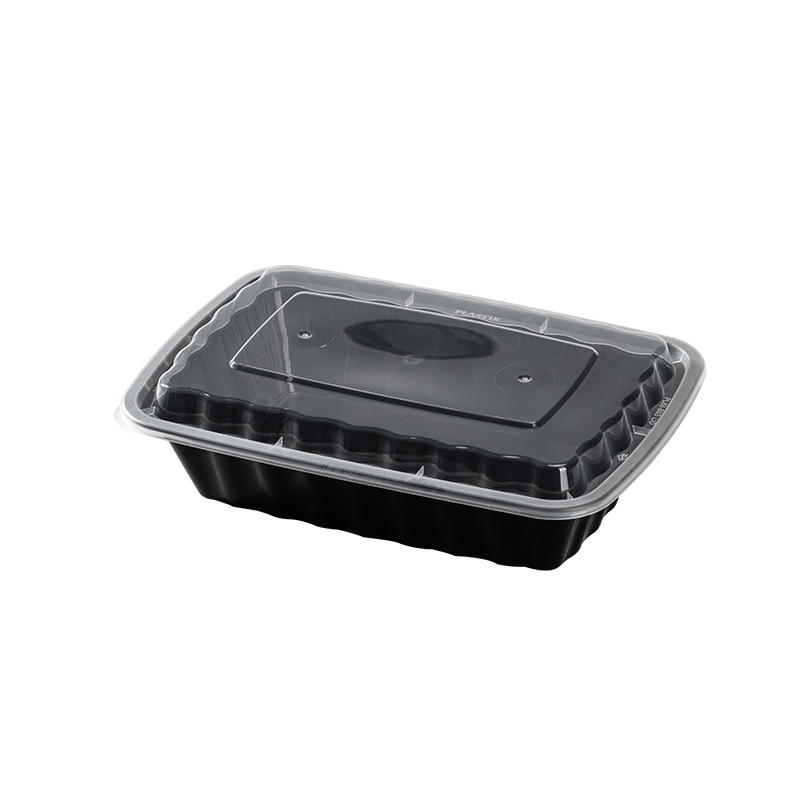
A compartment box keeps protein, starch, and vegetables separate, so each element keeps its texture and the customer reheats only what they want. The 32 oz three-compartment rectangular format is a workhorse for office lunches and meal-prep programs because it holds a full dinner portion and reduces the number of lids and bags per order.
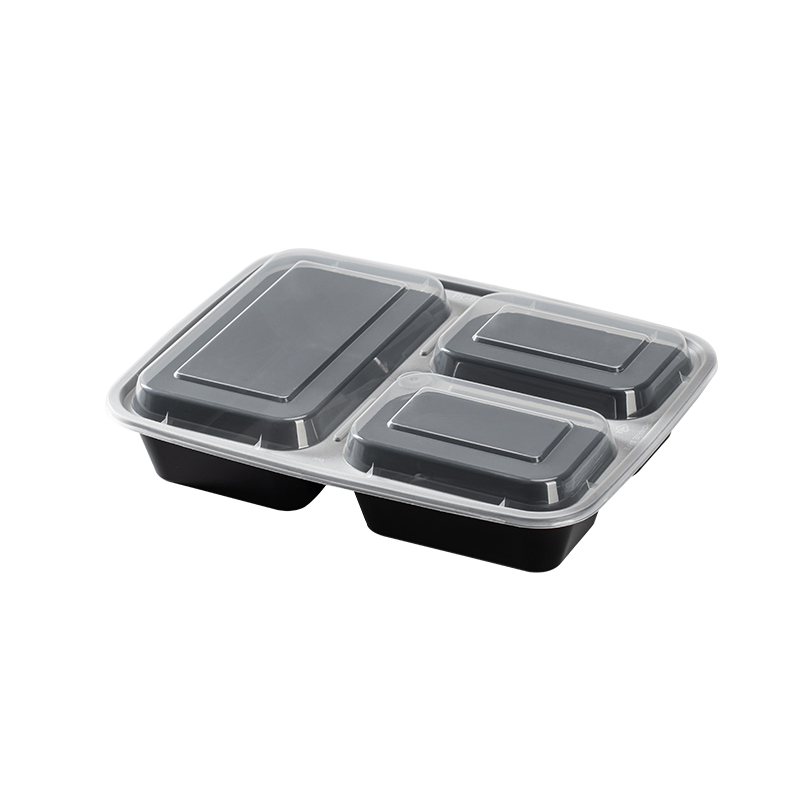 32 oz Three-Compartment Rectangular Container PL-9698A three-compartment 32 oz rectangular tray keeps protein, starch, and vegetables separate during transport and reheating. It accommodates full dinner portions for office lunches and meal-prep programs.View Product →
Tamper-Evident Containers for Delivery Confidence
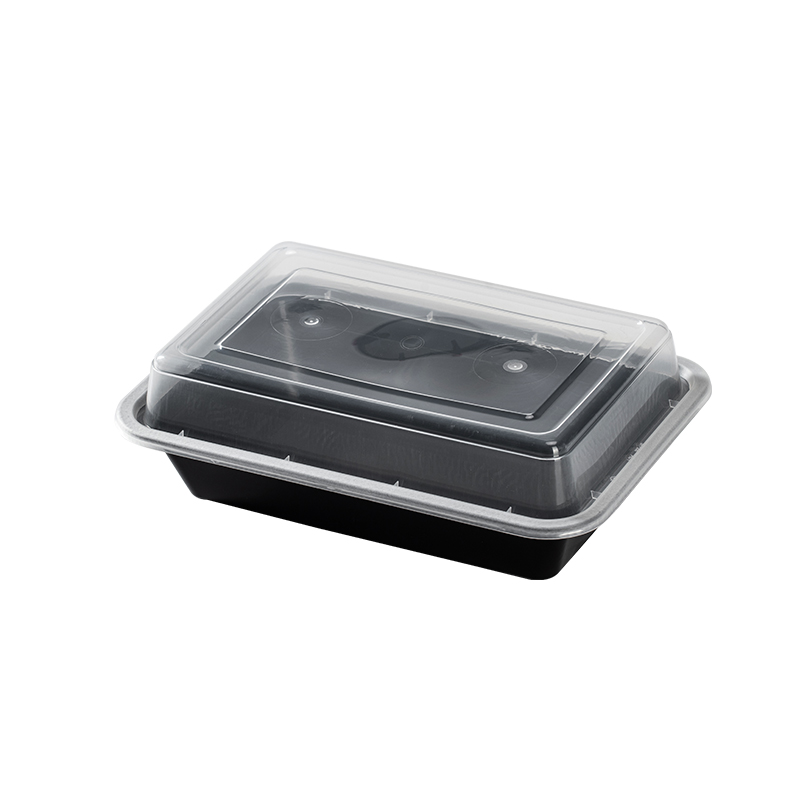
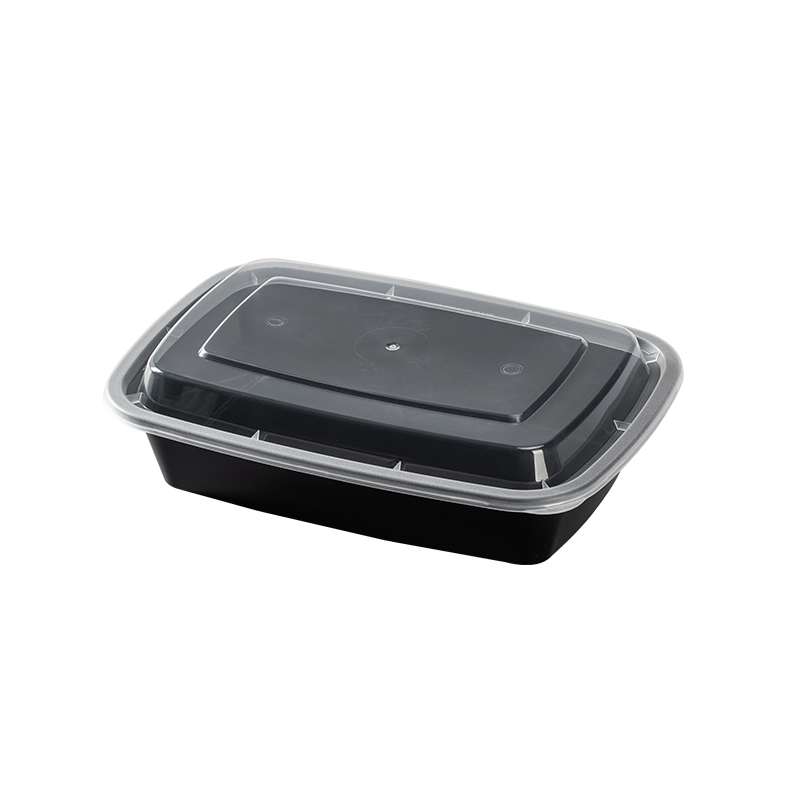
A tamper-evident container proves the food has not been opened after packing; the tabs break visibly when the lid is lifted. For delivery platforms and self-serve counters, that single feature turns a food safety practice into a customer-visible signal, and a 32 oz rectangular size covers most entree-plus-two-sides orders.
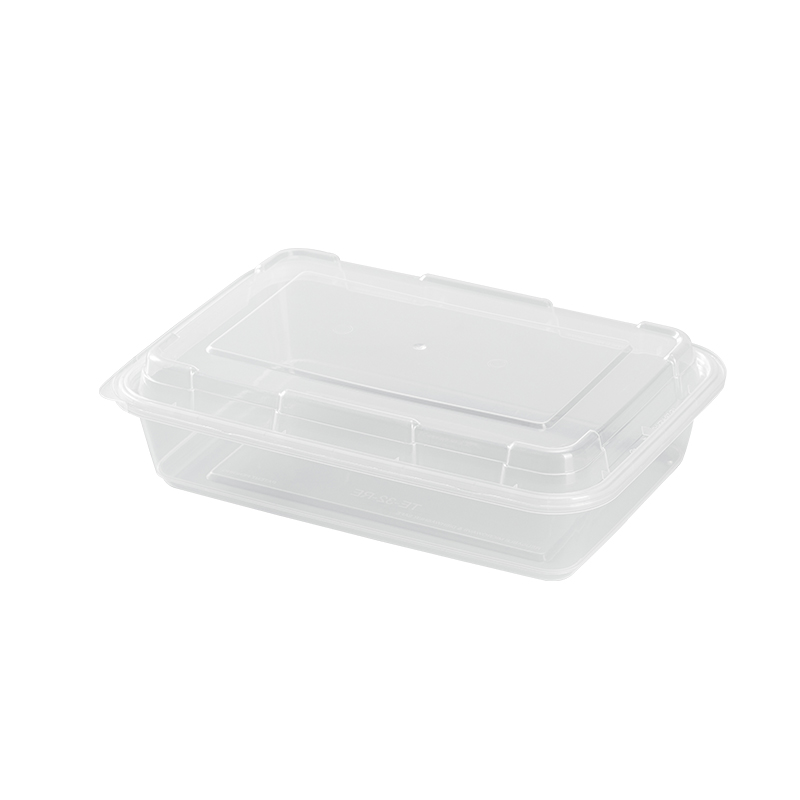 32 oz Rectangular Tamper-Evident Food Container TE-32-REThis 32 oz rectangular container features tamper-evident tabs that visibly break when opened, offering clear security for delivery and self-serve use. It holds entree-plus-two-sides orders reliably.View Product →
- Round 35%
- Rectangular 25%
- Compartment 20%
- Tamper-evident 12%
- Soup & other 8%
Typical format mix in a takeout-heavy kitchen; adjust proportions to your menu.
Your mix will follow your menu. A soup-focused kitchen uses mostly round containers; an office-catering kitchen leans on compartments. Start with a base order that matches menu share, then adjust at reorder.
Three Specifications That Predict Real-World Performance
Marketing language cannot tell you whether a container will survive delivery. These three measurable details can.
- Wall thickness. A heavier gauge means stiffer walls, better stacking, and fewer crushed meals, at a higher unit cost. Compare container weight in grams instead of descriptions.
- Lid sealing. Listen for the click and check that the rim seats all the way around. Leakproof claims are only credible when tested with oil-based liquids, because oil finds gaps that water does not.
- Temperature ratings. Confirm the high and low limits in writing. A container rated only for cold service turns brittle in a freezer and softens under a heat lamp within minutes.
Test before you commit: fill a sample with the hottest item you sell, close it, and lay it sideways for two minutes. The containers that pass are the ones customers will receive intact. Compare sizes, shapes, and lid systems across our full range of food grade plastic containers before requesting samples.
Plastic vs. Glass: The Quick Reality Check
Glass does not leach under normal use and can be washed hundreds of times, but those advantages matter mostly inside your kitchen. For takeout and delivery, plastic wins on simple arithmetic: glass weighs about five to eight times more than the same volume in plastic, which raises shipping cost, driver strain, and breakage, and a 200-order-a-day kitchen would need a return system most customers will not use.
Food grade plastic containers are engineered for exactly this workflow: portion-controlled, stackable, and cheap enough to treat as single-use or limited-reuse without changing your prices. We compared the full cost and usability picture in our detailed guide to plastic vs glass and stainless steel alternatives. The short conclusion: keep glass for prep and storage, and let plastic carry the order out the door.
When to Retire a Food Grade Container
Every plastic food container has a service life. Replace a container when you see any of these signs:
- Clouding or fine surface crazing. Micro-cracks trap bacteria and cannot be cleaned reliably.
- Warping after hot loads. Distortion means the material exceeded its heat limit.
- Staining or persistent odor. Tomato, turmeric, or oil residue penetrates a compromised surface.
- A lid that no longer clicks. The seal is the container’s only defense against leaks.
Reusing single-use containers after hot, oily meals is one of the highest-risk habits in a takeout kitchen. A replacement container costs less than a hygiene complaint.
Food Grade Plastic Containers: Common Questions
Is PET plastic safe for food storage?
Yes. PET (code 1) is approved for cold and room-temperature service. It is not designed for hot liquids or reheating; choose polypropylene when heat is part of the job.
Are black plastic takeout containers food grade?
Black plastic can be food grade if the resin and colorant both comply with food contact regulations. Color alone tells you nothing, so ask for the product’s food contact documentation before ordering.
Can every polypropylene container go in the microwave?
No. Polypropylene has good heat resistance, but the container needs a microwave-safe label and the lid should be removed or vented. Very fatty foods can exceed a container’s rating even in a microwave.
How can I test a container for leaks?
Fill it with the heaviest, most oil-rich item you sell, close the lid, and lay it flat or upside down for two to three minutes. Water is too forgiving; your real menu is the only honest test.
Food grade plastic containers are a small line on your cost sheet and a large line on the customer’s first impression. Verify the resin, match the format to the menu, and demand the supplier’s documentation. That is the whole skill, and it takes less time than cleaning up one leaked delivery.
Share:
Related Products
We are very glad that you came to JIEYU to purchase or customize, and we are confident to provide you with quality products and services.

We are committed to developing innovative, reliable, economical, and environmentally friendly disposable and reusable food service products for our customers.

No.199 Liansheng Road, Coast Business Center, Yinzhou District, Ningbo, Zhejiang, China

+86-18106622299

jay@jieyuplast.com
