
 English
  中文简体
中文简体


how to source PFAS-free disposable tableware: Practical Applications, Selection
Sep 18, 2026
Content
- 1 What "PFAS-Free" Really Means for Disposable Tableware
- 2 Material Options: Which Substrate Performs Best for Your Menu?
- 3 Supplier Verification: The Critical 5-Step Buyer's Checklist
- 4 Cost vs. Value: Why PFAS-Free Doesn't Mean More Expensive per Meal
- 5 Choosing by Application: From Fast Food to Catering
- 6 Frequently Asked Questions
You’ve made the decision to switch to PFAS-free disposable tableware, and that is a solid first step. The challenge is no longer about understanding why to avoid PFAS—it’s about how to verify that what a supplier claims is actually true. In 2026, the market is flooded with labels like "eco-friendly," "compostable," and "PFAS-free," but without a reliable sourcing protocol, you risk paying a premium for products that may still contain fluorinated chemicals. The most direct path to confidence is a three-step process: knowing what PFAS-free actually demands, choosing the right material for your use case, and verifying with third-party documentation. Here is your actionable checklist.
What "PFAS-Free" Really Means for Disposable Tableware
PFAS (per- and polyfluoroalkyl substances) are a class of thousands of synthetic chemicals used to provide oil, moisture, and heat resistance in disposable foodware. The term "PFAS-free" on a product label should mean that no PFAS compounds were intentionally added during manufacturing. However, unintentional contamination from recycled feedstocks or processing aids can still occur. The safest approach is to accept only a third-party test report (e.g., EN 14582 for total fluorine, or targeted LC-MS/MS for specific PFAS) and a written supplier statement of "no intentionally added PFAS." A mere claim on a product page is not sufficient.
Material Options: Which Substrate Performs Best for Your Menu?
Not all PFAS-free materials behave the same way. A salad box that works fine for dry greens might fail within minutes under hot, oily curry. The table below distills the performance differences across the three most common PFAS-free substrates for disposable tableware. Use it to match your specific food service scenarios with the right base material.
| Material | Grease Resistance | Moisture Barrier | Structural Rigidity | Best Use Cases |
|---|---|---|---|---|
| Molded Bamboo Fiber | High (natural lignin seal) | High | Very High | Hot meals, oily entrees, heavy-duty takeout |
| Bagasse (Sugarcane Pulp) | Moderate (often needs thin PLA coating) | Moderate | Moderate | Dry or cold items, light salads, pastries |
| Uncoated Kraft Paper | Low to None | Low | Moderate | Bread, dry snacks, wrapping items |
For high-volume operations serving meals with sauces or hot oils, molded bamboo fiber or a well-designed paper food container with a functional barrier (like a PLA coating) is your most reliable choice. For cold deli or bakery items, bagasse or uncoated kraft may suffice, but always test with a sample of your actual food.
Supplier Verification: The Critical 5-Step Buyer's Checklist
When vetting a manufacturer, skip the marketing claims and go straight to evidence. Here is the sequence you should follow with every candidate supplier:
- Request the third-party PFAS test report. A report from an accredited lab (e.g., SGS, Bureau Veritas, Intertek) using a method like EN 14582 (total fluorine) or LC-MS/MS (targeted PFAS) is the gold standard.
- Get a signed "no intentionally added PFAS" statement. This covers process controls, not just end-product testing.
- Confirm the material composition. PFAS can hide in recycled fiber. Ask specifically about the source of pulp or fiber content.
- Request food-contact compliance documents. For U.S. markets, check FDA 21 CFR; for the EU, look for EU 10/2011 compliance.
- Check for batch consistency. Ask if the supplier tests each production batch or only runs a single annual test. Repeat business should require per-batch certificates.
A manufacturer with in-house mold development capability, like Zhejiang Jieyu Plastic Products Co., Ltd., often has tighter process control than a pure trader, which can reduce the risk of material substitution during production.
Cost vs. Value: Why PFAS-Free Doesn't Mean More Expensive per Meal
A common hesitation is unit cost. PFAS-free tableware often carries a 10–30% price premium compared to PFAS-laden alternatives, particularly when moving from coated paper to molded fiber. However, the total cost of ownership across a full menu cycle is often lower when you factor in regulatory compliance, brand reputation, and waste management. The chart below illustrates how the cost gap narrows—and reverses—when you account for these hidden costs.
Moreover, many jurisdictions (including several U.S. states and EU countries) have enacted or are moving toward PFAS bans in food packaging. The cost of retrofitting after a ban is far higher than proactively switching now.
Choosing by Application: From Fast Food to Catering
Hot Oil & Greasy Meals
For items like fried chicken, mozzarella sticks, or oily pastas, look for paper or molded containers with a functional barrier (PLA coating is the most common PFAS-free option). Test the product with a sample of your actual hot food for at least 60 minutes before committing to a wholesale order. A candidate path for a heavy-duty solution is the 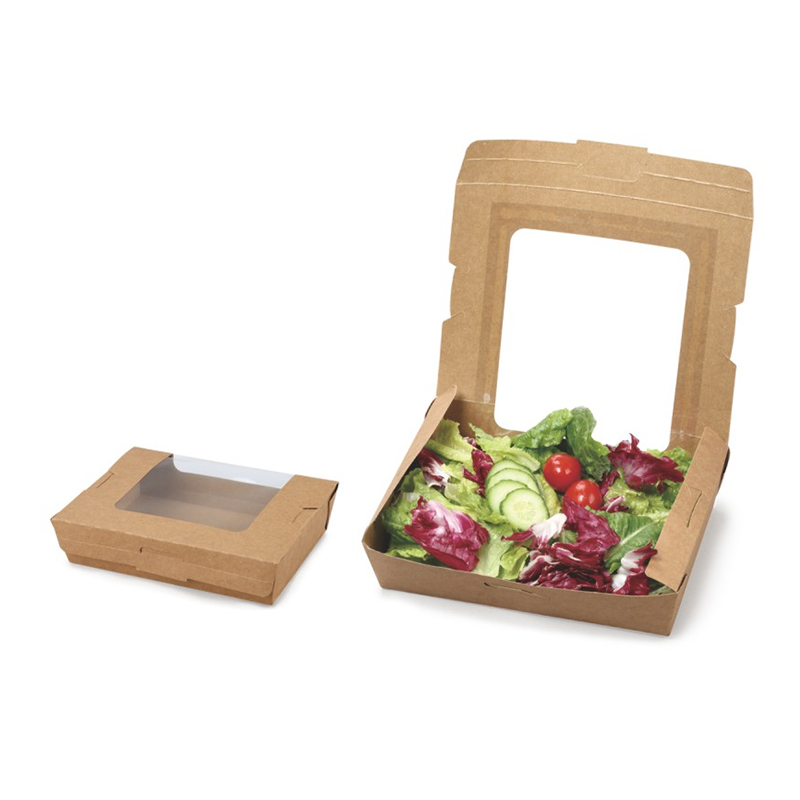 Kraft Salad Box with PLA Window for Heavy-Duty UseThis box combines grease resistance with product visibility, making it suitable for hot, oily foods like fried chicken or pasta. A practical choice when you need a functional barrier without PFAS.View Product → with a PLA window, which offers both visibility and grease resistance.
Cold or Dry Applications
Deli sandwiches, bakery items, and salads (without dressing) are well served by plain kraft paper or bagasse products. For these use cases, you rarely need a coating, which simplifies the supply chain and reduces cost.
Takeout & Delivery Durability
If your menu includes soups or saucy dishes that travel, a rigid container is a must. Consider a 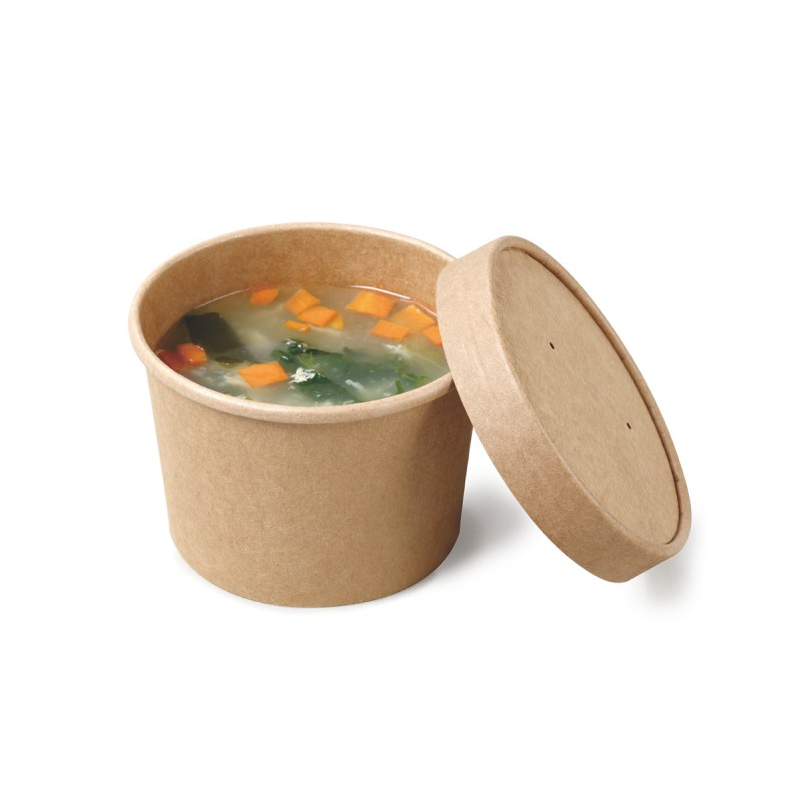 Paper Soup Cup with PFAS-Free CoatingDesigned for soups and saucy dishes, this rigid cup maintains structural integrity under heat. A reliable option for takeout that requires a leak-resistant, PFAS-free solution.View Product → with a PFAS-free coating, or a molded bamboo bowl for added structural integrity under heat.
Frequently Asked Questions
How can I quickly tell if a paper plate contains PFAS?
Without a lab test, visual inspection is unreliable. However, if a plate feels extremely smooth, waxy, or resists grease completely without any visible coating, PFAS is a strong suspect. Always ask the supplier for the test report.
Are bamboo and bagasse plates naturally PFAS-free?
Bamboo and bagasse as base materials do not contain PFAS. However, some manufacturers add coatings or wet-strength agents that may include PFAS. You must verify the finished product, not just the primary raw material.
Do I need to test every batch?
For high-volume or long-term contracts, yes. A one-time certification is insufficient. Specify in your supplier agreement that random batches will be sent out for third-party testing, and reserve the right to reject shipments if PFAS is detected.
Share:
Related Products


We are very glad that you came to JIEYU to purchase or customize, and we are confident to provide you with quality products and services.

We are committed to developing innovative, reliable, economical, and environmentally friendly disposable and reusable food service products for our customers.

No.199 Liansheng Road, Coast Business Center, Yinzhou District, Ningbo, Zhejiang, China

+86-18106622299

jay@jieyuplast.com
