
 English
  中文简体
中文简体


Microwave Safe Symbol Explained: How to Read It Before You Reheat Anything
Sep 25, 2026
Content
- 1 What the Microwave Safe Symbol Looks Like and What It Claims
- 2 The Resin Code Under the Symbol Matters Just as Much
- 3 The Parts That Fail First: Lids, Windows and Seals
- 4 Paper Containers: When the Symbol Applies and When It Does Not
- 5 How to Verify a Microwave Claim Before You Buy
- 6 A Simple Reheating Routine for Kitchen Teams
- 7 Frequently Asked Questions
A takeaway box of rice goes into the microwave for ninety seconds. The rice comes out hot, the base is fine, but the corners have lifted and the lid no longer clicks shut. Nothing in the kitchen could have predicted that from the packaging alone.
Here is the short answer: the microwave safe symbol is a test claim, not a promise about the material. It tells you the container was exposed to microwave energy under a defined combination of time and temperature. The resin code inside the triangle underneath tells you which plastic you are actually holding. Check both, confirm whether the lid carries the same rating as the base, and you can predict most reheating failures before a customer finds them.
What the Microwave Safe Symbol Looks Like and What It Claims
The most common version is three wavy vertical lines sitting above a rectangle or a shallow dish outline. A second version places the same wavy lines inside a simple microwave box. Both mean the same thing in practice: the item has been assessed for microwave heating.
Pay attention to the wording that travels with the pictogram. "Microwave safe" usually follows a defined test protocol with a stated temperature and duration. "Microwave friendly" is looser and often means only that a container survived an internal trial. That gap matters when you are committing to ten thousand units.
The wavy-lines mark also gets confused with three other symbols printed on the same lid or sleeve.
| Mark | What it looks like | What it claims | Practical action |
|---|---|---|---|
| Microwave safe | Three wavy lines over a dish, or inside a microwave box | Tested for microwave heating under stated conditions | Reheat within the temperature and duration in the spec sheet |
| Resin code | Triangle with a number from 1 to 7 | Identifies the polymer family | Code 5 suits reheating; codes 1 and 6 do not |
| Food contact | Fork and glass | Safe to touch food | Says nothing about heat resistance |
| Dishwasher safe | Glass with water drops | Withstands dishwasher cycles | Unrelated to microwave performance |
The Resin Code Under the Symbol Matters Just as Much
If you check only one thing, check the number. A container can carry the wavy-lines symbol and still be a poor choice for hot food, because the symbol describes a test while the resin code describes how the material behaves at temperature.
Polypropylene, code 5, is the workhorse of microwave-rated food packaging. It holds shape up to roughly 120°C in continuous service, comfortably above the 70-90°C a reheated meal actually reaches. Codes 1 and 6 sit much lower: a PET lid softens near 65°C and polystyrene begins to distort around 80°C. Neither belongs in a microwave, even when the base does.
Those figures are typical continuous-service ranges rather than absolute limits. A code 5 container used inside its stated window holds shape; the same container left in for eight minutes with a fatty sauce at full power will not. Fat reaches higher temperatures than water, which is why curry and fried rice distort containers more often than soup does.
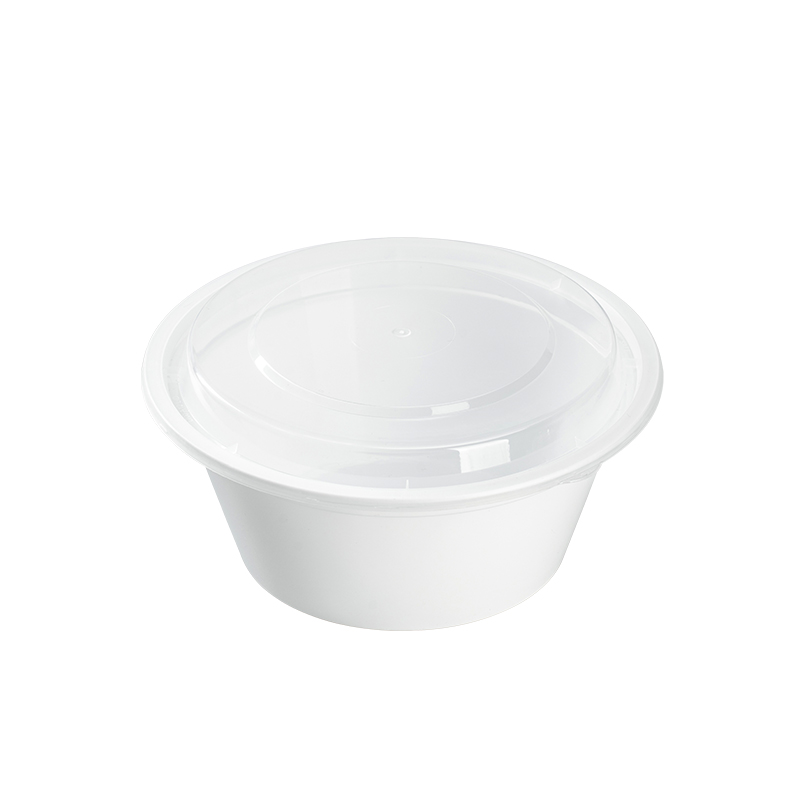
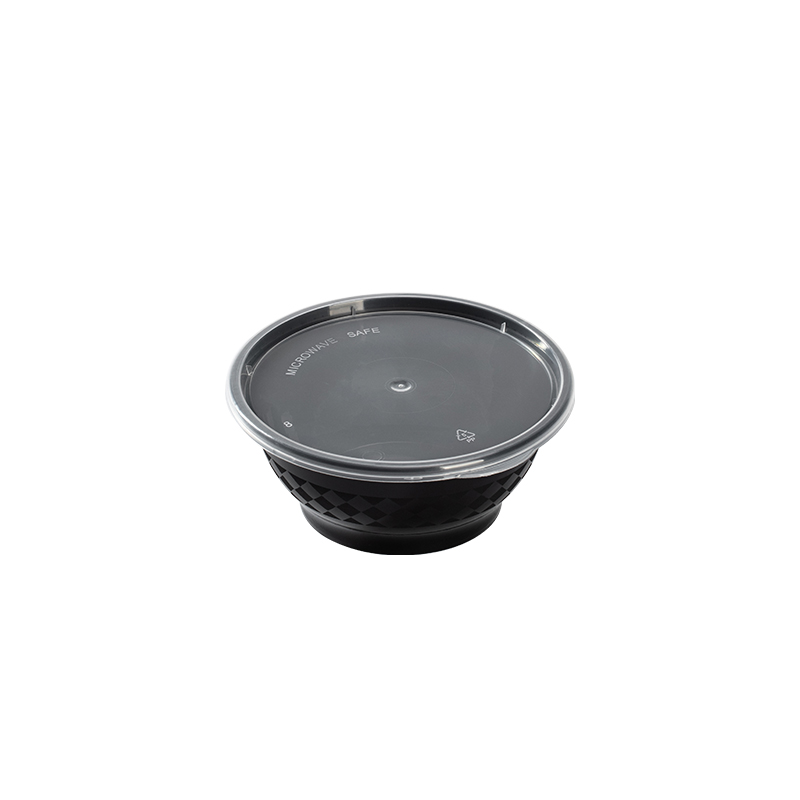
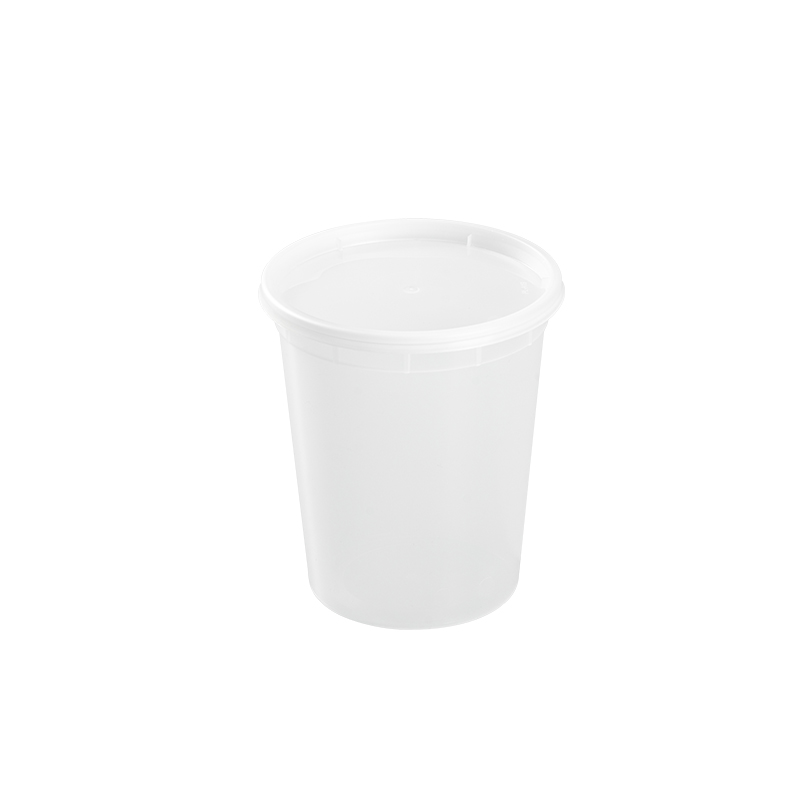
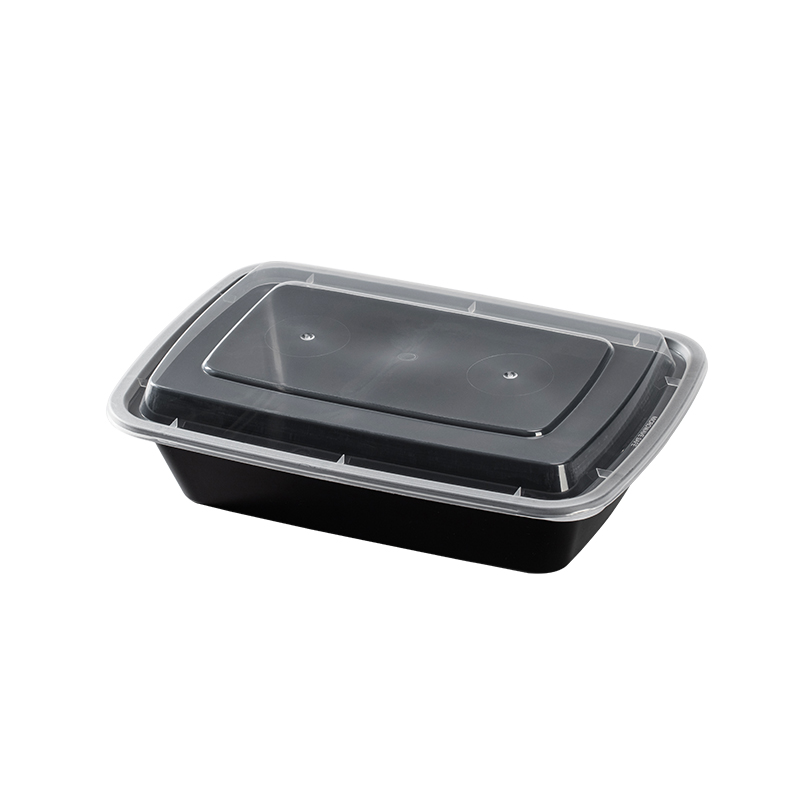
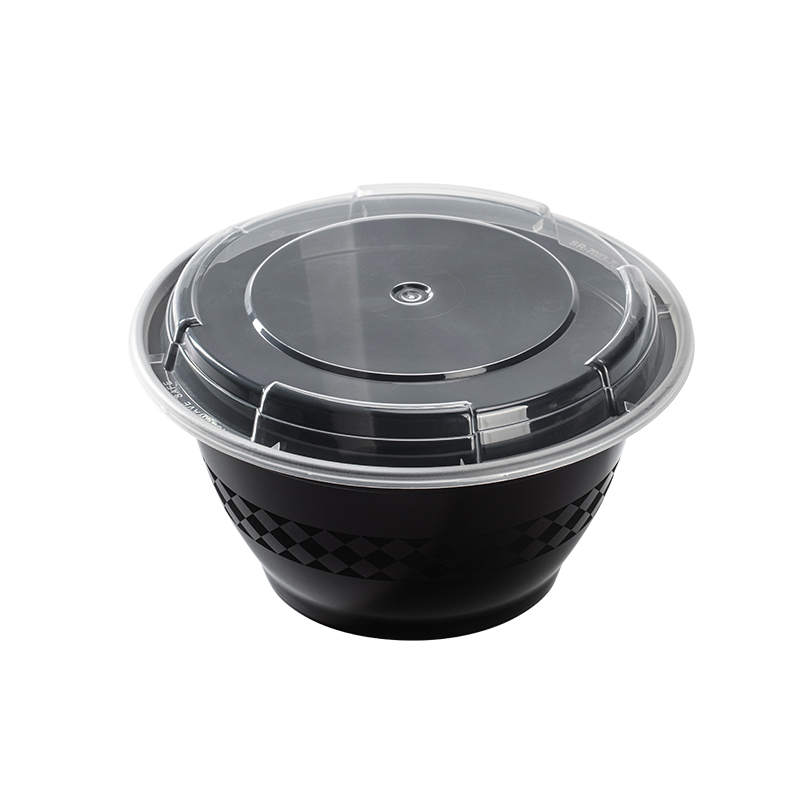
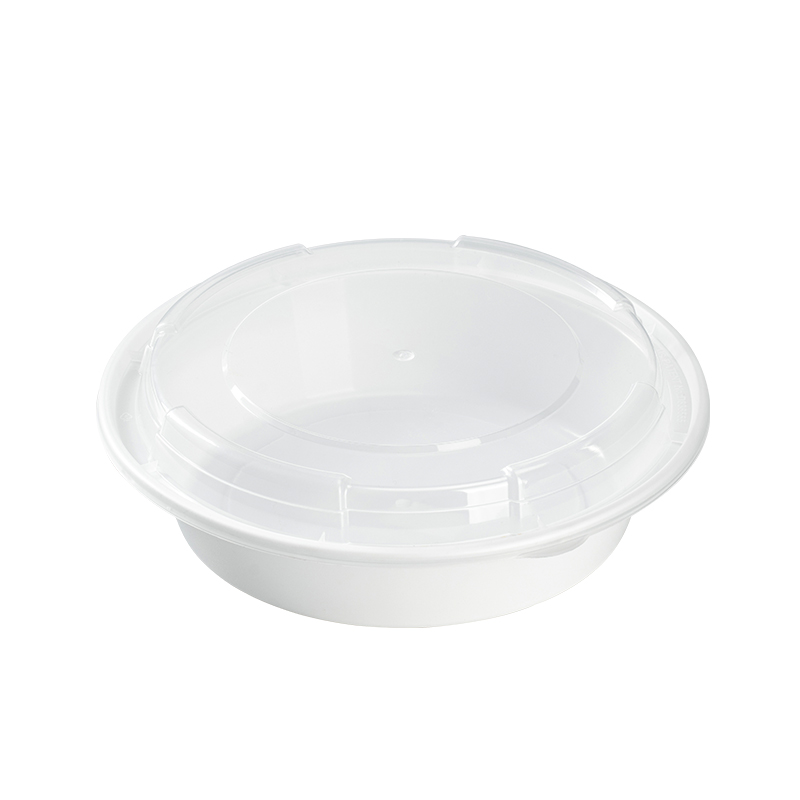 23oz Round Combo Pack PL-72339oz Round Compo Pack-Ripple PR-36View Product →
Geometry plays a part too. Round containers spread heat and internal pressure evenly, with no corners where the wall is thinnest, so they tend to keep their shape longer. Rectangular designs win on shelf space, stacking and portion control, which is why most kitchens settle on a mix of both shapes.
The Parts That Fail First: Lids, Windows and Seals
Most microwave complaints are not about the base. In the food-service accounts we work with, the container body usually survives the cycle; the lid, the seal or a coating gives up first.
A lid is often a different material from the base. A PET dome rated to 65°C on a polypropylene bowl rated to 120°C creates a mismatch that only shows up once the food is hot. PLA lids, standard on compostable lines, soften from about 55°C, so a hot soup can push them past their limit before the base is even warm. Snap-fit and tamper-evident designs handle internal pressure better than flat film, provided the seal is closed evenly around the rim.
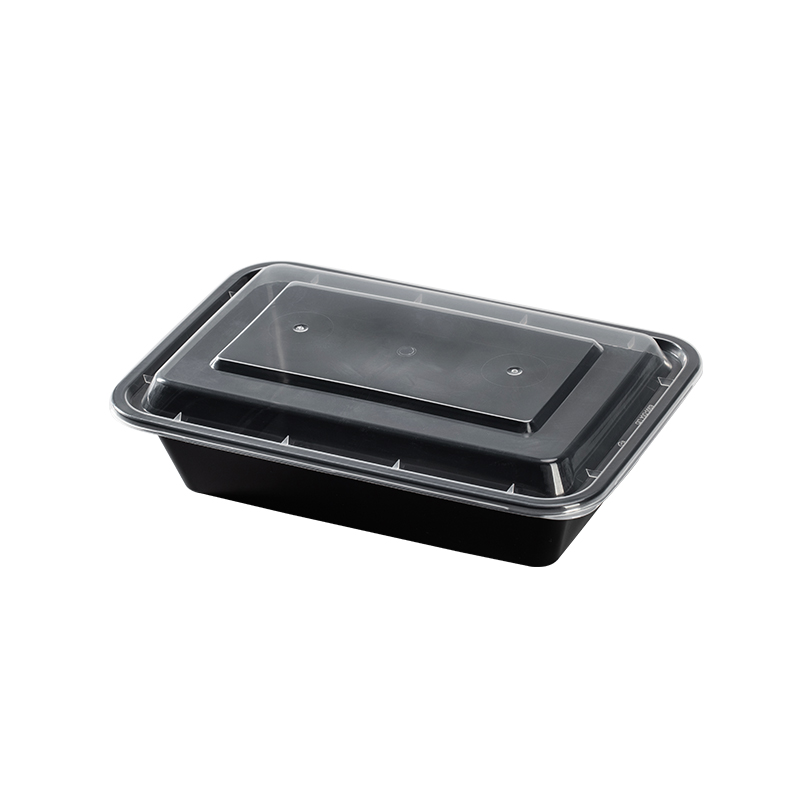
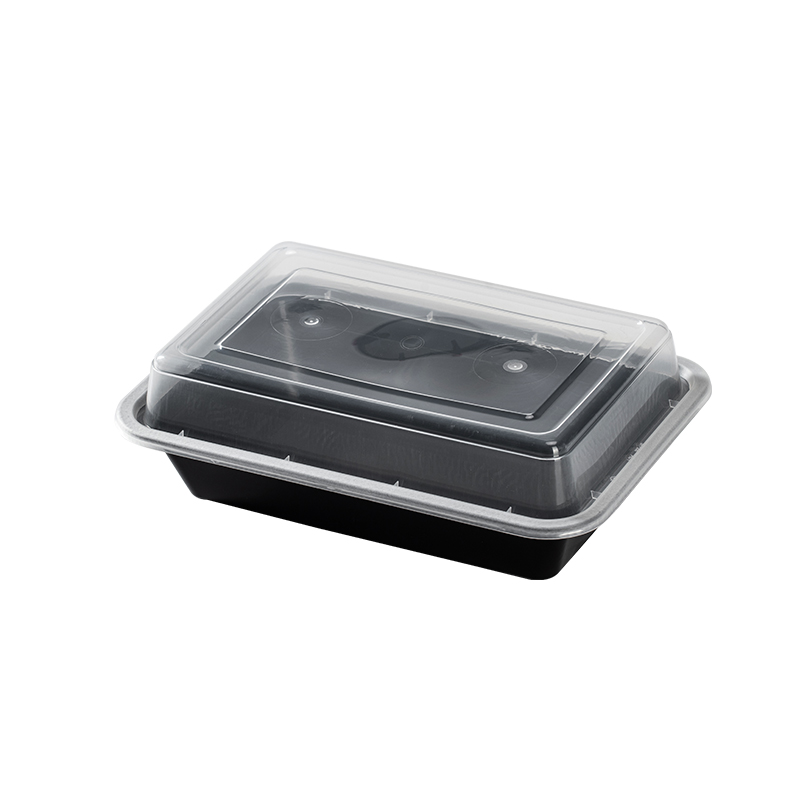
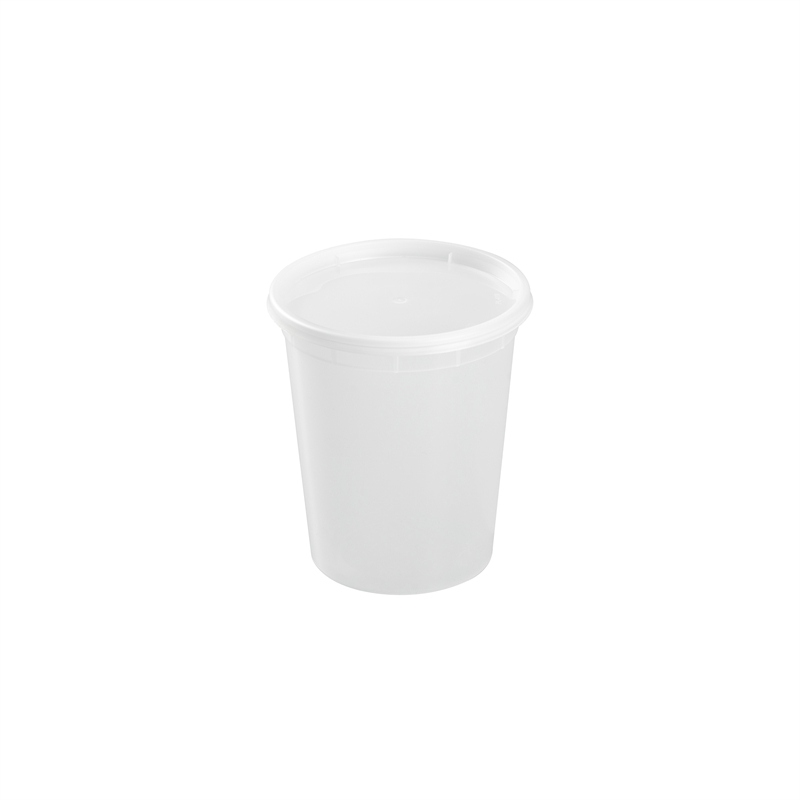
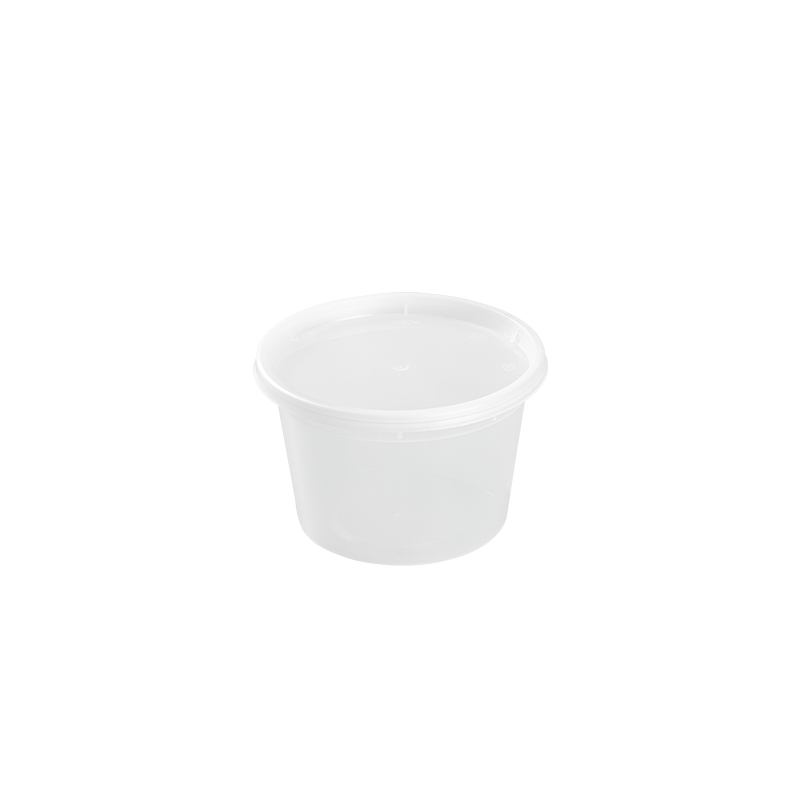 16oz Combo Pack S1623oz Round Combo pack-Ripple PR-23View Product →
Two habits prevent most of this. Vent the lid, or leave one corner open, so steam escapes instead of building pressure. And reheat in short bursts rather than one long cycle, because a container that survives two minutes may still distort at five.
Paper Containers: When the Symbol Applies and When It Does Not
Paperboard bowls and boxes carry the wavy-lines mark more often than people expect, and the paper itself is rarely the deciding factor. The coating is.
Polyethylene-coated board tolerates short reheats around 90-95°C. PLA-coated board, the compostable alternative, softens from roughly 55-60°C, which is below the temperature of the soup you are about to pour into it. A PLA window on a salad box or cake box should not go into a microwave at all, even when the board around it carries a rating. If compostability sits high on your packaging priorities, it is worth checking how each coating behaves under heat before you standardise on it; our sustainable packaging overview sets out how we compare those options in practice.
How to Verify a Microwave Claim Before You Buy
Ask for the test parameters, not just the pictogram. A supplier who has tested properly can answer five questions in writing:
- At what temperature and for how long was the container tested?
- Was the lid tested together with the base, or separately?
- Which components carry the rating: base, lid, window or sleeve?
- Which migration standard applies in your market, such as EU 10/2011 or FDA requirements?
- Does the printed symbol stay legible after washing, stacking and handling?
Those five answers separate a genuine microwave-rated line from one that merely survived a trial batch. Our FAQ covers the material and compliance questions customers raise most often during sampling.
A Simple Reheating Routine for Kitchen Teams
- Match the container to the dish: code 5 for hot and fatty foods, codes 1 and 6 for cold or ambient items only.
- Vent before heating. Crack the lid or choose a container with a steam vent.
- Run 60 to 90 second cycles and stir in between, rather than one long burst.
- Watch the lid as closely as the base, because that is where failure usually appears first.
- Retire any container that has warped, clouded or lost its seal. Deformation does not reverse.
Frequently Asked Questions
Is a container without the symbol unsafe to microwave?
Not automatically. It means the item was not tested and certified for microwave use, so the outcome is unpredictable. A code 5 container with no printed symbol usually behaves like one with it, but you carry the risk yourself, and in a commercial kitchen that risk is rarely worth taking.
The base is rated but the lid is not. Can I still microwave it?
Yes, if you remove or vent the lid. A rating applies to the component that was tested, not to the assembled pack. A PET or PLA lid on a polypropylene base is a common pairing, and the lid is normally the first part to deform.
Does microwave safe mean safe at any power setting?
No. The rating is tied to a temperature and duration, and a 1200-watt oven at full power pushes a container past that limit faster than a 700-watt one. Fat-based sauces are the most demanding, because they reach higher temperatures than water-based foods.
Is PLA microwave safe?
Generally no. PLA and CPLA soften from about 50-60°C, well below typical reheating temperatures. They perform well for cold and ambient foods and for lids on chilled items, but they should not be used for hot food in a microwave.
The symbol tells you the container was tested. The resin code tells you what the material will do next. Read them together, inspect the lid as carefully as the base, and keep reheating short and vented. That combination covers almost every failure we see in food-service packaging, and it costs nothing to apply.
Share:
Related Products

We are very glad that you came to JIEYU to purchase or customize, and we are confident to provide you with quality products and services.

We are committed to developing innovative, reliable, economical, and environmentally friendly disposable and reusable food service products for our customers.

No.199 Liansheng Road, Coast Business Center, Yinzhou District, Ningbo, Zhejiang, China

+86-18106622299

jay@jieyuplast.com
