
 English
  中文简体
中文简体


PPWR Recyclability Requirements 2026: A Practical Food Packaging Compliance Guide
Aug 21, 2026
Content
If your business places food packaging on the EU market, 12 August 2026 has already reset your compliance calendar. That is the day the Packaging and Packaging Waste Regulation (PPWR) began to apply across member states, and recyclability became a regulatory duty rather than a marketing claim. Buyers who entered the summer without reviewing designs, materials, and documentation are now in catch-up mode.
Here is the short version: packaging placed on the EU market after 12 August 2026 must be recyclable in practice, not just by intention. The detailed rules are still being finalized, but the direction is clear—fewer mixed materials, less problematic chemistry, and more evidence for every packaging claim.
What PPWR Recyclability Actually Requires
The PPWR replaces the earlier Packaging and Packaging Waste Directive with a directly applicable regulation. A single EU text means national authorities can no longer interpret recyclability in completely different ways. Article 6 contains the core duty: packaging may not be placed on the market unless the producer can demonstrate that it meets recyclability requirements. The European Commission’s March 2026 guidance confirmed that the obligation applies from 12 August 2026, while specific design-for-recycling evaluation methods are still being developed.
For food-service packaging buyers, three changes are easy to underestimate:
- Recyclability is calculated by weight. The percentage of a package that can be sorted and reprocessed by real recycling systems is what counts, not the theoretical recyclability of one material layer.
- Design for recycling starts at the drawing board. Coatings, labels, adhesives, closures, and windows all affect whether a container ends up as a new material or as residue.
- Documentation is part of compliance. A Declaration of Conformity and technical file must support the recyclability claim, and the manufacturer is responsible for keeping the evidence up to date.
Key Dates and Milestones
The August 2026 milestone has arrived, but the regulation continues to tighten. Companies that build the right review process now will avoid re-specifying packaging twice before the next wave of obligations in 2028 and 2030.
| Date | Recyclability-related requirement |
|---|---|
| 12 Aug 2026 | PPWR begins to apply; initial substance restrictions and the Declaration of Conformity requirement are now in force. Packaging must be recyclable in principle, subject to delegated rules. |
| By Jan 2028 | The European Commission is expected to adopt delegated acts setting out design-for-recycling criteria and recyclability performance grades. |
| 12 Aug 2028 | Harmonised EU recyclability labels become mandatory. |
| 2030 onward | Tighter recyclability performance classes and mandatory recycled plastic content thresholds apply. |
The ordering matters. August 2026 started the clock for recyclability and conformity documents; 2028 brings harmonised labels; the 2030s bring stricter performance grades and recycled content mandates. Material decisions made now will still be paying off—or limiting you—in 2030.
How Recyclability Is Assessed in Practice
Recyclability is not a binary attribute. It is the result of packaging meeting sorting and reprocessing requirements at realistic scale. A cup that is technically made of paper but contains a polyethylene lining can still fail because most paper mills cannot separate the layers in normal recovery streams.
When you evaluate a package, ask how each component behaves in the recycling chain:
- Does the fibre hold together after pulping? Moisture-resistant coatings and some adhesives can reduce fibre yield.
- Are the inks and pigments compatible with de-inking? Heavy pigments can darken recycled pulp.
- How large is the label or window? Large plastic windows in paper packaging may remain as contaminants through sorting.
- Does the package contain substances that recycling lines treat as problematic? Certain fluorinated chemicals are restricted under PPWR before recyclability is even considered.
For plastic containers, the same logic applies. A container fully made of one polymer family, with a lid and label from a compatible resin, is easier for a sorting line to accept than a multi-material construction. If you are sourcing cups, review the full construction, not just the headline material. A simpler paper-based format without an extra plastic sleeve can improve the recyclable weight share; our paper cup models show how basic constructions can be specified for different food-service uses.
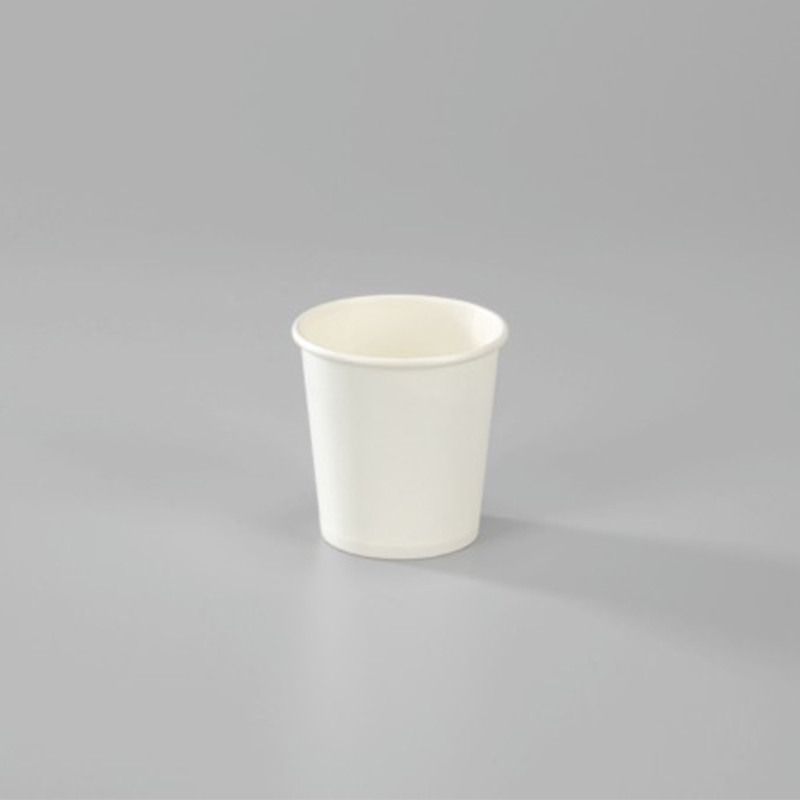 Custom Paper Cup Manufacturers, Factory- Zhejiang Jie Yu Plastic Products Co.,LtJie Yu Plastic Products Co.,Ltd is China custom Paper Cup Manufacturers and Paper Cup factory,View Product →
What Packaging Buyers Should Ask Now
The fastest way to prepare for the next compliance review is to test every current SKU against four questions:
- Who is the manufacturer under PPWR? If you put your brand on the packaging, you may carry the manufacturer’s obligations, even if another factory supplies the goods.
- Do you have the Declaration of Conformity? You need one for each packaging unit placed on the market, supported by a complete technical file.
- Is recycled content verifiable? For plastic packaging, you need to demonstrate the share of post-consumer recycled content from the material chain, not just from a brochure.
- Have you registered for EPR? Extended producer responsibility registration is required in every EU member state where you place packaging, and the rules continue to evolve.
Start with your highest-volume SKUs and ask suppliers for material declarations. If these questions feel new, you are not alone. Many food brands are working through the same audit with their suppliers. Our frequently asked questions on packaging and sourcing can help you frame the first conversation with your current supplier.
Choosing Packaging That Makes Compliance Easier
Simpler packaging is easier to prove compliant. For cold drinks, clear PET remains one of the most widely recycled food-contact plastics when collected in the right stream. A clear PET cold cup can be a stronger starting point than a multi-resin cup, especially in markets where PET bottle collection is mature.
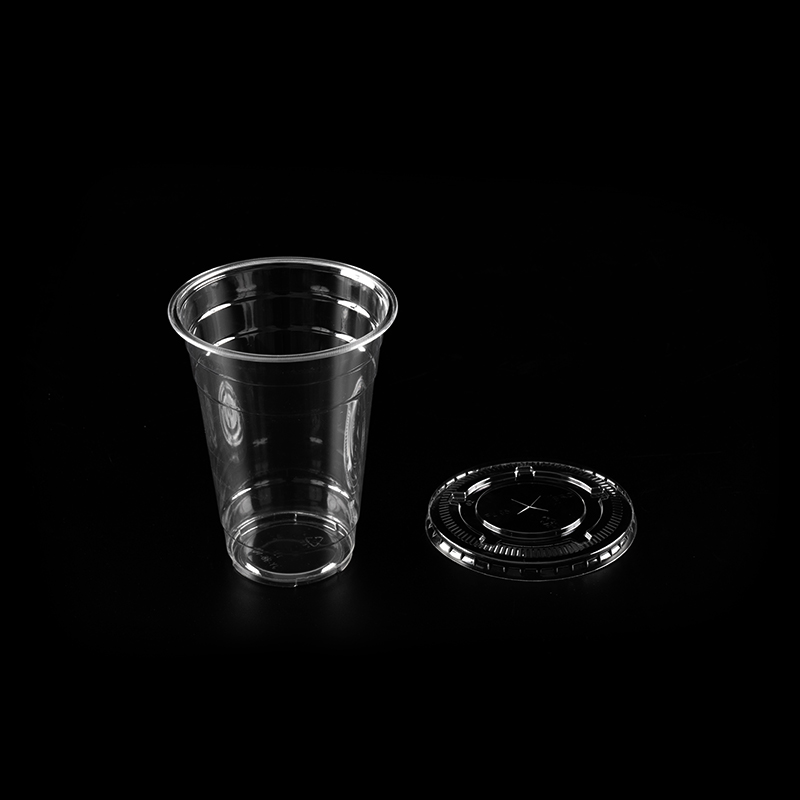 Custom 16oz PET cup(98dia) PET-9816 Manufacturers, Factory- Zhejiang Jie Yu PlasJie Yu Plastic Products Co.,Ltd is China custom 16oz PET cup(98dia) PET-9816 Manufacturers and 16oz PET cup(98dia) PET-9816 factory,View Product →
For takeaway meals, fibre-based packaging can work well when the coating, window, and liner are compatible with existing paper recycling. A kraft square paper food box is a clean base to evaluate because the material structure is relatively easy to trace. Confirm with the supplier that any window or grease-resistant treatment does not compromise the fibre recovery stream.
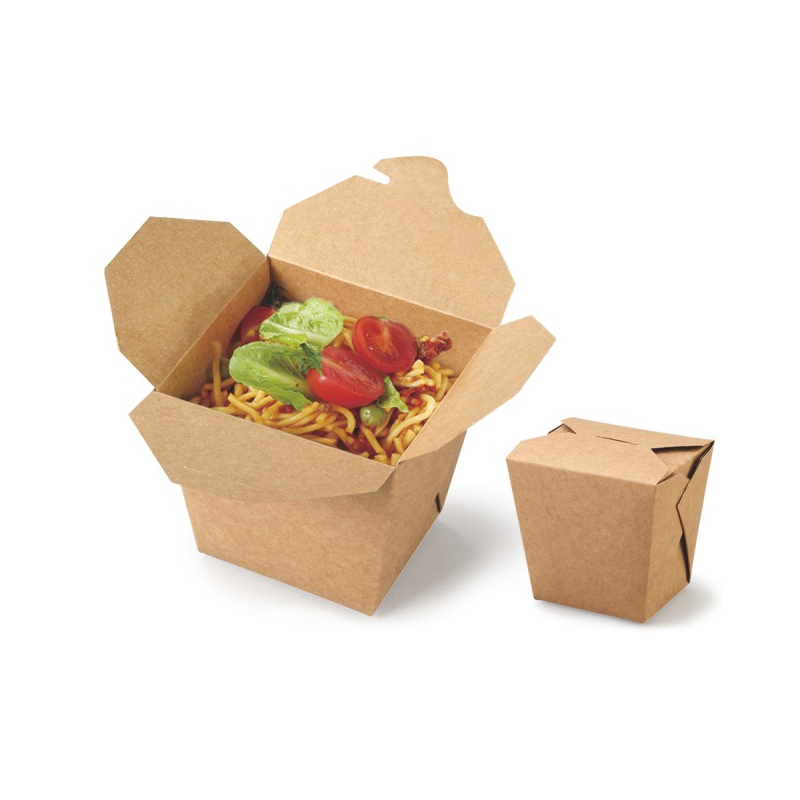 Custom Kraft Square Food Box Manufacturers, Factory- Zhejiang Jie Yu Plastic ProJie Yu Plastic Products Co.,Ltd is China custom Kraft Square Food Box Manufacturers and Kraft Square Food Box factory,View Product →
One of the most practical steps is to ask suppliers to identify the least complex version of a package that still protects your food. A smaller window, a lighter lid, or a different adhesive can improve the recyclable weight share without hurting the customer experience. That is where an experienced manufacturer with in-house tooling and material knowledge can help early in the design process. Our sustainability commitments explain how we approach material selection across paper and plastic lines.
FAQ
Does the 12 August 2026 date affect packaging already in storage?
The key trigger is “placing on the market”. Packaging first placed before 12 August 2026 can continue to flow through existing distribution chains. Any packaging placed on the market after that date must meet the applicable PPWR requirements, so check your inventory and stock rotation timelines carefully.
Who signs the Declaration of Conformity?
The manufacturer established in the EU, or the importer who places the packaging on the market, is responsible. Brand owners are commonly treated as manufacturers if they put their own name on the packaging. Because this changes supplier relationships, both parties should agree in writing who holds the technical file.
Does a compostable package count as recyclable?
Not automatically. Compostable packaging may be treated separately under PPWR where it has a clear environmental benefit, but industrial composting is not the same as material recycling. Confirm how your packaging is collected and processed in each market before relying on compostability as your compliance strategy.
The PPWR recyclability requirements are complex, but the core message for food packaging buyers is simple: choose materials that real recycling systems accept, keep each package as close to mono-material as possible, and document every decision. With 12 August 2026 now behind us, a structured supplier review is the most direct way to turn regulation into a long-term sourcing advantage.
Share:
Related Products

We are very glad that you came to JIEYU to purchase or customize, and we are confident to provide you with quality products and services.

We are committed to developing innovative, reliable, economical, and environmentally friendly disposable and reusable food service products for our customers.

No.199 Liansheng Road, Coast Business Center, Yinzhou District, Ningbo, Zhejiang, China

+86-18106622299

jay@jieyuplast.com
