
 English
  中文简体
中文简体


PPWR Regulation for Food Packaging: What It Means for Your Business (2026 Guide)
Aug 07, 2026
Content
What is the PPWR for food packaging?
If your food packaging is sold, imported, or distributed in the European Union, the Packaging and Packaging Waste Regulation (PPWR) is now the single most important compliance topic for your packaging line. The regulation entered into force on 11 February 2025, replacing the EU Packaging Directive (94/62/EC). The first hard obligations took effect in August 2026, and the next major milestones arrive on 1 January 2030. In short, food packaging that cannot be recycled at scale, relies on restricted substances, or contains too little recycled plastic will be pushed out of the EU market.
PPWR, formally Regulation (EU) 2025/40, is a full harmonisation regulation: the same rules apply in all 27 EU member states without national translation or local modification. It covers the entire packaging life cycle, from raw material selection and product design through sorting, recycling, and final disposal. For food packaging, the regulation adds stricter substance rules, recyclability grades, minimum recycled content, and labelling duties that go far beyond the previous directive.
Exporters outside the EU cannot ignore the PPWR. Because the regulation applies to all packaging placed on the EU market, manufacturers in Asia, North America, and elsewhere must provide documentation to their EU importers. Requests for Declarations of Conformity have already become a standard part of supplier qualification in the food service industry.
What the PPWR requires for food packaging
Food packaging buyers will meet four core obligations first: substance limits, recyclability, recycled content, and documentation.
Substance restrictions: PFAS and heavy metals
Since 12 August 2026, food contact packaging placed on the EU market must not contain per- and polyfluoroalkyl substances (PFAS) above the concentration limits set out in Article 5 of the regulation. PFAS are widely used in paper to repel grease and water, which makes burger wrappers, French fry boxes, and noodle cups directly affected. The restriction sits on top of a long-standing cap on lead, cadmium, mercury, and hexavalent chromium, which remain limited to 100 mg/kg in packaging materials. Suppliers of grease-resistant paper should therefore be asked for laboratory evidence of PFAS-free formulations.
Recyclability at scale
From 1 January 2030, every packaging item must be recyclable at scale, meaning it can be collected, sorted, and reprocessed in real European waste streams. The European Commission is developing design-for-recycling criteria that classify packaging into grades A, B, and C. From 2035, packaging that fails to achieve the required grade will be restricted. For food packaging, the practical consequence is that multi-material laminates, dark pigments, and non-detachable plastic windows or liners become commercial liabilities.
Minimum recycled content in plastics
Article 7 sets minimum post-consumer recycled content for plastic packaging. From 2030, contact-sensitive plastic packaging must contain 10% recycled material; PET packaging in this category requires 30%, and all other plastic packaging 35%. By 2040, these targets rise to 25%, 50%, and 65%. Every plastic food container sold into the EU will therefore need a documented recycled content ratio, and procurement contracts should specify how that ratio is verified.
Declaration of Conformity and labelling
From 12 August 2026, manufacturers must issue a Declaration of Conformity for each packaging item confirming that all PPWR requirements are met. Importers and distributors must hold the declaration and present it to national authorities on request. Packaging must also carry material identification labels to help consumers sort waste correctly. A second wave of harmonised labels, including a reuse pictogram, follows in 2028. If a supplier cannot provide a Declaration of Conformity, that supplier is already non-compliant in the eyes of EU market surveillance authorities.
PPWR compliance timeline for food packaging
The dates matter more than they look. Although 2030 is when most material requirements become mandatory, documentation and labelling duties started in August 2026. Using the time between now and 2030 as a preparation window, rather than waiting for enforcement, is the difference between a planned conversion and a costly emergency.
| Date | Obligation for food packaging |
|---|---|
| 11 February 2025 | PPWR entered into force; Directive 94/62/EC repealed |
| 12 August 2026 | PFAS ban in food contact packaging; Declaration of Conformity; material identification labelling |
| 12 August 2028 | Additional harmonised labelling, including reuse pictogram |
| 1 January 2030 | Recyclability at scale; minimum recycled content; ban on selected single-use formats; 10% takeaway reuse target |
| 1 January 2035 | Stricter recyclability grades; lower-grade packaging restricted |
| 1 January 2040 | Higher recycled content targets; 40% packaging waste reduction per capita |
How the PPWR changes material choices
Material selection is where the PPWR becomes a procurement decision. The regulation does not ban plastics, but it creates a clear division between packaging designed for circularity and packaging designed for single use with no recovery plan.
Paper and board
Paper-based food packaging enjoys strong infrastructure advantages under the PPWR. EU paper recycling is mature, and clean paper packaging can pass the recyclability-at-scale test with relative ease. The catch is contamination. A kraft paper food box coated with polyethylene, or a salad box with a non-detachable PET window, may fail the design-for-recycling criteria. The solution is to use compatible materials and detachable components. Fully recyclable kraft round paper food boxes are a good example: the fibre stays clean and the box enters the paper stream without special treatment. For products that need visual appeal, PLA-window salad boxes show how a clear front can remain compatible with industrial sorting while keeping the tray recyclable.
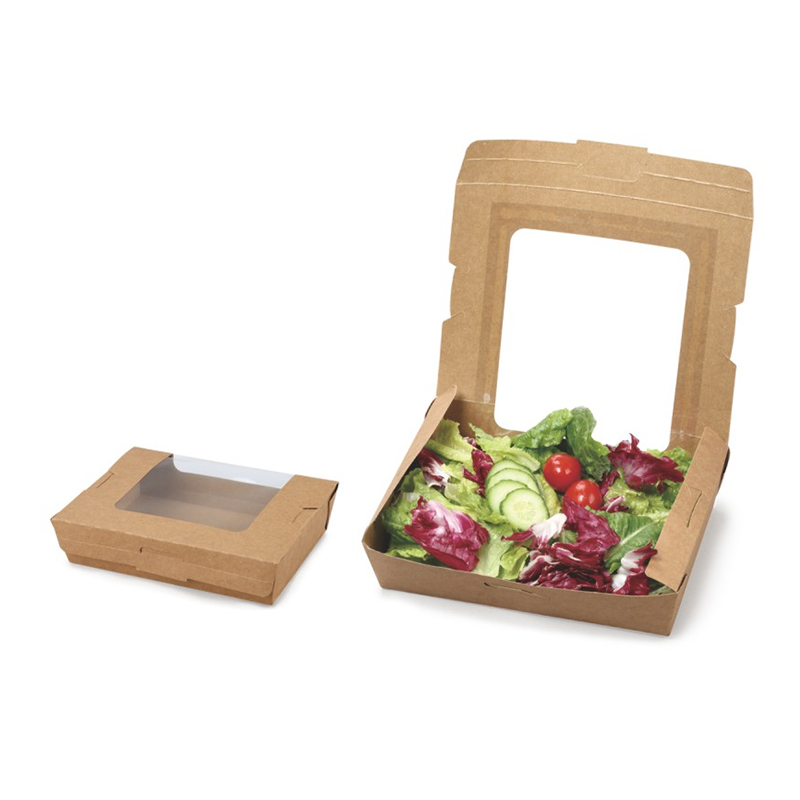 Custom Kraft Paper Salad Box-PLA Window Manufacturers, Factory- Zhejiang Jie Yu Jie Yu Plastic Products Co.,Ltd is China custom Kraft Paper Salad Box-PLA Window Manufacturers and Kraft Paper Salad Box-PLA Window factory,View Product →
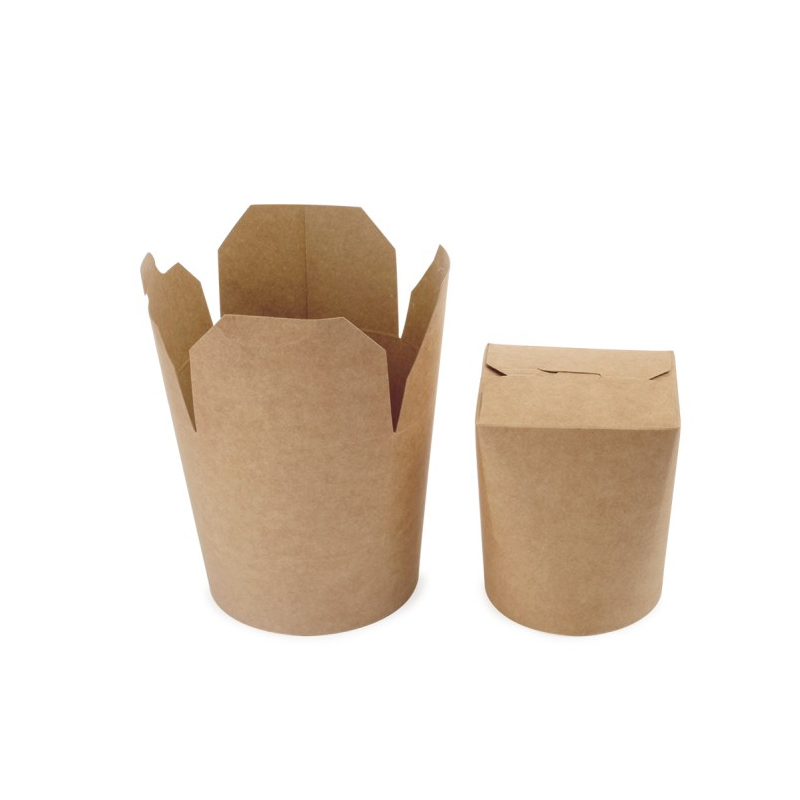 Custom Kraft Round Food Box Manufacturers, Factory- Zhejiang Jie Yu Plastic ProdJie Yu Plastic Products Co.,Ltd is China custom Kraft Round Food Box Manufacturers and Kraft Round Food Box factory,View Product →
Plastics: PET versus PP and PS
PET remains the most forward-compatible plastic for food packaging because food-grade rPET capacity already exists in Europe. Reaching 30% recycled content in contact-sensitive PET by 2030 is realistic for most converters. Polypropylene and polystyrene are more exposed: food-grade rPP is scarce, and PS sorting infrastructure varies widely by member state. Buyers should ask converters where their 2030 recycled content will come from, and whether the converter can prove it. This is the most important question for plastic food containers in the PPWR era.
Reuse targets for takeaway packaging
The takeaway sector has its own set of PPWR targets. From 2030, 10% of takeaway packaging must be reusable; from 2040, the share rises to 40%. Quick-service restaurants and delivery operators will need returnable container systems. Single-use packaging will not disappear, but reuse requirements redefine the economics; reusable cups and containers become a mandatory category in the packaging mix rather than an optional premium.
Approximate EU packaging waste mix by material
- Paper & cardboard 40%
- Glass 20%
- Plastics 19%
- Wood 7%
- Metals 5%
- Other 9%
The dominant paper share explains why fibre purity and coating compatibility determine whether paper food packaging passes the PPWR recyclability test.
What food businesses should do now
For food brands and packaging buyers, the PPWR turns procurement into a compliance exercise. The least expensive path is to act before competitors, and the most expensive path is to wait for a customs stop or a market withdrawal notice. Six steps cover the essentials:
- Inventory every packaging SKU you place on the EU market and map each material against the PPWR obligations.
- Request a Declaration of Conformity from every supplier. If they cannot provide one, treat them as high risk.
- Verify PFAS-free status with laboratory test reports for all grease-resistant paper items.
- Replace non-recyclable barriers such as PE lamination, wax coatings, and metallised films with recyclable alternatives.
- Build recycled content requirements into plastic packaging specifications now, not after 2030.
- Update packaging artwork for material identification labels and the upcoming harmonised labels.
Two practical starting points deserve attention. First, review your cup programme: beverage packaging is easier to convert than complex meal trays, and many operators are comparing PET cups against paper cups under the new rules. Our analysis of PET cup sustainability explains the trade-offs, while switching to PFAS-free paper cups is one of the fastest compliance wins. Second, evaluate supplier design capability. A packaging manufacturer that controls mould development and material selection, like ours, can adapt designs faster when recyclability criteria change. We have aligned our product development with circular-economy logic, documented in our sustainability commitments, so that buyers do not have to redesign twice.
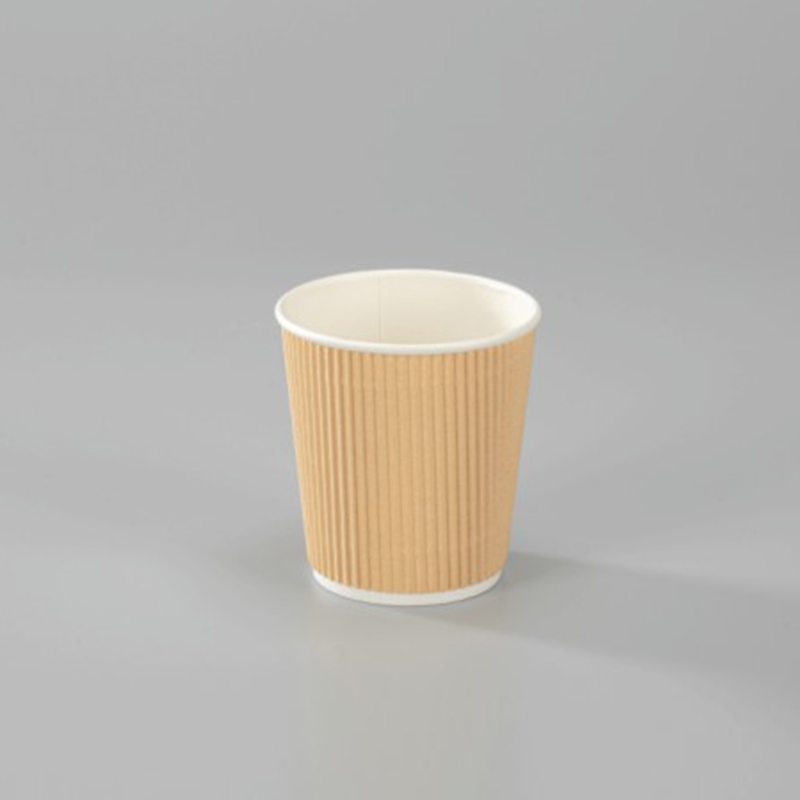 Custom Paper Cup Manufacturers, Factory- Zhejiang Jie Yu Plastic Products Co.,LtJie Yu Plastic Products Co.,Ltd is China custom Paper Cup Manufacturers and Paper Cup factory,View Product →
PPWR food packaging FAQ
Does the PPWR ban all plastic food packaging?
No. The PPWR sets conditions: recyclability at scale, minimum recycled content, and substance restrictions. Plastic food containers that meet these requirements can stay on the EU market. A narrow list of single-use formats, such as certain fruit and vegetable packaging under 1.5 kg, is banned from January 2030.
What is the first deadline I must act on?
The August 2026 obligations, which cover the PFAS ban, the Declaration of Conformity, and material labelling, are already running. If you have not requested Declarations of Conformity from your suppliers, that is the immediate next step.
Do I need to change my packaging if I sell only outside the EU?
Technically, no. The PPWR applies only to packaging placed on the EU market. But if you export to EU customers or sell through EU e-commerce platforms, your packaging is in scope.
What does "recyclable at scale" mean for food packaging?
It means the packaging must be collected, sorted, and recycled in real EU waste systems according to agreed design-for-recycling criteria. A material that is theoretically recyclable but rarely sorted in practice will not meet the requirement.
If you have questions about a specific packaging line, our FAQ page covers supplier and compliance topics, and our team can help evaluate your current packaging against the PPWR requirements.
Share:
Related Products
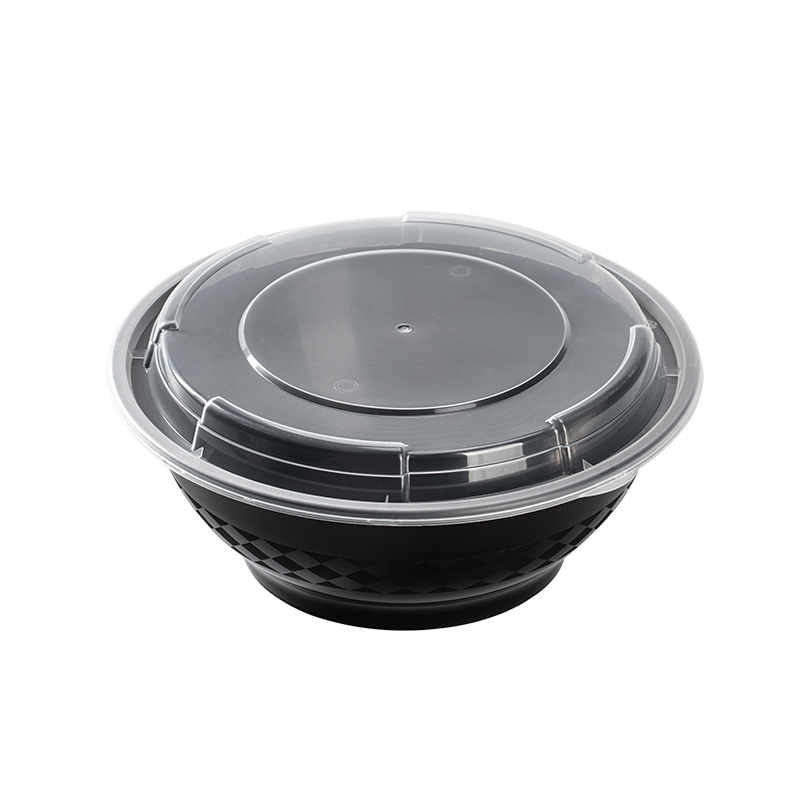
We are very glad that you came to JIEYU to purchase or customize, and we are confident to provide you with quality products and services.

We are committed to developing innovative, reliable, economical, and environmentally friendly disposable and reusable food service products for our customers.

No.199 Liansheng Road, Coast Business Center, Yinzhou District, Ningbo, Zhejiang, China

+86-18106622299

jay@jieyuplast.com
